
When influent BOD/COD ratio falls below 0.3, biological treatment systems struggle — microbes can’t efficiently break down refractory organics, effluent quality suffers, and downstream compliance becomes unpredictable. We see this most often in textile, pharmaceutical, chemical, and food processing wastewater. The good news: B/C ratio is improvable with the right pretreatment approach. Here are the four methods we rely on most in real projects.
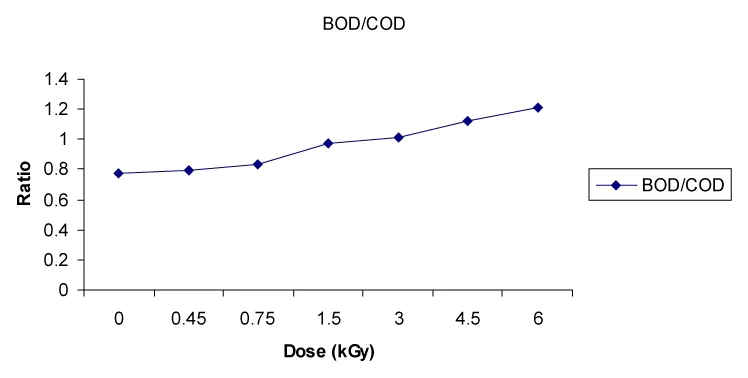
Why B/C Ratio Matters
The BOD/COD ratio measures what proportion of organic matter in your wastewater is biologically available:
- B/C > 0.3 → Suitable for direct biological treatment
- B/C 0.2–0.3 → Borderline; pretreatment recommended
- B/C < 0.2 → Poor biodegradability; pretreatment essential
A low B/C ratio doesn’t mean the water is untreatable — it means the treatment sequence needs to convert refractory organics into biodegradable forms before the biological stage sees them.
Method 1: Physical-Chemical Pretreatment
Best for: Wastewater with high grease, suspended solids, or large colloidal organic particles
Screens, oil separators, and coagulation-flocculation with PAC (50–200 mg/L) and PAM (1–3 mg/L) remove the fraction of COD that is physically separable but not biodegradable. By stripping out non-biodegradable suspended organics upfront, the remaining dissolved COD contains a higher proportion of biodegradable material — B/C ratio rises without any chemical conversion of the organic molecules themselves.
This is the lowest-cost first step and should always be evaluated before investing in more intensive pretreatment.
Method 2: Hydrolysis-Acidification or Anaerobic Pretreatment
Best for: Wastewater with complex macromolecules — proteins, cellulose, fats, starch
Hydrolysis tanks, UASB reactors, and IC reactors use anaerobic microbial activity to break large, refractory molecules into short-chain fatty acids and other small compounds that aerobic bacteria can readily consume. A well-operated hydrolysis-acidification tank typically raises B/C ratio by 0.1–0.2 units — for example, from 0.20 to 0.35–0.40 — making previously marginal wastewater suitable for direct biological treatment.
Key operating targets: HRT 4–12 hours depending on wastewater type, pH 6.0–8.0, DO below 0.5 mg/L. Monitor B/C at inlet and outlet to confirm the unit is performing — if improvement is less than 0.08 units, check HRT and sludge age.
Method 3: Advanced Oxidation Processes (AOPs)
Best for: Refractory industrial wastewater — pharmaceutical, dye, pesticide, landfill leachate
When biological and physical-chemical methods can’t adequately improve B/C ratio, AOPs use hydroxyl radicals (•OH) to chemically attack and fragment complex organic structures. Fenton oxidation (H₂O₂ + Fe²⁺ at pH 3–4) is the most widely applied — it degrades aromatic compounds, chlorinated organics, and other structures that resist biological degradation, converting them into smaller, oxidized intermediates with significantly higher biodegradability.
Ozone-based AOPs (O₃/UV, O₃/H₂O₂) are effective for color removal and pharmaceutical micropollutants but carry higher capital and operating cost. AOPs are typically positioned before the biological stage, not as a standalone treatment. Target B/C improvement: 0.15–0.35 units depending on wastewater type and AOP intensity.
Method 4: Iron-Carbon Micro-Electrolysis
Best for: Refractory organic wastewater, particularly before Fenton oxidation
Iron-carbon micro-electrolysis uses a galvanic cell formed between iron and carbon particles in acidic conditions (pH 3–5) to generate Fe²⁺ ions and nascent hydrogen [H], both of which reduce and fragment refractory organic molecules. The process works through electrochemical reduction, adsorption onto iron hydroxide flocs formed in situ, and coagulation of broken-down organic fragments.
It’s particularly effective as a pretreatment before Fenton oxidation — micro-electrolysis generates the Fe²⁺ that Fenton reaction requires, reducing chemical addition costs. Combined iron-carbon + Fenton systems consistently outperform either process alone on difficult industrial streams like PCB wastewater, pharmaceutical effluent, and high-concentration dye wastewater.
Choosing the Right Method for Your Wastewater
| Method | B/C Improvement | Cost Level | Best Application |
|---|---|---|---|
| Physical-chemical pretreatment | 0.05–0.15 | Low | High SS, grease-laden wastewater |
| Hydrolysis-acidification | 0.10–0.20 | Low-medium | Complex macromolecules, food/paper wastewater |
| Advanced oxidation (AOPs) | 0.15–0.35 | High | Pharmaceutical, dye, pesticide wastewater |
| Iron-carbon micro-electrolysis | 0.10–0.25 | Medium | Refractory organics, pre-Fenton treatment |
In practice, these methods are often combined in sequence. A typical configuration for difficult industrial wastewater: physical-chemical pretreatment → hydrolysis-acidification → AOP or micro-electrolysis → biological treatment. Each stage handles what the previous one cannot, progressively improving biodegradability to the point where the biological system can reliably achieve discharge limits.
FAQ
Q: How do I measure whether my B/C improvement method is actually working?
A: Sample at the inlet and outlet of each pretreatment unit. Measure BOD₅ and COD on both samples and calculate B/C ratio at each point. A functioning unit should show measurable improvement — at least 0.08–0.10 units — within normal operating conditions. If improvement is below that threshold, check HRT, chemical dosage, and operating pH before concluding the method isn’t suitable.
Q: What is the difference between Fenton oxidation and iron-carbon micro-electrolysis, and can they be used together?
A: Fenton oxidation adds H₂O₂ and Fe²⁺ externally to generate hydroxyl radicals at low pH. Iron-carbon micro-electrolysis generates Fe²⁺ and nascent hydrogen electrochemically using iron-carbon media. They complement each other well — micro-electrolysis first generates Fe²⁺ in situ, then H₂O₂ addition initiates the Fenton reaction without separate iron dosing. This combined approach reduces chemical cost and improves overall organic degradation efficiency.
Q: At what B/C ratio can I safely switch to biological treatment without pretreatment?
A: Above 0.4 is reliably suitable for most activated sludge systems. Between 0.3 and 0.4, biological treatment works but may require longer HRT or higher MLSS to compensate. Below 0.3, pretreatment is strongly recommended — running biological treatment on low B/C wastewater leads to sludge bulking, poor effluent quality, and progressive deterioration of the microbial community.
Match the Pretreatment to the Organic Structure — Not Just the B/C Number
A B/C ratio below 0.3 tells you there’s a problem; it doesn’t tell you which method will fix it. The organic structures causing low biodegradability — whether large macromolecules, aromatic compounds, chlorinated organics, or colloidal particles — determine which pretreatment approach delivers results. Identify the dominant refractory fraction first, then select accordingly.
If you’re troubleshooting a low B/C ratio problem or designing pretreatment for difficult industrial wastewater, our technical team can review your wastewater characterization and recommend a practical treatment sequence. Contact us for support.