Skip to content
These two tanks are easy to confuse because they share the same biological stage — but in practice, they serve different purposes and require different operating conditions. Getting this distinction wrong leads to process mismatches that affect both treatment performance and discharge compliance. Here’s a clear breakdown.
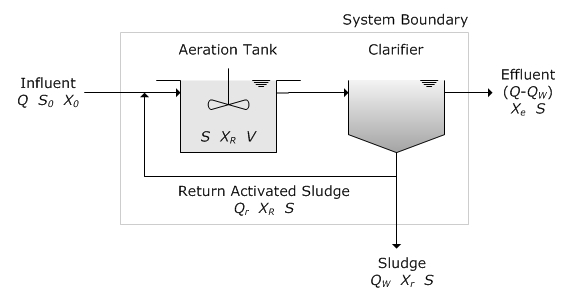
What They Have in Common
Both tanks operate in the anaerobic-to-facultative range and perform the early stages of organic decomposition:
- Break down large, hard-to-degrade molecules — proteins, cellulose, fats
- Convert complex organics into short-chain fatty acids and other small, biodegradable compounds
- Raise the BOD/COD ratio (B/C ratio), reducing the load on downstream aerobic treatment
This shared function is why they’re often discussed together — but it’s where the similarity ends.
Where They Differ
| Parameter | Hydrolysis Acidification Tank | Anaerobic Tank (Activated Sludge) |
|---|---|---|
| Oxygen Condition | Facultative / microaerobic; DO < 0.5 mg/L | Strictly anaerobic; DO < 0.2 mg/L |
| pH Range | 4.0–8.0 (wider tolerance) | 6.5–8.0 (tightly controlled) |
| Primary Function | Improve biodegradability only | Hydrolysis + phosphorus release |
| Key Microorganisms | Acid-producing bacteria | Acid-forming bacteria + PAOs |
| Role in System | Pretreatment before biological stage | Integral part of BNR process |
Oxygen and pH: Why the Difference Matters
The hydrolysis acidification tank intentionally stops short of full anaerobic conditions. Acid-forming bacteria tolerate a wider oxygen and pH range, so strict control isn’t required — the goal is simply to improve biodegradability before the wastewater enters the main biological system.
The anaerobic tank in an activated sludge process is more demanding. DO must stay below 0.2 mg/L and pH within 6.5–8.0 because polyphosphate-accumulating organisms (PAOs) are sensitive to both. Even brief DO intrusion above 0.2 mg/L — often caused by nitrate carryover in return sludge — suppresses phosphorus release and undermines the entire EBPR process downstream.
The Phosphorus Release Function — the Critical Distinction
This is what separates the two tanks functionally. The hydrolysis acidification tank has no role in phosphorus removal — it’s purely a pretreatment unit designed to make organic matter more accessible to downstream microbes.
The anaerobic tank in a biological nutrient removal (BNR) system serves a completely different strategic purpose: it triggers PAOs to release stored polyphosphate into solution, which they exchange for VFAs absorbed from the influent. Without this anaerobic phosphorus release step, PAOs cannot accumulate enough internal carbon reserves to drive luxury phosphorus uptake in the aerobic zone. The entire EBPR mechanism depends on this tank functioning correctly.
Which Tank Does Your System Need?
Use a hydrolysis acidification tank when:
- Influent has high refractory organic content (textile, food processing, paper mill wastewater)
- B/C ratio is too low (< 0.3) for effective downstream biological treatment
- The goal is pretreatment only — no biological phosphorus removal required
Use an anaerobic tank (BNR configuration) when:
- The system includes enhanced biological phosphorus removal (EBPR)
- Effluent TP limits require biological rather than purely chemical phosphorus removal
- PAOs need to be maintained as a functional microbial population
In some systems, both units appear in sequence — a hydrolysis acidification tank as pretreatment followed by an anaerobic-anoxic-aerobic (A²O) system with a dedicated anaerobic zone for EBPR. These are not interchangeable in that configuration; each serves a distinct role.
FAQ
Q: Can a hydrolysis acidification tank replace the anaerobic zone in an A²O system?
A: No. A hydrolysis acidification tank improves biodegradability but doesn’t support PAO activity — it lacks the stable strictly anaerobic conditions and functional microbial community that EBPR requires. Substituting one for the other will compromise phosphorus removal.
Q: What happens if DO exceeds 0.2 mg/L in the anaerobic tank of a BNR system?
A: Aerobic heterotrophs consume VFAs before PAOs can absorb them, depleting the carbon source PAOs need for PHB storage. Phosphorus release drops, and aerobic phosphorus uptake in the next zone weakens accordingly. Check return sludge nitrate — nitrate intrusion is the most common cause of false aerobic conditions in the anaerobic zone.
Q: How do I know if my hydrolysis acidification tank is working effectively?
A: Measure BOD/COD ratio at the tank inlet and outlet. A functioning tank should raise the B/C ratio by 0.1–0.2 units — for example, from 0.25 to 0.35–0.45. If the ratio isn’t improving, check HRT (target 4–12 hours depending on wastewater type) and pH stability.
The Right Tank for the Right Function
Hydrolysis acidification improves what goes into your biological system. The anaerobic zone in BNR drives what comes out — specifically, how much phosphorus is removed biologically rather than chemically. Mixing up their roles leads to either under-designed pretreatment or a failed EBPR process. Define your treatment goals first, then configure accordingly.
For process design support or chemical recommendations for biological nutrient removal systems, contact our technical team.