 Skip to content
In sand washing sites, effective wastewater treatment depends on fast flocculation, clear effluent, and strong sludge compaction. When the flocs form quickly and settle well, mud–water separation becomes easier, and sludge can be compacted and removed efficiently.
Based on field experience, anionic polyacrylamide (PAM) is the most commonly recommended flocculant for sand washing wastewater. In some cases, nonionic PAM may also be suitable, depending on water quality.
1. Why Anionic Polyacrylamide Is Used in Sand Washing Sites
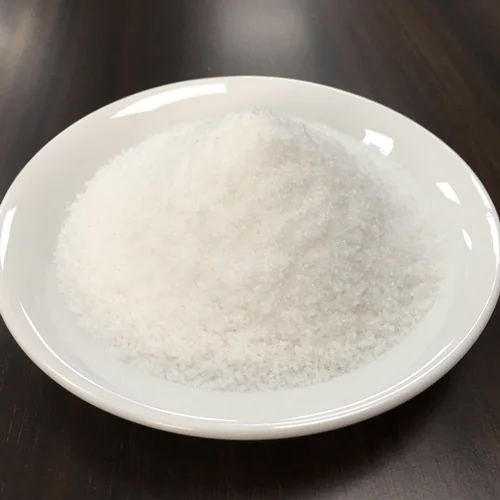
Anionic polyacrylamide is a water-soluble polymer with long molecular chains and polar functional groups. These characteristics allow it to:
- Adsorb suspended sand and silt particles
- Bridge fine particles together
- Reduce electrostatic repulsion
- Form large, dense flocs
As a result, the flocculation speed is fast, the settling performance is good, and the treated water becomes clear.
For most sand washing wastewater, an anionic PAM with a molecular weight around 12 million is recommended. The exact model should be confirmed through on-site testing.
2. Role of PAM in Sludge Compaction and Dewatering
After flocculation, sludge impurities can be efficiently dewatered using a filter press. PAM helps form compact and strong flocs, allowing sludge to be pressed into a solid mud cake with lower moisture content.
In practical operation:
- PAM solution is fully mixed with wastewater in a premix tank
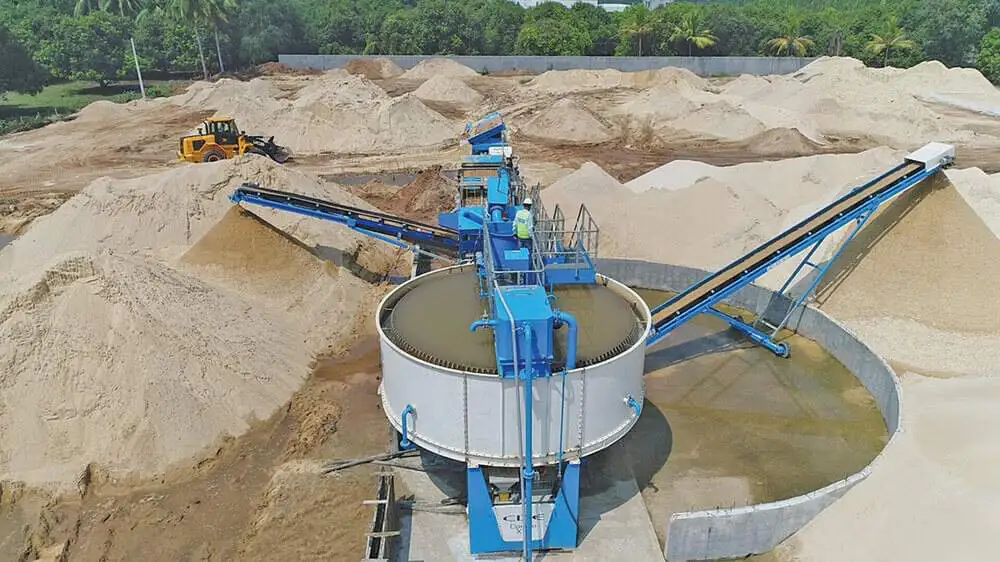
- The mixture flows into the first sedimentation tank for mud–water separation
- Dense sludge settles at the bottom and is easy to remove
- Clarified water overflows into the second sedimentation tank for further clarification
This process ensures tight sludge compaction and stable solid–liquid separation.
3. Sand Washing Wastewater Recycling Process
After secondary sedimentation, clarified water flows into a clear water tank. The treated water can then be reused in the sand washing process, reducing freshwater consumption and operating costs.
This closed-loop treatment method improves water recycling efficiency and supports environmentally friendly sand production.
4. Selection Notes for Best Treatment Results
To achieve optimal performance, attention should be given to:
- Proper PAM type (anionic or nonionic)
- Suitable molecular weight (commonly ~12 million)
- Correct dosing and mixing
- Stable hydraulic conditions
Overdosing or incorrect product selection may reduce treatment efficiency or increase costs. Trial tests are always recommended before full-scale application.
Conclusion
In sand washing wastewater treatment, anionic polyacrylamide plays a key role in fast flocculation, clear water separation, and effective sludge compaction. With proper selection and correct process control, sludge can be easily dewatered, and treated water can be recycled for reuse.
This approach not only improves treatment efficiency but also reduces water consumption and supports sustainable sand washing operations.


