
In sewage treatment, using a single water purification agent often fails to achieve stable and efficient results. In practical applications, polyaluminum chloride (PAC) and polyacrylamide (PAM) are usually used in combination, while single-agent treatment is relatively rare.
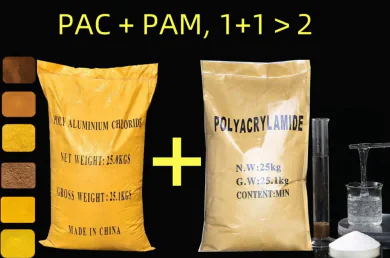
The combined use of PAC and PAM can significantly improve flocculation efficiency, sedimentation speed, and overall treatment performance.
1. Limitations of Using Polyaluminum Chloride Alone
When polyaluminum chloride is used alone, flocs can indeed be formed in the water. However, these flocs are often:
- Small and loose
- Slow to settle
- Easily suspended or floating
- Prone to drifting with water flow
As a result, the treated water often remains turbid, and sedimentation efficiency is poor. This makes the effect of using PAC alone unsatisfactory in many sewage treatment scenarios.
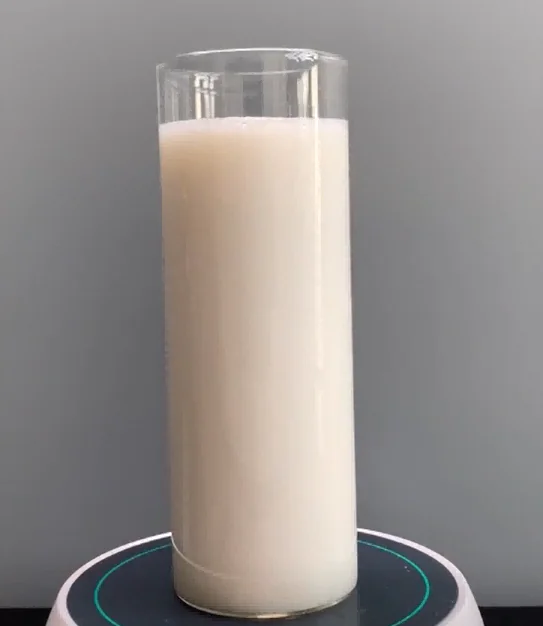
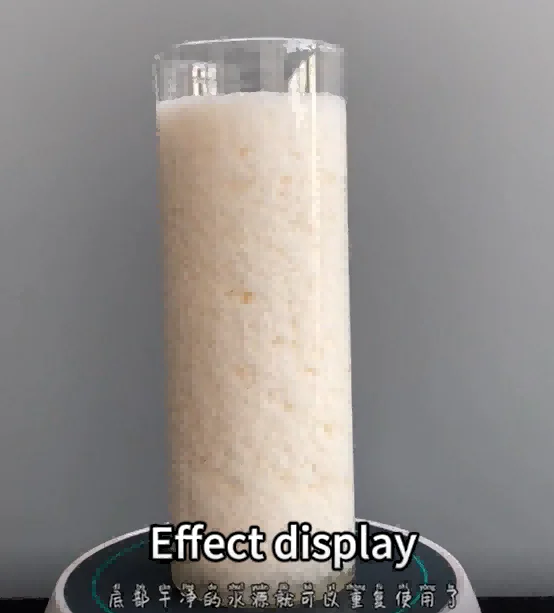
2. Performance of Polyacrylamide When Used Alone
Polyacrylamide mainly acts as a flocculant and sedimentation aid in water treatment.
When PAM is used alone:
- If the wastewater pH is between 6–9, PAM can often achieve good treatment results
- If the pH is outside this range or the water quality is complex, the flocculation effect may be unstable or insufficient
This shows that PAM is highly effective, but its performance strongly depends on water quality conditions, especially pH.
3. Key Roles of Polyaluminum Chloride in Combined Use
The function of polyaluminum chloride in combined treatment can be summarized in two main points:
3.1 pH Adjustment
PAC helps adjust the wastewater pH into the optimal range of 6–9, creating suitable conditions for the subsequent use of polyacrylamide and other flocculants.
3.2 Coagulation and Floc Formation
After PAC is added, coagulation occurs and primary flocs form in the water. These flocs serve as a foundation for further flocculation.
When PAM is added afterward, it quickly bridges and strengthens these flocs, forming larger and denser aggregates that settle rapidly.
4. Correct Dosing Sequence and Operation Notes
For best performance and cost efficiency, the correct dosing method is critical:
- Dissolve PAC and PAM separately
- Add the PAC solution first to achieve coagulation and pH adjustment
- Then add the PAM solution to enhance flocculation and settling
⚠️ Important:
PAC and PAM should never be mixed together during dissolution. Premixing will cause chemical interaction, reduce effectiveness, and increase chemical consumption.
This sequential dosing method provides the best treatment effect and is also the most economical approach.
Conclusion
In sewage treatment, the combined use of polyaluminum chloride and polyacrylamide is far more effective than using either agent alone. PAC prepares the water by adjusting pH and forming primary flocs, while PAM strengthens flocculation and accelerates sedimentation.
By using the correct dosing sequence and proper operating conditions, treatment efficiency can be greatly improved, and chemical costs can be reduced.