Skip to content
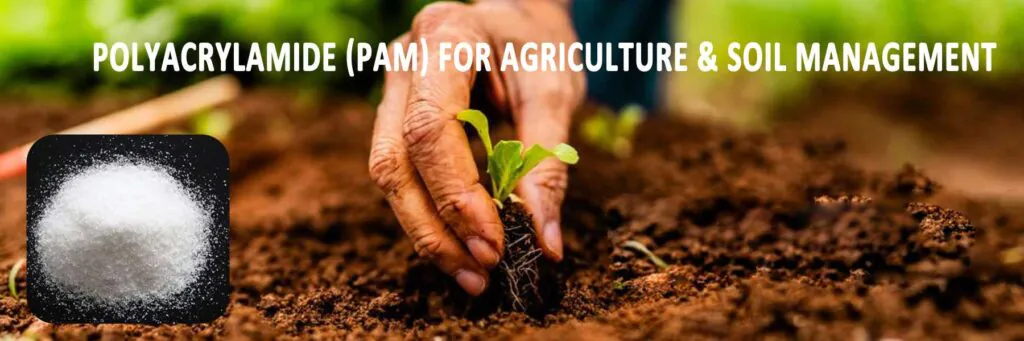
Polyacrylamide (PAM) is a high–molecular weight, water-soluble polymer widely used as a soil conditioner and soil stabilization agent. It is commonly applied in agriculture, horticulture, and land reclamation to improve soil structure, reduce erosion, and enhance water infiltration.
Unlike fertilizers, which supply nutrients, polyacrylamide soil conditioner improves the physical properties of soil, making it more stable, productive, and sustainable over time.
How Polyacrylamide Works in Soil Conditioning
The effectiveness of PAM as a soil conditioner comes from its long molecular chains and strong particle-binding ability. When dissolved in water and applied to soil, PAM interacts with soil minerals and organic matter through electrostatic attraction and hydrogen bonding. This interaction forms a flexible polymer network that stabilizes soil aggregates.
Flocculation of Fine Particles
PAM causes dispersed clay and silt particles to combine into larger, heavier aggregates. These aggregates are much more resistant to detachment during rainfall or irrigation, which is critical for erosion-prone farmland and slopes.
Surface Stabilization
By forming a thin, invisible polymer film on the soil surface, PAM prevents crusting and sealing. This improves air exchange and allows water to move more freely into the soil profile.
Improved Water Infiltration and Retention
PAM-treated soil absorbs water more efficiently and retains moisture for a longer period. This reduces irrigation frequency and helps crops tolerate dry conditions.
Reduced Runoff and Sediment Loss
Field studies show that PAM can reduce sediment runoff by 80–95%, significantly improving downstream water quality and minimizing nutrient loss.
Types of Polyacrylamide for Soil Use
| Type | Charge | Description | Typical Applications |
|---|---|---|---|
| Anionic PAM | Negative | Most commonly used; environmentally safe | Agriculture, irrigation, erosion control |
| Nonionic PAM | Neutral | Mild interaction with soil | Horticulture, turf, hydroseeding |
| Cationic PAM | Positive | Strong charge; potential toxicity | Industrial wastewater only |
Anionic polyacrylamide is the preferred polyacrylamide soil conditioner for agricultural and environmental use because it is non-toxic, highly effective, and compatible with natural soils.
Application Methods for Polyacrylamide Soil Conditioner
Surface Spray or Broadcasting
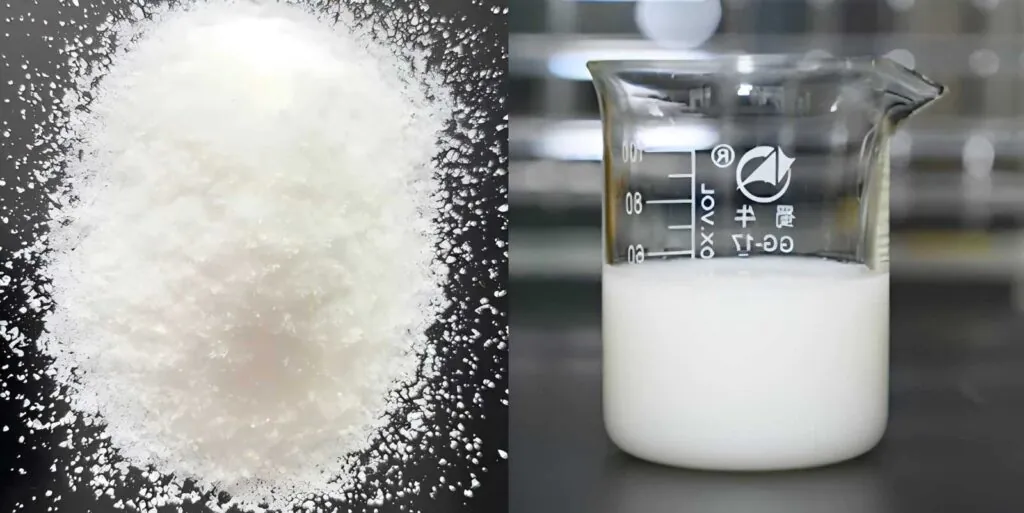
PAM powder or solution is applied directly to the soil surface at 2–5 kg/ha before rainfall or irrigation. This method stabilizes topsoil and reduces erosion on newly cultivated land.
Irrigation Water Injection
PAM is dissolved in irrigation water at a concentration of 1–10 mg/L and applied through furrow or sprinkler systems. This is one of the most effective methods for controlling runoff and sediment loss in farmland.
Hydroseeding and Vegetation Restoration
In slope protection and land reclamation projects, PAM is mixed with mulch and seeds. It binds soil particles, improves seed adhesion, and supports early vegetation establishment.
Soil Mixing
For long-term soil improvement, PAM can be incorporated into the top 5–10 cm of soil to enhance aggregate stability and infiltration across multiple growing seasons.
Optimal Application Rates
| Application Scenario | PAM Dosage | Purpose |
|---|---|---|
| Irrigated farmland | 1–10 mg/L | Reduce erosion and runoff |
| Rain-fed fields | 2–5 kg/ha | Improve soil structure |
| Hydroseeding | 1–2 kg per 1000 L slurry | Enhance seed adhesion |
| Sandy soils | 5–10 kg/ha | Improve moisture retention |
| Construction sites | 10–20 kg/ha | Stabilize disturbed soil |
Correct dosage is essential to achieve maximum soil conditioning performance while ensuring environmental safety.
Key Benefits of Using Polyacrylamide Soil Conditioner
Improved Soil Structure
PAM promotes stable soil aggregation, prevents surface crusting, and increases porosity for healthier root development.
Enhanced Water Efficiency
Better infiltration and moisture retention reduce irrigation demand and limit nutrient leaching.
Effective Erosion Control
Soil loss can be reduced by up to 95%, protecting fertile topsoil and nearby water bodies.
Improved Crop Productivity
Stronger soil structure and balanced moisture lead to higher germination rates, healthier roots, and increased yields.
Environmental Safety
Anionic PAM is non-toxic to plants, animals, and soil microorganisms and degrades naturally through sunlight and microbial activity.
Environmental and Safety Considerations
Although polyacrylamide itself is safe, its monomer (acrylamide) is toxic in pure form. For environmental applications:
- Ensure residual acrylamide content is below 0.05%
- Use certified agricultural-grade PAM only
- Avoid cationic PAM in open-water environments
When applied correctly, polyacrylamide soil conditioner fully supports sustainable agriculture and environmental protection.
Field Research and Case Studies
- USDA studies report sediment reduction of up to 94% in PAM-treated irrigation furrows
- Field trials in China and Australia show 25% higher infiltration rates and 10–15% yield increases
- Long-term use improves soil microbial balance and organic matter retention
These results confirm that PAM is a proven, evidence-based solution for modern soil management.
Conclusion
Polyacrylamide soil conditioner represents a major advancement in sustainable soil management. Through flocculation, surface stabilization, and moisture retention, PAM improves soil structure, prevents erosion, and supports long-term soil fertility.
As water conservation and sustainable agriculture become increasingly important, polyacrylamide soil conditioner is emerging as an essential tool for farmers, agronomists, and environmental engineers worldwide.