Skip to content
Polyaluminium chloride (PAC) appears across more industrial wastewater applications than almost any other single coagulant — not because it’s a universal solution, but because its combination of rapid hydrolysis, high charge density, and broad pH operating range makes it genuinely effective across a wide range of inorganic and organic-dominated wastewater streams. This article covers six of the most common industrial applications, with specific treatment process details and performance benchmarks for each.

1. Steel Industry Wastewater
Wastewater profile: High suspended solids (iron oxide scale, ore fines, slag particles), heavy metal ions (Zn²⁺, Pb²⁺, Mn²⁺), colloidal iron compounds, high continuous flow volume.
Treatment approach: PAC at 0.5–1.5‰ of flow volume dosed into a rapid mix chamber before lamellar or conventional sedimentation. PAC’s polynuclear aluminum species rapidly neutralize the negative surface charge on iron fines, forming dense floc within 30–60 seconds. For streams above pH 9.5 from lime-neutralized pickling discharge, PAFC outperforms standard PAC by maintaining effective coagulation in the high-alkalinity range.
Results:
- Turbidity reduction > 85%
- Zn²⁺, Pb²⁺ removal: 70–90% via co-precipitation with Al(OH)₃ floc
- Cr³⁺ removal: > 85%
2. Dyeing and Textile Wastewater Decolorization
Wastewater profile: High color intensity from reactive, disperse, and vat dye residues; COD typically 800–3,000 mg/L; fluctuating pH from acidic dyeing baths and alkaline scouring discharge.
Treatment approach: PAC at 0.8–1.2‰ combined with pH adjustment to 6.5–7.5 before dosing. PAC forms Al(OH)₃ colloids that adsorb dye chromophores — particularly reactive and acid dye molecules — through surface adsorption and charge neutralization. Air flotation combined with PAC coagulation outperforms gravity sedimentation for dyeing wastewater because the low-density dye-floc aggregates float more effectively than they settle.
Results:
- Color removal rate: up to 90%
- COD reduction: 40–60% in coagulation stage
- Improved effluent consistency for downstream biological treatment
3. Polyester and Chemical Wastewater Pretreatment
Wastewater profile: Extremely high COD (10,000–30,000 mg/L) from terephthalic acid, ethylene glycol esters, and polymer intermediates; macromolecular organics that resist biological degradation without pretreatment.
Treatment approach: PAC at 0.3–0.5‰ combined with anionic PAM at 2–5 mg/L. PAC neutralizes colloidal charge on large organic particles; PAM bridges neutralized particles into settleable floc. This combination achieves initial COD reduction sufficient to improve B/C ratio from typically < 0.1 to > 0.3, creating the biodegradability conditions needed for downstream iron-carbon micro-electrolysis and UASB anaerobic treatment to function effectively.
Results:
- Initial COD reduction: ~40%
- Improved B/C ratio enabling biological treatment
- Reduced organic loading protecting downstream biological systems
4. Daily Chemical and Surfactant Wastewater
Wastewater profile: High surfactant content causing persistent foam; emulsified oils and fats; strong fluctuations in COD (5,000–15,000 mg/L) and pH with production cycles.
Treatment approach: PAC at 0.2–0.4‰ for coagulation-sedimentation as primary pretreatment before biological treatment. Surfactant-laden wastewater often requires a defoamer addition alongside PAC to prevent foam generation during rapid mixing. PAC destabilizes emulsified oil droplets and surfactant-stabilized colloids, reducing organic load entering the biological system to manageable levels.
Results:
- COD reduction from ~11,000 mg/L to ~2,500 mg/L in coagulation stage
- Emulsified oil removal > 80%
- Biological system load reduced to stable operating range
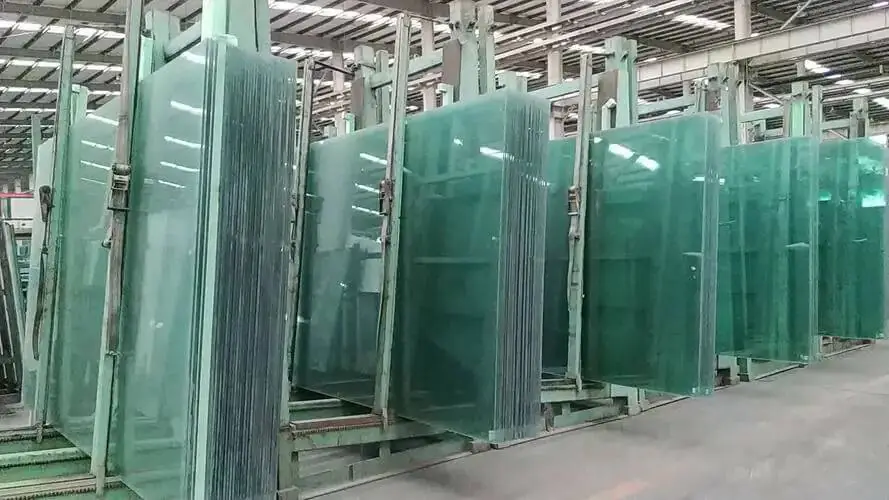
5. Glass Processing Wastewater
Wastewater profile: Strongly alkaline (pH > 10), ultrafine glass grinding particles (0.1–10 µm), near-zero biodegradability, high abrasion risk to downstream membranes.
Treatment approach: PAFC (polyaluminium ferric chloride) rather than standard PAC — the iron component extends effective coagulation to pH 10.5–11.0 where standard PAC loses effectiveness. PAFC at 100–300 mg/L neutralizes alkalinity in the dosing zone, then iron-aluminum mixed hydroxide floc sweeps ultrafine glass particles into dense, fast-settling aggregates. Effluent at ≤ 5 NTU protects downstream ultrafiltration membranes from abrasive particle damage.
Results:
- SS removal > 90%
- Effluent turbidity ≤ 5 NTU
- Stable ultrafiltration operation enabled
6. High-Fluoride Industrial Wastewater
Wastewater profile: Semiconductor manufacturing, etching, and surface treatment discharge with fluoride concentrations typically 10–100 mg/L — well above the discharge limit of 1.0–2.0 mg/L F⁻ in most jurisdictions.
Treatment approach: PAC provides dual fluoride removal mechanisms. Al³⁺ ions react directly with F⁻ to form sparingly soluble aluminum fluoride complexes (AlF₃, Al(OH)xFy species), while Al(OH)₃ floc adsorbs additional fluoride from solution. Optimize pH to 6.0–7.0 for maximum fluoride removal — below pH 5.5, aluminum speciation shifts away from the hydroxide forms that adsorb fluoride most effectively. PAC is typically combined with lime pre-treatment for high-fluoride streams (> 50 mg/L) to reduce fluoride concentration before the PAC polishing stage.
Results:
- Fluoride reduction from 14.6 mg/L to 0.4–1.0 mg/L
- Effluent meets discharge and reuse standards
- Lower sludge volume than lime-only treatment
Application Summary
| Industry | PAC Dosage | Key Pollutant Removed | Typical Result |
|---|---|---|---|
| Steel / metallurgical | 0.5–1.5‰ | Iron fines, heavy metals | Turbidity < 10 NTU, metals 70–90% removal |
| Dyeing / textile | 0.8–1.2‰ | Color, COD | Color removal up to 90% |
| Polyester / chemical | 0.3–0.5‰ | Macromolecular COD | ~40% COD reduction, improved B/C |
| Daily chemical | 0.2–0.4‰ | Surfactants, emulsified oil | COD from 11,000 to 2,500 mg/L |
| Glass processing | 100–300 mg/L (PAFC) | Ultrafine glass particles | Turbidity ≤ 5 NTU |
| High-fluoride | Adjusted to fluoride load | Fluoride | F⁻ from 14.6 to 0.4–1.0 mg/L |
FAQ
Q: How do I decide whether to use PAC alone or PAC combined with PAM for my industrial wastewater?
A: PAC alone handles charge neutralization and micro-floc formation. Adding anionic PAM at 1–5 mg/L after PAC bridges micro-flocs into larger, faster-settling aggregates — particularly valuable when clarifier residence time is limited or when suspended solids load is high. For simple, moderate-turbidity streams, PAC alone is sufficient. For high-COD, high-SS industrial wastewater or applications targeting effluent turbidity below 10 NTU, the PAC + PAM combination consistently delivers better results at lower total chemical cost than increasing PAC dose alone.
Q: What is the difference between PAC and PAFC, and when should I choose PAFC over standard PAC?
A: PAFC incorporates ferric iron alongside aluminum in its polynuclear structure, extending effective coagulation to pH 9–11 where standard PAC loses performance. Choose PAFC when your wastewater pH consistently exceeds 9.5 — glass processing, lime-treated streams, alkaline cleaning discharge — or when you need denser floc and faster settling than PAC alone provides. For wastewater below pH 9.0, standard PAC is more cost-effective.
Q: How often should I retest PAC dosage for industrial wastewater treatment?
A: Retest whenever influent characteristics change significantly — new raw material inputs, process changes, seasonal variation in source water, or unexplained shifts in treatment performance. For stable continuous industrial processes, quarterly jar testing is a reasonable minimum. For variable batch processes or operations with frequent raw material changes, monthly testing keeps dosage optimization current with actual wastewater conditions.
PAC’s Versatility Comes From Matching Grade and Dosage to Each Application
The same chemical — polyaluminium chloride — handles steel plant suspended solids, textile dye removal, fluoride precipitation, and high-pH glass wastewater treatment because the underlying coagulation mechanisms adapt across these different conditions. What changes between applications is grade selection (standard PAC versus PAFC), dosage, pH management, and whether PAM combination is needed. Getting these variables right for your specific wastewater is what determines whether PAC delivers the treatment performance its chemistry is capable of.
HyChron supplies PAC and PAFC for industrial wastewater applications across all six sectors described above, with batch-specific quality documentation and technical support for process-specific dosage optimization. Contact our team for product specifications or an application-specific recommendation.