 Skip to content
Glass processing wastewater is one of those streams that catches facilities off guard — it looks relatively simple compared to organic industrial effluent, but its combination of extreme alkalinity, ultrafine abrasive particles, and near-zero biodegradability makes conventional treatment approaches fail quickly. We’ve worked with flat glass, optical glass, and architectural glass processing operations, and the treatment challenge is consistently the same: standard coagulation chemistry that performs reliably on most wastewater simply doesn’t hold up at pH above 10. This article explains why, and what actually works.
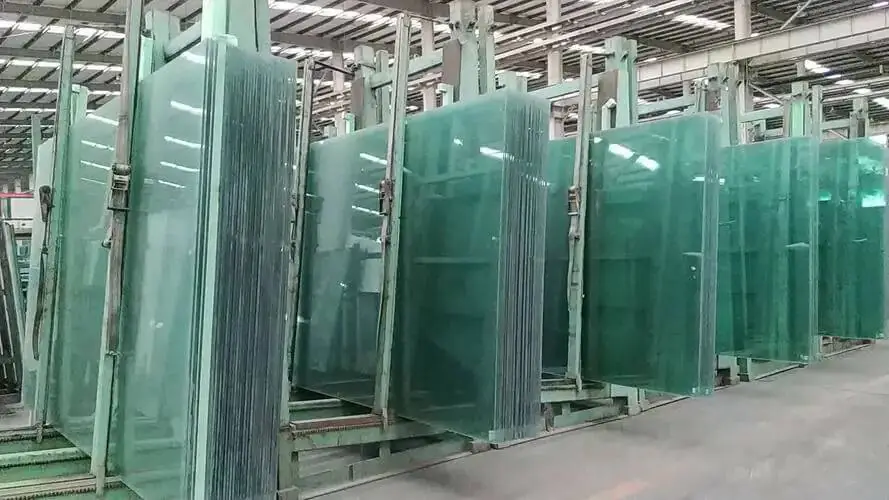
What Makes Glass Processing Wastewater Difficult to Treat
Glass processing wastewater differs fundamentally from organic industrial effluent, and that difference determines everything about how it needs to be treated.
During cutting, grinding, polishing, and edge-finishing operations, glass generates extremely fine particulate — particles in the 0.1–10 µm size range that remain suspended almost indefinitely in water. These particles carry negative surface charge and resist settling without chemical intervention. Unlike organic suspended solids, they don’t biodegrade, don’t flocculate naturally, and their density (approximately 2.5 g/cm³) is high enough to cause rapid abrasion in pumps, pipes, and membranes if allowed to pass through the treatment system uncaptured.
The alkalinity comes primarily from the glass itself — silica and metal oxide compounds dissolve slowly into the process water — and from alkaline grinding coolants and polishing slurries used in fabrication. Wastewater pH routinely exceeds 10–11, and in optical glass polishing operations using cerium oxide slurries, pH can reach 11–12. This extreme alkalinity creates two specific problems for chemical coagulation: it suppresses the hydrolysis chemistry of standard aluminum-based coagulants, and it means that the coagulant must also partially neutralize alkalinity before it can effectively destabilize suspended particles.
Biological treatment is not a viable option for this wastewater. There is essentially no biodegradable organic fraction — BOD/COD ratios are typically below 0.1 — and the glass particle load would abrade biological reactor components and membrane systems rapidly. Chemical coagulation is the only practical core treatment technology.
| Wastewater Characteristic | Typical Range | Treatment Implication |
|---|---|---|
| pH | 9.5–12.0 | Limits standard PAC effectiveness; requires PAFC or modified coagulant |
| Suspended Solids | 500–5,000 mg/L | High coagulant demand; requires optimized dosing |
| Turbidity | 200–2,000 NTU | Target ≤ 5 NTU for membrane protection |
| BOD/COD Ratio | < 0.1 | Biological treatment ineffective |
| Particle Size | 0.1–10 µm | Ultrafine; requires sweep flocculation rather than charge neutralization alone |
| Abrasion Risk | High | Equipment selection must account for particle hardness |
Why Standard PAC Underperforms and PAFC Is the Better Choice
Standard polyaluminium chloride (PAC) performs reliably across a pH range of approximately 6.0–9.0. Within that range, aluminum hydrolysis produces Al(OH)₃ and polynuclear aluminum species that effectively neutralize particle surface charge and sweep fine solids into settleable flocs. Above pH 9.5, the chemistry changes: aluminum hydroxide begins to dissolve into aluminate ions (Al(OH)₄⁻) rather than forming solid hydroxide precipitates. The sweep flocculation mechanism that makes PAC effective is suppressed, coagulant demand increases sharply, and residual turbidity after settling climbs even as chemical dose increases.
Polyaluminium ferric chloride (PAFC) — sometimes described as iron-modified PAC — incorporates ferric iron (Fe³⁺) into the polynuclear coagulant structure alongside aluminum. This modification extends effective coagulation performance into the pH 9–11 range through two mechanisms that standard PAC lacks at high alkalinity.
First, iron hydroxide precipitates (Fe(OH)₃) form over a wider pH range than aluminum hydroxide and remain as solids rather than converting to soluble species at pH above 9. This means the sweep flocculation mechanism stays active in alkaline conditions where aluminum alone would be ineffective. Second, the iron-aluminum mixed hydroxide flocs are denser and more compact than aluminum hydroxide flocs alone, which improves settling velocity in clarifiers and produces a thicker, more concentrated sludge that is easier to dewater and transport.
Performance comparison at pH 10–11:
| Parameter | Standard PAC | PAFC |
|---|---|---|
| Effective pH Range | 6.0–9.0 | 6.0–11.0 |
| Floc Density | Moderate | High |
| Settling Velocity | 0.3–0.8 m/h | 0.8–1.5 m/h |
| Residual Turbidity (after settling) | 15–40 NTU | 3–8 NTU |
| Sludge Volume Index | Higher | Lower |
| Typical Dosage at pH 10+ | 400–600 mg/L | 100–300 mg/L |
The dosage advantage is particularly significant in practice. Achieving ≤ 5 NTU effluent turbidity with standard PAC at pH 10+ often requires doses above 400 mg/L — at which point aluminum residuals in the treated water become a concern and sludge volume increases substantially. PAFC achieves equivalent or better turbidity removal at 100–300 mg/L, reducing chemical cost, sludge generation, and downstream treatment burden simultaneously.
How PAFC Removes Glass Particles: The Mechanism in Detail
Understanding the removal mechanism helps explain why process sequence and mixing conditions matter as much as chemical selection.
Step 1 — Partial Alkalinity Neutralization When PAFC contacts high-pH glass wastewater, the aluminum and iron species hydrolyze and consume hydroxide ions, partially reducing pH in the dosing zone. This local pH reduction — typically dropping the dosing zone from pH 10.5 to pH 9.0–9.5 — shifts the coagulant speciation toward active polynuclear forms that are far more effective at particle destabilization than either the original Al/Fe salts or their fully hydrolyzed hydroxide forms.
Step 2 — Charge Neutralization and Particle Destabilization The polynuclear Al-Fe hydroxide species carry positive charge and adsorb onto the negatively charged glass particle surfaces, collapsing the electrical double layer that keeps particles dispersed. This charge neutralization reduces the electrostatic repulsion between particles, allowing them to approach each other closely enough for van der Waals attraction to take over.
Step 3 — Sweep Flocculation As Al(OH)₃ and Fe(OH)₃ precipitate throughout the water volume, they physically entrap glass particles in a three-dimensional hydroxide gel network — a process called sweep flocculation. This mechanism captures particles that escaped charge neutralization, including the finest sub-micron glass fragments that are hardest to coagulate by charge neutralization alone. The resulting floc is dense and settles rapidly due to the high density of both the glass particles and the iron hydroxide component.
Step 4 — Floc Growth and Sedimentation Gentle flocculation mixing (G value 20–50 s⁻¹ for 5–10 minutes) after rapid mixing allows micro-flocs to aggregate into settleable particles. The dense Fe-Al-glass composite flocs achieve settling velocities of 0.8–1.5 m/h, allowing clarifier designs that are compact relative to what lighter organic flocs require.

Recommended Treatment Process for Glass Processing Wastewater
The treatment train we recommend for most glass processing operations follows a straightforward sequence, with each stage designed around the specific characteristics of the wastewater.
Equalization Tank Glass processing operations generate highly variable wastewater flow and concentration depending on production schedule — polishing operations, cooling water discharge, and coolant changes all contribute at different rates. An equalization basin sized for 4–8 hours of average flow dampens these variations before the coagulation stage. Consistent feed conditions allow PAFC dosing to be optimized rather than continuously chased across a fluctuating load.
PAFC Dosing and Rapid Mixing Dose PAFC at 100–300 mg/L into the rapid mix chamber. Rapid mixing at G value 200–400 s⁻¹ for 30–60 seconds distributes the coagulant through the water volume before hydrolysis products precipitate unevenly. Dosing point location matters — inject directly into a zone of high turbulence, not into a quiescent feed pipe where the coagulant will react with only a fraction of the flow before entering the mixing zone.
Flocculation Chamber Reduce mixing intensity to G value 20–50 s⁻¹ for 8–15 minutes to allow floc growth without breaking the fragile floc structures that form after rapid mixing. Tapered mixing — higher G value at the inlet, lower at the outlet — produces more uniform floc size distribution than constant-intensity mixing.
Sedimentation Inclined plate or tube settlers achieve clarified effluent turbidity of ≤ 5 NTU with properly coagulated glass wastewater, with surface overflow rates of 1.0–2.0 m/h depending on floc characteristics and temperature. Effluent at ≤ 5 NTU is within the typical feed water quality specification for ultrafiltration membranes — protecting membrane elements from the abrasive glass particles that would otherwise cause rapid flux decline and mechanical damage.
Ultrafiltration / Water Reuse Clarified effluent meeting ≤ 5 NTU turbidity and low suspended solids can be recycled to grinding and cooling operations after ultrafiltration polishing, significantly reducing fresh water consumption. Water reuse rates of 70–85% are achievable in well-designed closed-loop systems, which matters both for operating cost and for facilities in water-stressed regions.
Dosage Reference and Performance Benchmarks
| Parameter | Typical Value |
|---|---|
| PAFC Dosage Range | 100–300 mg/L |
| Optimal Dosing pH | 9.0–11.0 |
| Rapid Mix Intensity (G value) | 200–400 s⁻¹ |
| Flocculation Time | 8–15 minutes |
| Clarifier Overflow Rate | 1.0–2.0 m/h |
| SS Removal Efficiency | > 90% |
| Effluent Turbidity Target | ≤ 5 NTU |
| Sludge Moisture (after dewatering) | 70–80% |
| Water Reuse Rate (with UF) | 70–85% |
Actual dosage within the 100–300 mg/L range depends on influent suspended solids concentration, pH, and target effluent quality. We recommend jar testing at three dosage points — 100, 200, and 300 mg/L — using actual facility wastewater at the target pH range to confirm optimal dose before commissioning full-scale dosing equipment.
What to Look for When Selecting PAFC for Glass Wastewater
Not all PAFC products perform equally in high-alkalinity glass wastewater, and procurement decisions based solely on price per kilogram often result in higher total treatment cost. Three product quality factors matter most in this application.
Iron-to-Aluminum Ratio Stability The Fe:Al ratio in PAFC directly determines its performance range at high pH. Products with Fe:Al molar ratios of 0.3–0.5 deliver the best balance of alkaline-range effectiveness and floc density for glass wastewater. Suppliers should provide batch-specific certificates of analysis confirming iron and aluminum content — inconsistent batch-to-batch ratios require constant dosage recalibration and produce variable treatment results.
Basicity and Hydrolysis Degree PAFC basicity — the ratio of hydroxyl to total metal content — affects how the coagulant behaves during rapid mixing. Products with basicity of 60–80% hydrolize at a rate suited to glass wastewater treatment; lower basicity products hydrolize too slowly at high pH and may require longer rapid mix times.
Corrosion Impact on Equipment PAFC is acidic in concentrated form (typical solution pH 2–4) and requires chemical-resistant storage tanks (HDPE or lined FRP), dosing pumps with PTFE or ceramic components, and chemical-resistant pipe materials. Stainless steel grade 316L is generally acceptable for dilute solution contact; carbon steel corrodes rapidly and is not suitable. Confirm material compatibility with your supplier before equipment specification.
FAQ
Q: How do I determine the correct PAFC dosage for my specific glass processing wastewater?
A: Run a jar test with your actual wastewater at three dosages — 100, 200, and 300 mg/L — at your typical influent pH. After rapid mixing and 10 minutes of gentle stirring, measure settled turbidity at 30 minutes. The lowest dose achieving ≤ 5 NTU settled turbidity is your target. Retest seasonally as wastewater characteristics change with production type and volume.
Q: What is the difference between standard PAC and PAFC, and when should I use each?
A: Standard PAC works well from pH 6–9 and is lower cost. PAFC adds iron to extend effective coagulation into pH 9–11, which is where glass processing wastewater typically falls. If your wastewater pH is consistently below 9.5, standard PAC with pH adjustment may be more economical. Above pH 9.5, PAFC outperforms standard PAC clearly enough to justify the price difference through lower dosage requirements and better effluent quality.
Q: How should PAFC be stored and what is its shelf life?
A: Liquid PAFC is stable for 12 months in sealed HDPE or lined FRP tanks, away from direct sunlight and freezing temperatures. Keep storage temperature between 5–40°C — freezing causes precipitation that is difficult to redissolve. Inspect tanks quarterly for sediment buildup. Always check the batch certificate for manufacture date and iron/aluminum content before accepting delivery.
PAFC Makes Glass Wastewater Treatment Reliable and Reuse-Ready
Glass processing wastewater doesn’t respond to standard treatment chemistry — its combination of extreme alkalinity and ultrafine abrasive particles requires a coagulant specifically suited to high-pH operation. PAFC addresses both challenges: its iron-aluminum mixed hydroxide chemistry remains active above pH 10 where standard PAC fails, and the denser flocs it produces protect downstream ultrafiltration membranes and support water reuse targets. For glass processing facilities targeting stable effluent at ≤ 5 NTU and water reuse rates above 70%, PAFC is the most reliable chemical solution available.
HyChron supplies PAFC with consistent iron-to-aluminum ratios, batch-specific certificates of analysis, and technical support for dosage optimization. Contact our team for product specifications, sample requests, or a treatment recommendation based on your wastewater characteristics.


