Skip to content
Clean and safe water is essential for public health, industrial production, and environmental protection. When untreated or poorly treated water is used, it may contain suspended solids, metal ions, pathogens, and organic pollutants that pose serious health and operational risks.
To address these issues, coagulation and flocculation are widely applied as core chemical processes in both drinking water and wastewater treatment systems. These processes play a critical role in removing fine particles that cannot be separated by physical methods alone.
1. What Is Coagulation? (In Treatment Plants and Daily Life)
Coagulation is a rapid mixing process in which coagulants are added to raw or untreated water to destabilize suspended particles.
Common Coagulants Include:
- Polyaluminium chloride (PAC)
- Aluminium sulphate (alum)
- Ferric chloride
- Aluminium chlorohydrate
- Polymer-based coagulants
These chemicals neutralize the electrical charges on fine particles, allowing them to come closer and form micro-particles known as microflocs.
Interestingly, coagulation is not limited to industrial processes. A simple everyday example is sour milk, where a drop in pH destabilizes fat particles and causes them to coagulate.
polyaluminium chloride (PAC)
2. How Flocculation Works After Coagulation
Flocculation is the next and equally critical step following coagulation.
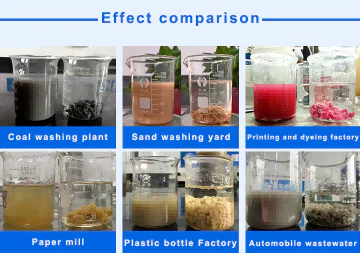
Once particles are destabilized, flocculants (usually polymers) are added to bind these particles together into larger, heavier flocs that can no longer remain suspended in water.
How Flocculants Work:
- Polymers carry charged functional groups
- They attract oppositely charged particles
- Long polymer chains create “bridges” between particles
- Large flocs form and settle or float easily
Coagulation and flocculation must work together. If coagulation fails, flocculation becomes ineffective.
polyacrylamide flocculant (PAM)
3. Types of Coagulants and Flocculants
Inorganic Coagulants
These are mainly metal salt–based chemicals, such as:
- Aluminium-based coagulants (PAC, alum)
- Iron-based coagulants (ferric chloride, PAFC)
They are widely used for turbidity removal, metal ion precipitation, and large-scale municipal systems.
Organic Flocculants
Organic flocculants are water-soluble polymers, either natural or synthetic, such as:
- Polyacrylamide (anionic, cationic, nonionic)
- Modified starch polymers
- Natural biopolymers
These polymers significantly enhance floc size, settling speed, and sludge dewatering performance.
Selection depends on:
- Water quality
- Treatment objective
- Cost-performance balance
4. Where Are Coagulants and Flocculants Applied?
Coagulation–flocculation technology is widely used across many sectors:
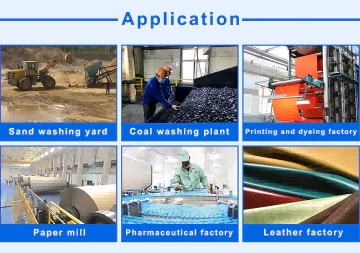
Typical Applications:
- Drinking water treatment
- Municipal sewage treatment
- Industrial wastewater (textile, steel, chemical, paper mills)
- Oil refinery and petrochemical effluent
- Sludge thickening and dewatering
Pollutants Removed:
- Heavy metal ions
- Suspended solids (TSS)
- Turbidity
- COD and dyes
- Emulsified oils
5. Natural Flocculants: Are They the Future?
Natural flocculants are gaining attention as environmentally friendly alternatives due to their renewability and biodegradability.
Common Natural Sources:
- Moringa oleifera
- Chitosan
- Okra extracts
- Plantago ovata
- Natural starch
Advantages:
- Biodegradable
- Non-toxic
- Renewable
- Low environmental impact
Limitations:
- Short shelf life
- Lower stability
- Inconsistent performance
- Limited industrial scalability
For now, synthetic polymers like PAM remain the most reliable choice for large-scale and industrial water treatment.
How to Choose the Right Coagulant or Flocculant (Buyer Insight)
For plant owners and procurement teams, the key factors include:
- Treatment target (SS, COD, metals, color)
- Water chemistry (pH, salinity, temperature)
- Sludge handling requirements
- Chemical consumption cost
- Supplier technical support
Conclusion
Coagulation and flocculation are fundamental and proven technologies in water and wastewater treatment. Understanding how coagulants and flocculants work, where they are applied, and how to select them properly allows treatment plants to achieve better water quality, lower operating costs, and stable compliance with discharge standards.
If you are looking for reliable coagulant and flocculant solutions for your water treatment system, selecting the right chemical and supplier is the first step toward long-term success.