Skip to content
Polyaluminum chloride (PAC) performance is directly related to its active ingredient — alumina (Al₂O₃). The alumina content usually ranges from 20% to 30%. Higher alumina content often means stronger coagulation ability. Therefore, testing alumina purity is essential before purchasing or using PAC products.
Understanding how PAC is tested and applied correctly helps ensure stable and efficient water treatment performance.
How to Test PAC Alumina Content
To determine PAC quality, alumina content must be measured through laboratory testing.
The common testing process includes:
- Dissolving the PAC sample in water
- Adding acid to decompose the polymer structure
- Performing titration with zinc chloride
- Analyzing ion concentration
- Calculating alumina content from titration data
This method follows industry standards. However, since it is a manual laboratory process, small deviations may occur.
Acceptable Testing Deviation
- Liquid PAC: deviation ≤0.1%
- Solid PAC: deviation ≤0.2%
If test results fall within this deviation range, the product is considered qualified. Minor variation does not mean poor quality. It is a normal laboratory tolerance.
How to Use Polyaluminum Chloride Correctly
Proper application is as important as purity testing.
1. Do Not Add PAC Directly
PAC should never be added directly in solid form. It must be dissolved first. Most users choose solid PAC for easier transport and storage. Before use, it must be fully dissolved.
Recommended Dissolution Ratio
Solid : Water = 1 : 5
After complete dissolution, further dilute to required working concentration.
Correct Concentration Control
It is recommended to prepare a 5%–10% aqueous solution for dosing.
Important notes:
- If concentration is too low (<1%), hydrolysis may occur and reduce effectiveness.
- If concentration is too high, it may cause waste and poor dispersion.
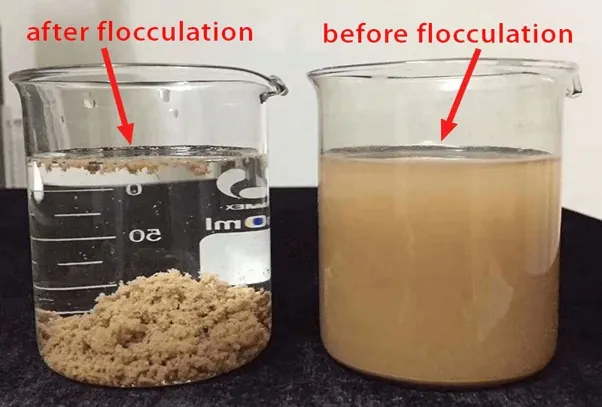
Proper concentration ensures stable flocculation performance.
Adjust Dosage Based on Water Quality
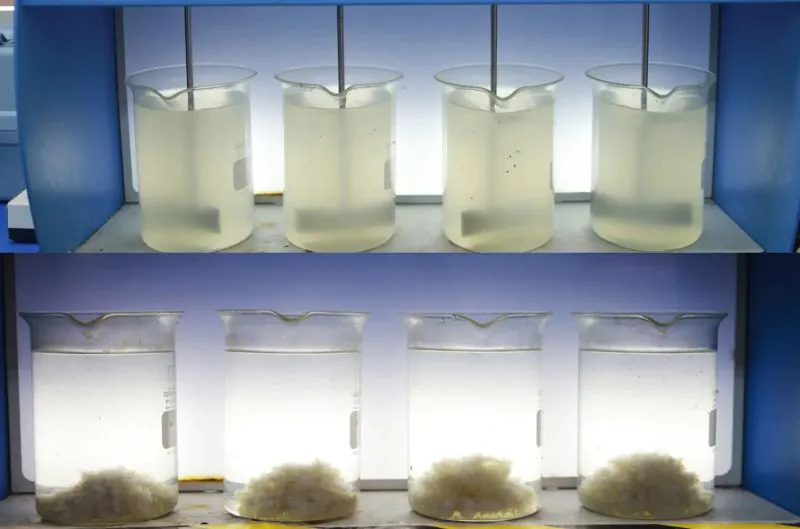
PAC dosage must be adjusted according to raw water conditions. Jar tests are recommended before large-scale application.
Signs of Incorrect Dosage
- Small flocs + high turbidity → Insufficient dosage
- Large floating flocs → Overdosage
Timely adjustment ensures stable sedimentation and optimal clarification.
Solid vs Liquid PAC Selection
Most plants prefer solid PAC because:
- Easier transportation
- Longer storage life
- Lower transport cost
Liquid PAC may offer convenience but has higher transport and storage limitations.
Choosing the right model depends on:
- Raw water turbidity
- Temperature
- Required alumina content
- Treatment process
Conclusion
PAC alumina content directly affects coagulation performance. Proper testing ensures product quality, while correct dissolution and dosage control guarantee stable treatment results.
Minor testing deviations are normal within industry standards. The key to successful PAC application lies in:
- Accurate alumina testing
- Proper dilution
- Correct concentration control
- Timely dosage adjustment
When applied correctly, polyaluminum chloride remains one of the most reliable and cost-effective coagulants in water treatment systems.