Skip to content
Calcium chloride is one of the most widely used inorganic salts in global industry. From deicing and oil drilling to food processing and construction, its performance is driven by a simple yet highly effective chemical structure.
This guide covers:
- The chemical formula and structure of calcium chloride
- Major production methods
- Core industrial applications
- Safety and handling considerations
What Is Calcium Chloride?
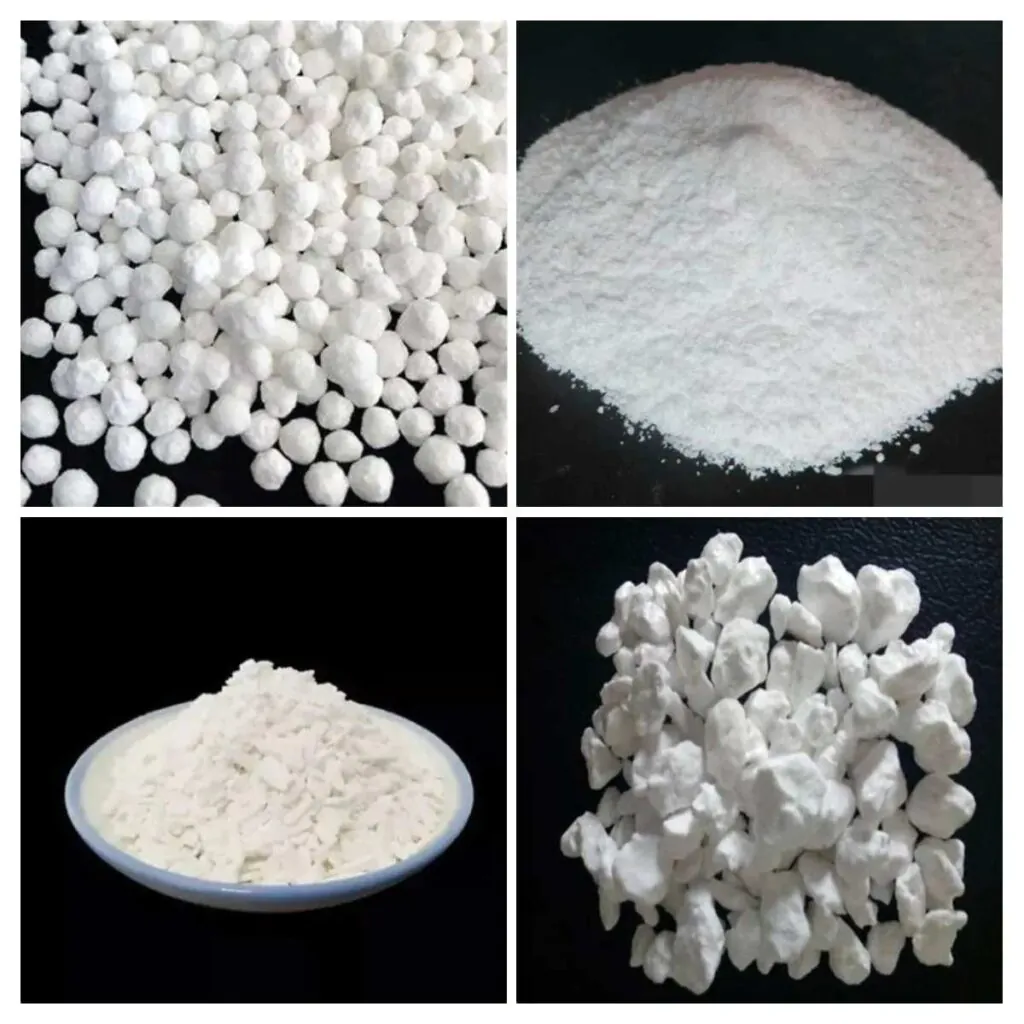
Calcium chloride (CaCl₂) is a white, crystalline inorganic salt. It is:
- Highly soluble in water
- Hygroscopic (absorbs moisture from air)
- Exothermic when dissolved (releases heat)
These properties make it highly effective for moisture control, freezing point depression, and industrial processing.
Chemical Formula and Structure
The chemical formula of calcium chloride is CaCl₂.
It consists of:
- One calcium ion (Ca²⁺)
- Two chloride ions (Cl⁻)
This ionic structure explains:
- High solubility in water
- Strong electrolyte behavior
- Efficient moisture absorption
Calcium chloride exists in several hydration forms, including:
- Anhydrous calcium chloride
- Calcium chloride dihydrate
- Other hydrated forms
The hydration state depends on production methods and storage conditions.
Production Methods of Calcium Chloride
Calcium chloride is produced through several industrial processes, depending on purity requirements and intended applications.
1. Solvay Process (Byproduct Method)
In the Solvay process for sodium carbonate production, calcium chloride is generated as a byproduct. Limestone reacts with sodium chloride and carbon dioxide, resulting in calcium chloride solution after processing.
This method is commonly used for large-scale industrial-grade production.
2. Limestone and Hydrochloric Acid Reaction
High-purity calcium chloride is produced by reacting:
- Limestone (CaCO₃)
- Hydrochloric acid (HCl)
This controlled reaction allows better impurity management and is suitable for:
- Food-grade applications
- Pharmaceutical-grade production
3. Natural Brine Processing
In some regions, natural brines contain high concentrations of calcium chloride. These brines are concentrated and purified to produce commercial calcium chloride products.
This method is often used where mineral-rich salt lakes are available.
Key Applications of Calcium Chloride
1. Deicing and Dust Control
Calcium chloride lowers the freezing point of water effectively and works at lower temperatures than many alternative salts.
It is widely used for:
- Road and highway deicing
- Airport runway maintenance
- Dust suppression on unpaved roads
Its hygroscopic property helps retain surface moisture, reducing airborne dust.

2. Oil and Gas Industry
Calcium chloride brine solutions are used in:
- Hydraulic fracturing
- Well completion fluids
- Workover operations
It provides density control and formation stability during drilling operations.
3. Construction Industry
In concrete applications, calcium chloride functions as a setting accelerator, especially in cold weather.
Benefits include:
- Faster curing
- Improved early strength
- Reduced construction delays
4. Food Industry
In food processing, calcium chloride serves as:
- A firming agent for canned vegetables
- A coagulant in cheese production
- A stabilizer in certain beverages
Food-grade material must meet strict purity standards.
5. Medical Applications
Medical-grade calcium chloride is used as:
- An electrolyte replenisher
- A treatment for hypocalcemia
- Support during cardiac resuscitation
These applications require highly controlled manufacturing standards.
Handling and Storage
Although widely used, calcium chloride requires proper handling:
- Store in moisture-proof packaging
- Keep in a dry environment
- Use protective gloves and eye protection
- Avoid inhalation of dust
Its hygroscopic and mildly corrosive nature requires standard industrial safety procedures.
Conclusion
Calcium chloride (CaCl₂) is a versatile inorganic compound with applications across:
- Ice melt products
- Oil drilling chemicals
- Food additives
- Agricultural and feed chemicals
- Construction materials
Understanding its formula, production methods, and industrial functionality allows buyers to select the appropriate grade for their specific needs.
As a professional manufacturer, we focus on:
- Stable purity levels
- Multiple grade options
- Consistent supply capacity
- Certified quality standards
If you are sourcing calcium chloride for industrial or specialty applications, feel free to contact us for detailed specifications and technical support.