Skip to content
Industries often struggle with slow sludge settling, high disposal costs, and inefficient water treatment processes. Without optimized solutions, plants lose money and risk regulatory penalties. Polyacrylamide (PAM) offers a reliable solution that accelerates solids separation, reduces sludge, and saves operational costs.
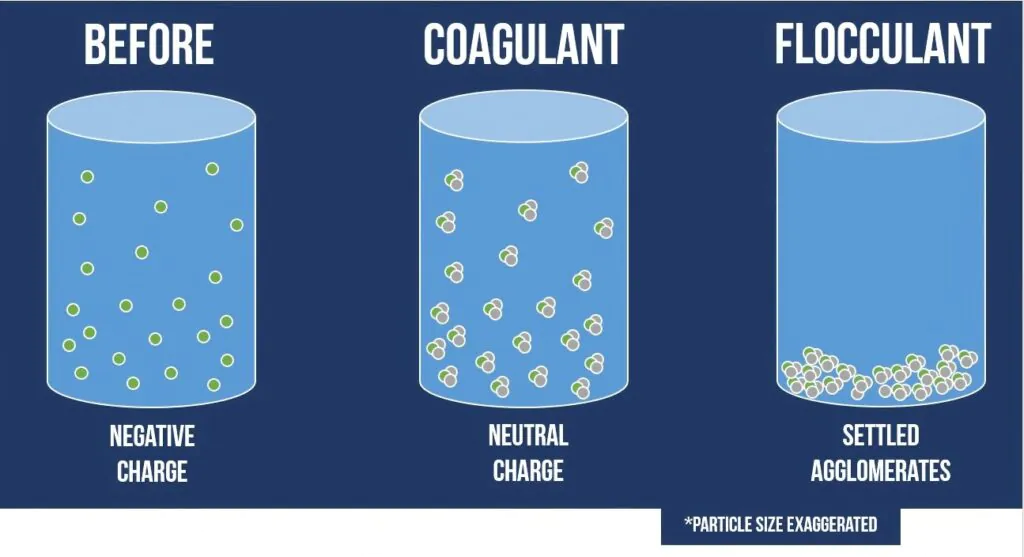
PAM accelerates solids separation by 70% through charge neutralization and polymer bridging. Correct application reduces sludge volume by 30-50%, cutting disposal expenses significantly across municipal and industrial plants.
What is Polyacrylamide (PAM)?
Polyacrylamide is a high-molecular-weight polymer widely used as a flocculant. Its primary mechanism involves charge neutralization and polymer bridging, which aggregate suspended solids into dense flocs that settle rapidly.
Key points:
- Cationic PAM: Targets negatively-charged organics, ideal for food and municipal wastewater.
- Anionic PAM: Targets positively-charged particles, used in mining and textile effluents.
- Amphoteric PAM: Works in mixed-charge waste streams, providing flexibility for diverse industries.
How PAM Removes Contaminants
Operators often overdose chemicals, thinking more equals better results. Proper understanding of PAM allows 25% less chemical usage while achieving superior clarity.
Mechanism details:
- Electrostatic Attraction: Opposite charges attract, destabilizing particles.
- Polymer Bridging: Long chains link multiple particles into larger, settleable flocs.
- Optimized Settling: Proper polymer type and dosage reduce sludge volume and improve water clarity.
Tip: Match polymer type to waste characteristics for best results. Charge density, molecular weight, and operational parameters are critical.
Selecting the Right PAM: Factors to Consider
Charge Density Matching
| Waste Type | PAM Type |
|---|---|
| Textile Effluent (negative) | Cationic |
| Mining Slurry (positive) | Anionic |
| Municipal Sewage (mixed) | Amphoteric |
Molecular Weight Impact
| Weight Range | Floc Size | Application |
|---|---|---|
| Low (1–5M Da) | Small | Drinking water clarification |
| Medium (6–10M Da) | Medium | Food processing effluent |
| High (12–15M Da) | Large | Mining tailings dewatering |
Operational Sweet Spot
- Dosage: 0.1–0.5 ppm for optimal floc formation
- Overdosing reverses charge, causing flocs to disperse
- Temperature: Pre-heating cold wastewater (<10°C) improves kinetics
- pH: Maintain 6–8 for best performance
Industry Applications and Case Studies
Food Processing
- Meat/Poultry: High-charge cationic PAM binds fats and solids. Sludge volume reduced by 40%. pH control prevents emulsions.
- Dairy: Medium-weight PAM preserves whey protein clarity, reduces chemical use by 30%, and lowers clarifier downtime by 20%.
- Breweries: Low doses during peak cycles prevent filter clogging, improve settling by 50%.
Paper Industry
- Recycled fiber mills using PAM achieve:
- 30% less freshwater use
- 15% higher paper yield
- 50% fewer clarifier cleanings
Chemical Industry
| Waste Type | PAM Type | Result |
|---|---|---|
| Dye effluent | High-cationic | Color removal >99% |
| Petrochemical | Emulsion PAM | Oily sludge reduced 75% |
| Pharma | Ultra-pure grades | COD limits met |
Municipal Wastewater
- Case study: City reduced EPA fines and sludge disposal by 55%
- Achieved 95% water clarity at half the cost of traditional coagulants
- Sludge volume reduced 30–50%, fewer truckloads required
Avoiding Treatment Failures
Common causes of PAM inefficiency:
- Improper hydration → “fish-eyes” reduce polymer activity by 60%
- Incompatible mixing energy → floc shear
- Fluctuating influent quality → reduces settling efficiency
Best practices:
- 0.1–0.3% solution, stir 50–200 rpm for 45 min
- Maintain water temperature 15–35°C
- Calibrate G-value mixers, monitor real-time TOC
- Implement auto-buffering for pH swings
Conclusion
Polyacrylamide (PAM) maximizes wastewater treatment efficiency by:
- Cutting chemical usage by 25%
- Reducing sludge volume 30–50%
- Enhancing solids capture and recovery in industrial and municipal settings
- Maintaining compliance and reducing operational costs
Proper selection, dosage, and monitoring ensure that PAM delivers the highest efficiency, cost savings, and environmental compliance.
CTA: Contact us today for tailored PAM solutions, free dosage consultation, and sample testing to optimize your wastewater treatment process.