
Most wastewater treatment operators are familiar with cationic and anionic polyacrylamide. Nonionic PAM — the third member of the polyacrylamide family — is less discussed, less commonly stocked, and frequently overlooked even in situations where it would outperform both ionic grades.
Nonionic PAM carries no electrical charge. It works entirely through polymer bridging, without any charge neutralization component. In most standard wastewater applications, this makes it less effective than ionic grades — which is why it is not the default choice. But in a specific set of conditions, the absence of charge becomes an advantage rather than a limitation.
Understanding when nonionic PAM is the right tool — and when it is not — prevents both the mistake of defaulting to ionic grades in conditions where they underperform, and the mistake of using nonionic PAM where ionic grades would deliver better results at lower cost.
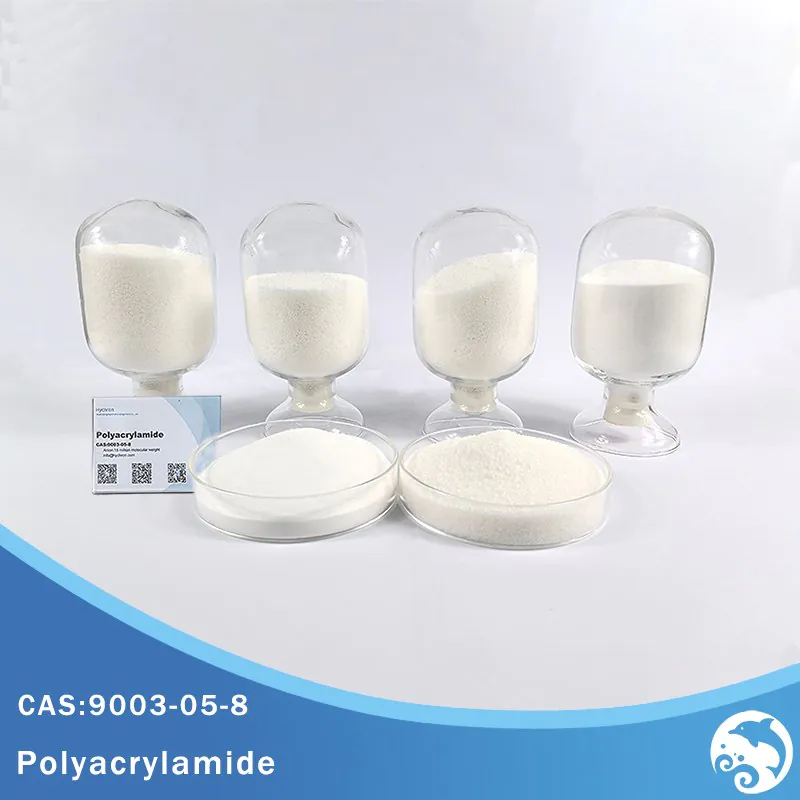
How Nonionic PAM Works
Without ionic charge groups, nonionic PAM cannot interact with particle surfaces through electrostatic attraction. Its flocculation mechanism relies entirely on physical adsorption — polymer chains adsorb onto particle surfaces through hydrogen bonding and van der Waals forces, then bridge multiple particles together as the chains extend through the solution.
This mechanism is less efficient than ionic bridging in most conditions, which is why nonionic PAM typically requires higher dosage than ionic grades to achieve comparable flocculation in standard applications.
The advantage becomes apparent under two specific conditions: when ionic strength in the solution is very high, and when the pH is extreme. In both cases, ionic PAM grades lose effectiveness — and nonionic PAM, unaffected by either condition, maintains consistent performance.
The Four Conditions Where Nonionic PAM Performs Best
Condition 1: High-Salinity Wastewater
This is the primary application where nonionic PAM outperforms ionic grades — and where selecting the wrong grade can make treatment almost completely ineffective.
Anionic PAM in particular is highly sensitive to dissolved salts. In high-ionic-strength solutions, the electrostatic repulsion between the polymer’s negative charge groups is suppressed by the surrounding cations. This causes the polymer chain to coil and contract rather than extend — dramatically reducing bridging reach and flocculation efficiency.
For facilities treating high-salinity process water — produced water from oilfield operations, seawater desalination brine, industrial recycled water with high dissolved solids, or mining operations in arid regions using saline groundwater — anionic PAM often fails to perform adequately regardless of dosage.
Nonionic PAM is not affected by ionic strength in the same way. Its chains extend and bridge effectively even in water with total dissolved solids above 5,000 mg/L — a threshold where many anionic grades begin to lose significant performance.
Typical applications: Oilfield produced water treatment, mining operations with saline process water, coastal industrial facilities using seawater cooling, desalination concentrate management.
Get in touch for product specifications, pricing, and application support. → Get in touch today
Condition 2: Extreme pH Conditions
Anionic PAM performs poorly below pH 5, where its charge groups become protonated and lose effectiveness. Cationic PAM loses performance above pH 9. When wastewater pH falls outside the 5–9 range — even temporarily during process upsets — ionic grades underperform.
Nonionic PAM operates effectively across a much broader pH range, from pH 2 to pH 12 in most grades. For facilities with highly acidic or highly alkaline process streams, or with frequent pH excursions that are difficult to control, nonionic PAM provides consistent performance that ionic grades cannot match.
Typical applications: Acid mine drainage treatment, chemical manufacturing effluent with extreme pH, pickling and metal treatment wastewater, alkaline cleaning solution recovery.
Condition 3: Specific Mineral Processing Applications
Certain mineral processing operations — particularly those involving calcium carbonate, phosphate minerals, and some oxide ores — involve particle surfaces with complex or variable charge characteristics. Ionic PAM performance in these applications can be unpredictable, with charge interactions sometimes stabilizing particles rather than flocculating them.
Nonionic PAM, operating purely through physical bridging, avoids these charge-related complications and often produces more consistent flocculation in applications where ionic grades give variable results.
Typical applications: Calcium carbonate slurry treatment, phosphate ore processing, certain oxide mineral thickening applications.
Condition 4: Drinking Water Treatment
In drinking water treatment applications, regulatory limits on residual ionic polymer in treated water are often more stringent than for industrial applications. Some jurisdictions specifically approve nonionic PAM for drinking water clarification at defined dosage limits, while ionic grades — particularly cationic grades — face stricter controls due to concerns about cationic polymer residuals in potable water.
Where nonionic grades are approved for potable water use, they provide a compliant flocculation option with regulatory acceptance that some ionic grades do not have.
Typical applications: Drinking water clarification, potable water treatment in jurisdictions with ionic polymer restrictions.
For guidance on matching PAM type to your specific application requirements, see: Choosing the Right PAM Grade for Your Industry
When Not to Use Nonionic PAM
Knowing when nonionic PAM is the wrong choice is as important as knowing when it is right.
Standard municipal wastewater: Organic biological solids respond much better to cationic PAM’s charge neutralization mechanism. Nonionic PAM at equivalent dosage produces inferior flocculation and dewatering performance in municipal sewage treatment.
Low-salinity inorganic slurries: High-MW anionic PAM typically outperforms nonionic grades in mineral processing applications with normal-salinity process water. The ionic bridging mechanism of anionic PAM is more efficient, requiring lower dosage for equivalent settlement.
Sludge dewatering: Nonionic PAM is rarely effective for mechanical sludge dewatering. Belt presses, filter presses, and centrifuges handling biological sludge require the charge neutralization that only cationic PAM provides.
Cost-sensitive applications where ionic grades work: Nonionic PAM is generally priced similarly to or higher than anionic grades, and requires higher dosage in non-saline conditions. Where ionic grades perform adequately, nonionic offers no performance advantage to justify its use.
Nonionic vs Ionic PAM: Decision Summary
| Condition | Recommended Type |
|---|---|
| Standard inorganic mineral slurry, normal salinity | Anionic PAM |
| Organic biological solids, municipal sewage | Cationic PAM |
| Sludge dewatering (belt press, centrifuge) | Cationic PAM |
| High salinity process water (TDS > 3,000 mg/L) | Nonionic PAM |
| pH below 5 or above 9 | Nonionic PAM |
| Drinking water treatment (where approved) | Nonionic PAM |
| Variable mineral surface charge applications | Trial nonionic vs anionic |
Frequently Asked Questions
Can nonionic PAM be used alongside ionic grades in the same system?
Yes. In some applications — particularly those with variable salinity or pH — combining a small proportion of nonionic PAM with an anionic grade can improve performance consistency across changing conditions. The optimal combination is best determined through jar testing at the range of conditions your system experiences.
How does salinity affect anionic PAM performance specifically?
Dissolved cations in high-salinity water screen the negative charge groups on anionic PAM chains, causing them to coil rather than extend. This reduces bridging reach by 50–80% in severe cases. The effect becomes significant above approximately 1,000–2,000 mg/L total dissolved solids and worsens progressively as salinity increases.
Is nonionic PAM available in the same molecular weight range as ionic grades?
Yes. Nonionic PAM is available across a similar molecular weight range as ionic grades — typically 5–20 million Daltons. Higher molecular weight nonionic grades are preferred for most flocculation applications to compensate for the absence of charge-assisted adsorption.
Conclusion
Nonionic PAM is a specialist tool, not a general-purpose one. In standard wastewater conditions, ionic grades outperform it at lower dosage. But in high-salinity water, extreme pH environments, specific mineral processing applications, and regulated potable water treatment, nonionic PAM delivers consistent performance that ionic grades cannot match.
The key is recognizing which conditions apply to your system — and not defaulting to ionic grades simply because they are more familiar. If your facility operates with high dissolved solids, variable or extreme pH, or treats process water where ionic PAM performance has been inconsistent, nonionic PAM is worth evaluating.
Contact our technical team today to find out whether nonionic PAM is right for your application — and request trial samples to test against your current grade. → Contact our technical team today