
Polyacrylamide is a significant line item in the operating budget of any facility that uses it regularly. Yet in many plants, a portion of every order is quietly wasted — not because the product was defective, but because it was stored incorrectly.
Degraded PAM does not fail dramatically. It dissolves slowly, forms excessive fish eyes, delivers inconsistent flocculation, and forces operators to increase dosage to compensate — raising chemical costs without identifying the real cause.
For procurement managers and warehouse teams, understanding what PAM needs from storage is a straightforward way to protect the value of every order placed.
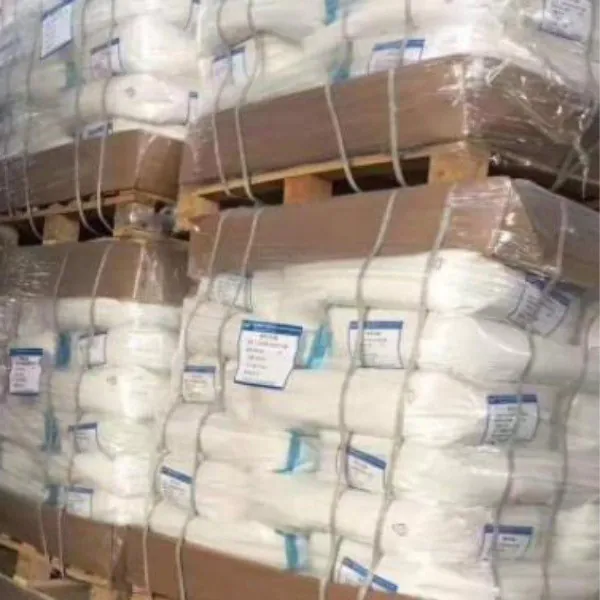
How PAM Degrades in Storage
Polyacrylamide degrades through three primary mechanisms during storage, each triggered by a different environmental condition:
Moisture absorption: Dry powder PAM is hygroscopic — it absorbs moisture from surrounding air. As moisture content rises above 10–12%, the powder begins to clump. Surface hydration creates a gel skin that slows dissolution and promotes fish eye formation. Severely moisture-damaged PAM may form solid lumps that cannot be dissolved effectively regardless of preparation procedure.
Thermal degradation: Prolonged exposure above 40°C initiates hydrolysis of amide groups on the polymer chain, altering charge density and reducing effective molecular weight. In hot climates or unventilated storage areas, this can reduce product activity significantly within a few months.
UV and oxidative degradation: Direct sunlight and exposure to oxidizing agents can break polymer chains and reduce molecular weight, lowering flocculation performance even when dissolution appears normal.
Storage Requirements for Dry Powder PAM
Temperature and Humidity
Store dry powder PAM at 5°C–35°C and relative humidity below 60%.
In hot climates where warehouse temperatures regularly exceed 35°C:
- Store away from metal roofing, south-facing walls, and heat-generating equipment
- Consider climate-controlled storage for large buffer stocks or specialty grades
In cold climates, dry powder is not damaged by sub-zero temperatures — unlike emulsion PAM. However, condensation when cold bags move into warm humid environments can cause surface moisture damage. Allow bags to equilibrate to ambient temperature before opening.
Practical Humidity Control
- Keep bags sealed until immediately before use
- Never reseal opened bags with tape — transfer remaining content to a sealed container with a proper lid
- In high-humidity environments, store opened bags in sealed plastic bins with desiccant
- Always store on pallets with at least 10 cm floor clearance — concrete floors wick moisture
Light and Chemical Segregation
Store away from direct sunlight and segregate from strong oxidizing agents, strong acids or alkalis, and solvents. Oxidizing agents in particular can degrade polymer chains on contact and should never be stored adjacent to PAM.
Storage Requirements for Emulsion PAM
Emulsion PAM has more demanding storage requirements than dry powder.
Temperature: Store strictly between 5°C and 30°C.
- Below 5°C: Freezing causes irreversible phase separation. Frozen emulsion PAM cannot be restored and must be disposed of. Heated storage is mandatory in cold climates.
- Above 35°C: Accelerated degradation of the surfactant stabilizer leads to phase separation and loss of product activity.
Before use: Gently agitate emulsion stored for more than two weeks to re-homogenize any minor settling. Use slow paddle or gentle rolling — not high-shear mixing.
Shelf life: 6–12 months from manufacture date under correct conditions. Always verify manufacture date on delivery.
Shelf Life and Stock Rotation
| Product Form | Shelf Life | Primary Risk |
|---|---|---|
| Dry powder PAM | 18–24 months | Moisture absorption, clumping |
| Emulsion PAM | 6–12 months | Freezing, thermal degradation |
First-in-first-out (FIFO) rotation is essential for both forms. New stock placed behind existing stock, oldest stock used first. In practice, many facilities use new stock from the front of the rack while older stock accumulates at the back — a common and costly error.
Label each pallet with delivery date and target use-by date at receipt. Conduct monthly stock checks to identify product approaching its use-by date. For facilities with seasonal shutdowns, plan procurement schedules to avoid carrying large buffer stocks through extended idle periods in hot or humid climates.
Receiving and Inspection
Inspect every delivery before accepting into storage:
- Check bags for damage, tears, or moisture staining
- Confirm manufacture date and calculate remaining shelf life
- For emulsion PAM, request temperature logs for cold-climate transit routes to confirm no freezing occurred
- Retain batch-specific Certificates of Analysis for quality reference
Reject any delivery showing visible moisture damage, abnormal clumping through intact packaging, or a manufacture date that leaves less than 6 months of shelf life at your expected consumption rate.
Contact our team to discuss delivery scheduling and batch documentation that protects product quality from manufacture to point of use. → Contact our technical team today
Signs That PAM Has Degraded in Storage
Even with correct procedures, periodic checks help catch degradation early:
- Excessive clumping when bags are opened → moisture absorption
- Abnormally slow dissolution despite correct preparation → moisture or thermal damage
- Higher-than-normal fish eye formation → moisture-induced surface hydration
- Reduced flocculation at established dosage → molecular weight degradation
- Unusual yellowing → thermal degradation in some grades
If degradation is suspected, run a comparative jar test using fresh product from a new batch alongside the suspect stock. A clear performance difference confirms the issue.
Frequently Asked Questions
How long can I store dry powder PAM before it loses effectiveness?
Correctly stored dry powder PAM — below 35°C, below 60% relative humidity, away from direct sunlight — maintains full activity for 18–24 months from manufacture date. Outside these conditions, degradation can occur significantly faster. Always check manufacture date on delivery and rotate stock on a FIFO basis.
Can I store PAM bags outdoors under a covered area?
Short-term outdoor covered storage is acceptable in mild, low-humidity climates. For storage beyond 2–4 weeks, indoor warehouse conditions are strongly recommended. In tropical or high-humidity environments, even covered outdoor storage carries significant moisture absorption risk within days of opening.
What should I do with PAM stock that has been stored incorrectly?
Run a jar test comparing suspect stock against fresh product. If flocculation performance is significantly reduced, use at adjusted dosage for non-critical applications or dispose of the product. Do not use severely degraded PAM where consistent effluent quality is required — performance will be unpredictable and compliance risk increases.
Conclusion
Correct storage is the final link in the quality chain between manufacture and treatment performance. Product that leaves the factory at full specification can arrive at the dosing point significantly degraded if warehouse conditions are not managed — costing more in chemical waste and treatment problems than any savings from lower-cost storage.
The requirements are simple: dry, cool, shaded conditions for powder PAM; temperature-controlled storage for emulsion PAM; FIFO rotation for both. Applying these consistently protects product quality and ensures the polymer program delivers the performance it was specified to provide.
Contact us today to discuss supply scheduling, storage recommendations for your climate, and batch documentation for your facility. → Get in touch today