
Fish eyes are the most visible and most misunderstood problem in polyacrylamide preparation. Every operator who has prepared PAM solution has encountered them — those stubborn, translucent gel lumps floating in an otherwise dissolved solution, resisting further mixing no matter how long the agitator runs.
They look like a minor nuisance. In practice, they represent wasted polymer, blocked dosing equipment, disrupted flocculation, and — most expensively — a chronic underperformance problem that operators frequently attribute to the wrong cause.
Understanding exactly why fish eyes form, and why the standard response of mixing longer rarely fixes them, is the starting point for preventing them entirely.
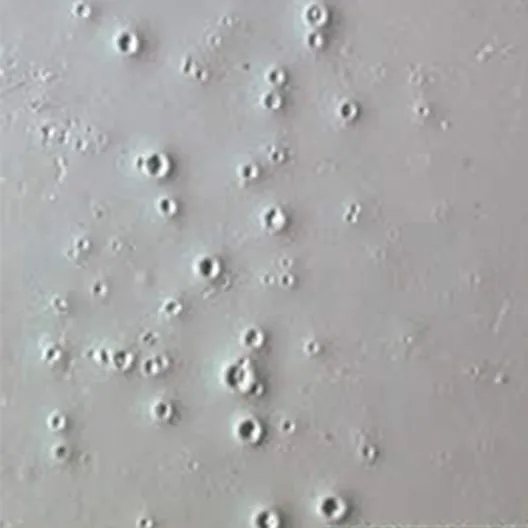
What Fish Eyes Actually Are
A fish eye is not simply undissolved powder. It is a powder particle that has partially dissolved — and in doing so, has become resistant to further dissolution.
When PAM powder contacts water, the outer surface of each particle hydrates almost instantly, swelling into a gel layer. Under normal dissolution conditions — correct temperature, slow addition, adequate mixing — water continues to penetrate this outer gel layer, progressively hydrating the particle from outside to inside until it is fully dissolved.
Fish eyes form when this outer gel layer becomes too thick or too dense for water to penetrate effectively. The gel skin traps dry or partially hydrated polymer inside, creating a stable gel bead that resists further dissolution. The interior may remain essentially dry for hours, even while the exterior appears fully swollen.
This is why continuing to mix rarely solves the problem. The gel skin is already formed. More mixing agitates the fish eye but does not dissolve it — and high-speed mixing can actually break fish eyes into smaller fragments that are harder to detect but equally problematic at the dosing point.
The Five Causes of Fish Eye Formation
Cause 1: Powder Added Too Quickly
The most common cause by a significant margin.
When powder is added faster than the agitator can disperse individual particles across the water surface, particles contact each other before they are fully wetted. Adjacent particles stick together as their surfaces hydrate simultaneously, forming multi-particle gel aggregates — fish eyes — that are far more resistant to dissolution than individual particles.
The physics are unforgiving: once two or more particles bond through surface gel, the interior of the aggregate is effectively sealed from water contact.
Prevention: Add powder over a minimum of 3–5 minutes of continuous slow addition. The target is a steady stream of individual particles dispersed across the vortex surface — not a pour that delivers a visible mass of powder at once.
Request technical data sheets with grade-specific preparation parameters for your current PAM product. → Get in touch today
Cause 2: Agitator Not Running Before Powder Addition
If the agitator is started after powder has been added — or if powder is added to a tank where the agitator has not yet created a vortex — powder settles to the bottom or floats on the surface as a concentrated mass before mixing begins.
The concentrated mass hydrates as a unit rather than as individual particles, forming a large gel aggregate that cannot be broken down by subsequent mixing regardless of speed or duration.
Prevention: Always start the agitator and confirm the vortex is established before adding any powder. This is the single most impactful procedural step for fish eye prevention.
Cause 3: Water Temperature Too Low
Cold water slows the hydration rate of PAM significantly. At low temperatures, the outer gel layer forms more slowly — but water penetration into the particle interior is also dramatically slower. The net effect is that particles at the surface of a cold solution hydrate unevenly: the outer skin thickens before the interior has begun to hydrate, creating the same sealed-gel-skin condition that causes fish eyes at normal temperatures.
Below 15°C, fish eye formation risk increases substantially even with correct addition technique and agitator setup.
Prevention: Maintain water temperature between 20°C and 35°C. In cold-climate facilities during winter, pre-heat preparation water using a heat exchanger, steam injection, or warm process water blending before adding polymer.
Cause 4: Solution Concentration Too High
At concentrations above 0.3%, the solution becomes viscous enough to impede water movement to undissolved particle surfaces. As more powder is added into an already viscous solution, individual particles are surrounded by thick, slow-moving liquid that cannot deliver water fast enough to prevent gel skin formation before adjacent particles contact each other.
High-concentration preparation also reduces the vortex effectiveness of the agitator, further limiting dispersion.
Prevention: Keep preparation concentration at or below 0.2% for standard grades and 0.15% for high molecular weight grades above 18 million Daltons. If your application requires a higher active dose, achieve it through dosage rate rather than preparation concentration.
Cause 5: Moisture-Damaged Powder
Powder that has absorbed moisture during storage undergoes partial surface hydration before it even reaches the preparation tank. When added to water, these pre-hydrated particles develop gel skins almost instantaneously — faster than any addition technique can prevent.
Moisture-damaged powder is identifiable by visible clumping in the bag, resistance to breaking apart when pressed between fingers, and a sticky or damp texture compared to correctly stored product.
Prevention: Store powder correctly — below 60% relative humidity, sealed until use, on pallets away from concrete floors. Inspect every bag before use. Do not attempt to use heavily moisture-damaged powder in critical treatment applications.
For full storage guidance, see: Proper Storage Conditions for Polyacrylamide PAM
Why Mixing Longer Does Not Fix Fish Eyes
This bears repeating because it is counterintuitive and the source of significant wasted effort.
Once a fish eye has formed — once the gel skin has sealed around a dry or partially hydrated core — the interior is mechanically protected from further water contact. Agitation moves the fish eye through the solution but does not break the gel skin. High-speed mixing can fragment fish eyes into smaller pieces, but these fragments retain the same gel-sealed structure and remain undissolved.
The only reliable fix for fish eyes is prevention. A batch containing significant fish eyes should be assessed carefully before dosing. If fish eyes are large and numerous, the batch should be discarded and a new batch prepared with corrected procedure.
For small numbers of minor fish eyes in an otherwise well-dissolved solution, passing the solution through a coarse mesh screen before the dosing pump can remove the gel fragments before they reach the treatment system.
Quick Prevention Checklist
Before every batch preparation, confirm:
- ✓ Agitator running and vortex established before any powder addition
- ✓ Water temperature between 20°C and 35°C
- ✓ Target concentration at or below 0.2%
- ✓ Powder addition time of 3–5 minutes minimum
- ✓ Powder free of visible clumping or moisture damage
- ✓ Mixing speed reduced to moderate after addition is complete
- ✓ Minimum 30-minute hydration time observed before dosing
All five fish eye causes are addressed by items on this checklist. A batch prepared with all items confirmed will not produce significant fish eyes regardless of PAM grade or molecular weight.
Frequently Asked Questions
Can I salvage a batch that has already formed fish eyes?
For minor fish eye contamination — a small number of isolated gel beads in otherwise clear solution — screening through a coarse mesh (1–2 mm) before the dosing pump removes the fragments. For heavily contaminated batches with numerous large fish eyes, the practical recommendation is to discard and prepare fresh. The active polymer content of a fish-eye-contaminated batch is unpredictable, making reliable dosage control impossible.
Do higher molecular weight PAM grades form more fish eyes?
Yes, in general. Higher MW grades hydrate more rapidly on the particle surface, making the gel skin formation that causes fish eyes faster and more pronounced. This is why high MW grades — particularly those above 15 million Daltons — require slower addition rates, lower preparation concentrations, and warmer water than lower MW grades. Product-specific preparation guidelines from your supplier should reflect these requirements.
Our fish eye problem is worse in winter — is this normal?
Yes, and it is one of the most consistent seasonal complaints in polymer preparation. Cold water dramatically slows water penetration through gel skins, making fish eye formation more likely even with correct technique. The solution is to maintain water temperature above 20°C year-round using pre-heated preparation water, rather than adapting addition technique to cold-water conditions.
Conclusion
Fish eyes are entirely preventable. Every case of fish eye formation traces back to one of five causes — addition speed, agitator timing, water temperature, solution concentration, or moisture-damaged powder — all of which are controlled by preparation procedure rather than product quality.
The prevention checklist in this guide addresses all five causes in a single pre-batch confirmation step. Facilities that implement it consistently report the elimination of fish eye problems within the first week of application — along with improvements in flocculation performance and reductions in polymer consumption that follow from better dissolution quality.
If fish eyes are a persistent problem in your preparation system, contact our technical team today for a free procedure review and product-specific dissolution recommendations. → Contact our technical team today