
Every winter, wastewater treatment plants that operated comfortably through spring and summer begin struggling. Settling slows. Effluent turbidity rises. Polymer consumption increases. And operators who have not encountered this pattern before start looking for equipment faults or product problems — when the real cause is temperature.
Cold water affects PAM-assisted wastewater treatment through multiple mechanisms simultaneously. It slows polymer dissolution, reduces chain extension, increases water viscosity, and slows the biological and chemical reaction kinetics that support flocculation. The cumulative effect can reduce treatment performance significantly even when everything else in the system is operating correctly.
Understanding these mechanisms — and knowing which countermeasures address each one — allows operators to maintain consistent treatment performance through winter without simply accepting that cold weather means poor settling.
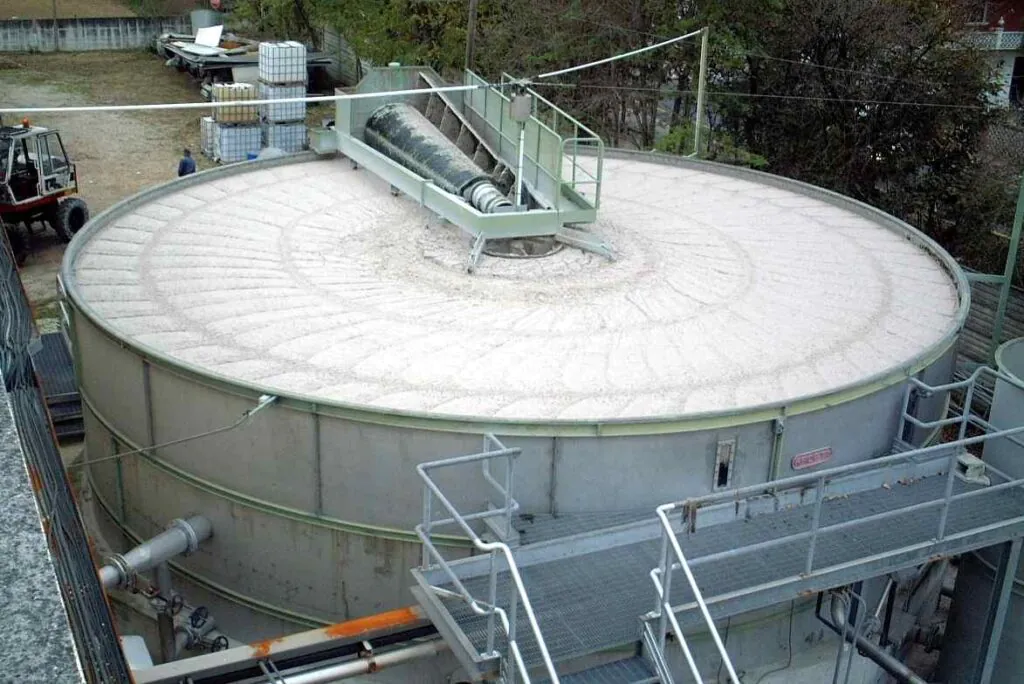
How Cold Water Affects PAM Performance
Effect 1: Slower Polymer Dissolution and Chain Extension
PAM dissolves by progressive hydration — water molecules penetrate the polymer matrix and cause chains to unfold and extend outward into solution. This process is driven by thermal energy. At lower temperatures, molecular mobility decreases, hydration slows, and polymer chains do not fully extend within the standard 30–45 minute preparation time.
The practical consequence: solution prepared at 10°C may appear dissolved but contains chains that are only 60–70% extended compared to solution prepared at 25°C. This partially extended solution performs significantly below its rated molecular weight and charge density — the polymer is present, but much of it is not active.
Effect 2: Increased Water Viscosity
Cold water is more viscous than warm water. At 5°C, water viscosity is approximately twice that at 25°C. Higher viscosity affects treatment in two ways: it slows the collision rate between polymer-coated particles that drives floc growth, and it reduces the settling velocity of formed flocs — even correctly formed flocs settle more slowly in cold, viscous water than in warm water.
This is a physical limitation that polymer optimization can partially offset but cannot eliminate entirely. Operators should expect slower settling in winter regardless of polymer optimization, and should plan hydraulic loading accordingly.
Effect 3: Reduced Coagulant Reaction Kinetics
Where coagulant pre-treatment is used before PAM addition, cold temperatures slow the precipitation and micro-floc formation reactions that coagulants rely on. Inadequately formed coagulant micro-flocs provide fewer and weaker attachment points for PAM bridging — reducing the maximum achievable floc size and density regardless of polymer grade or dosage.
Effect 4: Biological Activity Reduction
In treatment systems with biological stages upstream of polymer-assisted clarification, cold temperatures reduce biological activity, potentially increasing the concentration of fine biological solids reaching the clarifier. Higher suspended solids loading at lower temperature compounds the treatment challenge.
Request winter-grade PAM samples to trial before temperatures drop. → Get in touch today
Strategy 1: Pre-Heat Polymer Preparation Water
The single most impactful cold-weather countermeasure for most facilities is maintaining polymer preparation water temperature above 20°C regardless of ambient conditions.
Preparing polymer at 20°C instead of 10°C can increase effective chain extension by 30–40% — the equivalent of upgrading to a significantly higher molecular weight grade, at no additional product cost.
Practical implementation options:
- Heat exchanger on the preparation water supply line — most reliable for large continuous operations
- Steam injection into the preparation tank — effective but requires careful temperature control to avoid exceeding 40°C
- Blending warm process water with cold supply water — often the simplest solution where warm process water is available
- Insulated preparation tanks with immersion heater — low capital cost option for smaller operations
The target is water temperature between 20°C and 35°C at the point of polymer addition. Temperatures above 40°C risk thermal degradation of polymer chains — warmer is not always better.
Strategy 2: Extend Preparation Mixing Time
When pre-heating preparation water is not immediately feasible, extending mixing time partially compensates for reduced hydration rate at lower temperatures.
Adjusted mixing time guidelines by water temperature:
| Water Temperature | Minimum Mixing Time |
|---|---|
| 25°C – 35°C | 30 minutes |
| 20°C – 25°C | 40 minutes |
| 15°C – 20°C | 50 – 60 minutes |
| 10°C – 15°C | 60 – 90 minutes |
| Below 10°C | 90+ minutes — pre-heating strongly recommended |
Extended mixing time alone does not fully compensate for very cold water — at temperatures below 10°C, chain extension remains incomplete regardless of mixing duration. Pre-heating is the more effective solution at these temperatures.
Strategy 3: Switch to a Higher Molecular Weight Grade for Winter
Higher molecular weight PAM maintains better performance at low temperatures than lower MW grades, for two reasons: longer chains have more bridging points per molecule, partially compensating for reduced extension; and larger flocs formed by high MW polymer settle faster, partially offsetting the increased water viscosity effect.
For facilities that use a single PAM grade year-round, trialing a higher MW grade through the winter months — reverting to the standard grade in spring — is a practical approach that many operations adopt after experiencing the first winter performance decline.
Typical MW upgrade for winter operation:
- Summer grade: 12–15 million Daltons
- Winter grade: 16–20 million Daltons
The higher MW winter grade typically achieves comparable performance to the summer grade at 10–20% lower dosage — partially offsetting the higher cost per kilogram of the higher MW product.
For guidance on molecular weight selection, see: Molecular Weight and Its Impact on Flocculation
Strategy 4: Increase Dosage Conservatively
Where preparation temperature cannot be increased and grade upgrading is not immediately available, modest dosage increases partially compensate for reduced polymer activity in cold water.
The key word is conservatively. Cold-water performance problems tempt operators toward significant dosage increases — which risk overdosing and restabilization, worsening performance. The correct approach is small, tested increases:
- Increase dosage by 10–15% from the established warm-weather optimum
- Monitor effluent turbidity for 1–2 hours after each increase
- Continue increasing in 10% steps only if improvement is confirmed
- Stop immediately if turbidity rises rather than falls — overdosing threshold may be lower in cold water due to reduced polymer chain extension and activity
Strategy 5: Reduce Hydraulic Loading During Peak Cold Periods
Cold water’s effect on settling velocity is a physical reality that chemistry alone cannot fully overcome. When settling velocity decreases, the same flow rate through a clarifier produces poorer separation because particles have less time to settle before reaching the overflow weir.
For facilities with flexibility in production scheduling, reducing throughput during the coldest periods — or redistributing flow across more settling units in parallel — can maintain compliance without chemical interventions.
Where production scheduling flexibility does not exist, the combination of strategies 1–3 above typically provides sufficient performance improvement to maintain compliance through normal winter temperature ranges in most climates.
Emulsion PAM in Cold Weather: A Storage Warning
Facilities using emulsion PAM face an additional cold-weather challenge: freezing. Emulsion PAM stored or transported below 5°C can freeze, causing irreversible phase separation that makes the product unusable.
Cold-weather emulsion PAM precautions:
- Store in heated warehouses above 5°C at all times
- Inspect drums or IBCs after any cold-transit event before use
- Do not attempt to thaw and use frozen emulsion — discard and replace
- Consider switching to dry powder PAM for winter months in climates where temperature-controlled emulsion storage is difficult
For storage guidance covering both powder and emulsion forms, see: Proper Storage Conditions for Polyacrylamide PAM
Frequently Asked Questions
How much does cold water reduce PAM performance?
The effect varies with temperature. Between 20°C and 10°C, performance reduction is moderate — typically 15–25% in settling efficiency — and manageable through preparation temperature control and modest dosage adjustment. Below 10°C, the combined effects of reduced chain extension and increased water viscosity can reduce settling efficiency by 40–60% compared to optimal temperature conditions, requiring more significant countermeasures.
Should I change my jar test procedure in winter?
Yes. Always conduct winter jar tests using wastewater samples at their actual temperature rather than warming them to room temperature first. Testing at ambient temperature reveals the true performance of your polymer under actual operating conditions. Testing at elevated temperature will overestimate full-scale performance and lead to underestimating the dosage adjustment needed.
Can I use the same PAM grade year-round or do I need a dedicated winter grade?
Many facilities successfully operate year-round with a single grade by adjusting preparation temperature, mixing time, and dosage seasonally. A dedicated higher MW winter grade delivers better performance but requires maintaining two product inventories. The right approach depends on the severity of your winter temperatures, the strictness of your discharge requirements, and the cost of maintaining dual inventory versus the performance benefit of the winter grade.
Conclusion
Cold weather is a predictable, manageable challenge for PAM-assisted wastewater treatment. The performance decline that winter brings is real — but it is not inevitable if the right countermeasures are applied before temperatures drop rather than after performance has already deteriorated.
Pre-heating preparation water is the single most effective intervention and should be the first priority for any facility that experiences significant winter performance decline. Extending mixing time, upgrading molecular weight seasonally, and making conservative dosage adjustments provide additional performance support where pre-heating alone is insufficient.
Planning for winter operations in autumn — confirming preparation equipment, reviewing grade options, and adjusting setpoints — prevents the reactive scramble that cold-weather performance problems typically cause when they arrive unannounced.
Contact our technical team today for cold-weather PAM grade recommendations and preparation system advice for your climate. → Contact our technical team today