
In a procurement environment where cost pressure is constant, polyacrylamide is often treated as a commodity — a product where the lowest compliant price wins. This approach is understandable. PAM is a treatment chemical, not a finished product. Its quality is invisible until something goes wrong.
The problem is that with PAM, quality differences are real, measurable, and financially significant — they just tend to show up in operational costs rather than purchase costs. The facility that saved 15% on polymer purchase price may be spending 25% more on chemical consumption, managing more frequent compliance problems, and dealing with operational disruptions that a more consistent product would have prevented.
This article makes the case for quality — not as a supplier selling point, but as a financially demonstrable operational reality.
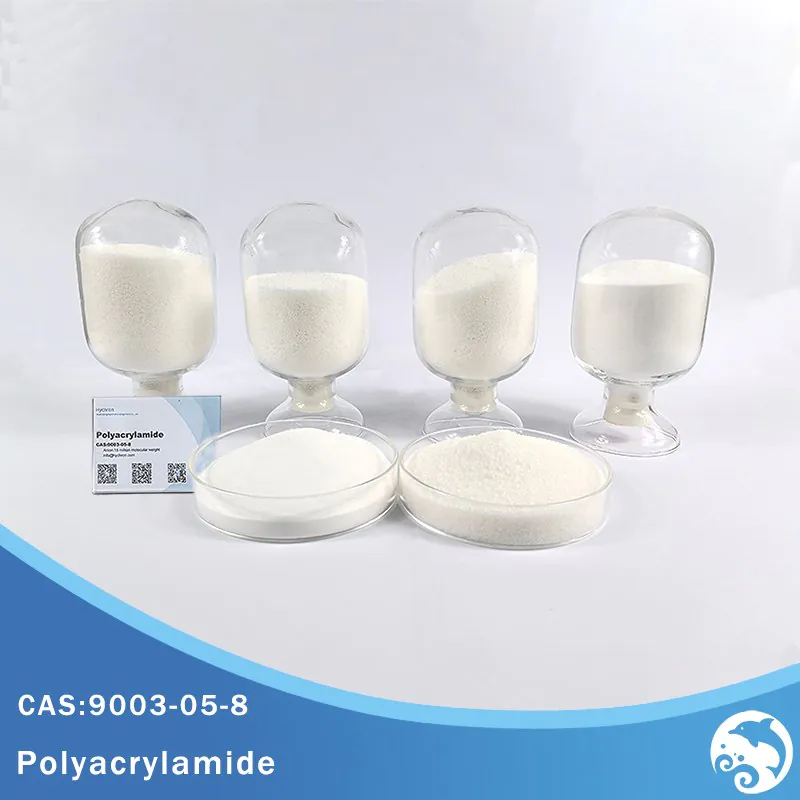
What “Quality” Actually Means for Polyacrylamide
Quality in PAM is not a vague concept. It is defined by five measurable parameters that directly determine treatment performance:
Molecular weight consistency: High-quality PAM is manufactured to a defined molecular weight range and tested batch by batch to confirm it. Consistent molecular weight means predictable bridging capacity and predictable dosage requirements — the same pump setting delivers the same result every day.
Charge density accuracy: The ionic charge density of the polymer determines how it interacts with particle surfaces. High-quality grades are manufactured to defined charge density specifications and tested per batch. Consistent charge density means consistent adsorption efficiency across every shipment.
Residual acrylamide control: Quality manufacturers minimize residual acrylamide monomer through controlled polymerization conditions and purification steps. Consistently low residual acrylamide — typically below 0.05% for industrial grades — protects both environmental compliance and worker safety.
Dissolution characteristics: Optimized particle size distribution in quality powder grades produces fast, uniform dissolution with minimal fish eye formation. Consistent dissolution means consistent active polymer delivery to the treatment system regardless of which operator prepared the batch.
Batch-to-batch reproducibility: Perhaps the most operationally important quality attribute. A product whose specifications are consistent across every production batch allows treatment operations to be standardized — dosage protocols, preparation procedures, and performance expectations remain valid regardless of when the product was manufactured.
The Operational Value of Consistent Molecular Weight
Molecular weight is where quality differences have the most direct treatment impact. Consider what happens when molecular weight varies between batches:
A facility optimizes its dosage program through jar testing with one batch — finding the optimal dose of 4 mg/L for their clarifier application. The next batch arrives, ostensibly the same product at the same price. But its molecular weight is 20% lower than the previous batch.
The facility continues dosing at 4 mg/L. Floc size decreases, settling slows, effluent turbidity rises. Operators respond by increasing dosage — maybe to 5 or 6 mg/L — until performance returns to acceptable levels. They never identify the cause as a product quality shift. They simply accept higher consumption and attribute it to “harder wastewater.”
This scenario plays out routinely in facilities sourcing from suppliers without rigorous batch MW testing. The cost is not a dramatic compliance failure — it is a quiet, unattributed 20–30% increase in polymer consumption that persists until the next batch.
Request batch CoA, product specifications, and trial quantities today. → Get in touch today
Consistent Performance Reduces Total Treatment Cost
The financial case for quality PAM is most clearly made by comparing total treatment cost — not purchase cost — across product tiers.
Scenario: Industrial clarifier treating mineral processing water
| Parameter | Quality PAM | Low-Quality PAM |
|---|---|---|
| Optimal dosage (quality product) | 5 mg/L | — |
| Effective dosage required | 5 mg/L | 6.5 mg/L |
| Annual consumption (10,000 m³/day) | 18.25 tonnes | 23.7 tonnes |
| Annual purchase cost | $51,100 | $52,140 |
| Compliance incidents (estimated) | 2/year | 8/year |
| Operator time for troubleshooting | Low | High |
In this scenario, the lower-priced product actually costs more annually — because the dosage premium required to compensate for lower molecular weight consistency exceeds the purchase price saving. This pattern is not universal, but it is common enough that procurement decisions made on purchase price alone consistently disappoint.
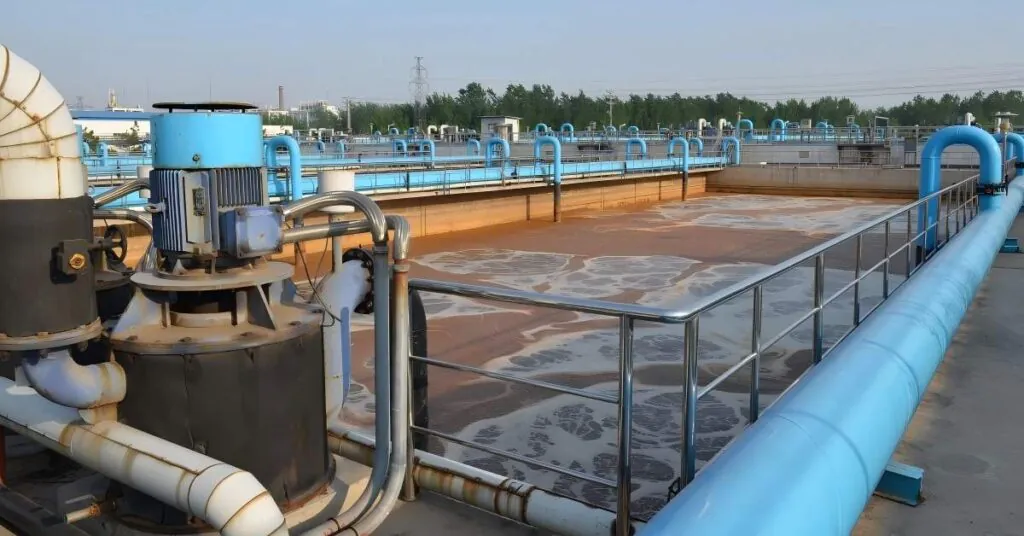
Quality PAM Reduces Operational Risk
Beyond the direct cost comparison, high-quality PAM reduces operational risk in ways that do not appear in procurement calculations but matter significantly to plant operators and environmental managers.
Compliance reliability: Consistent product means consistent treatment performance, which means fewer unexpected exceedances of discharge limits. For facilities operating close to permit limits, the reduction in compliance risk from using consistent-quality polymer has real financial value — avoided fines, avoided regulatory interactions, avoided permit conditions.
Reduced troubleshooting burden: Variable polymer quality is a hidden variable in treatment system troubleshooting. When performance deteriorates, operators investigate dosage, influent characteristics, equipment, and preparation procedure — often without considering that the product itself may have changed between batches. High-quality, consistent PAM eliminates this variable from the troubleshooting equation.
Predictable preparation: Consistent dissolution characteristics mean that the preparation procedure optimized for one batch works for every subsequent batch. Variable dissolution — fish eye frequency, required mixing time, concentration limits — forces operators to adapt preparation procedures for each delivery, introducing variability that affects treatment performance.
For guidance on what quality specifications to look for, see: Polyacrylamide Quality Standards: What Buyers Must Know
How to Recognize Quality PAM Before You Buy
Quality claims are easy to make. The indicators that distinguish genuine quality from marketing language are verifiable:
Batch-specific CoA with molecular weight data: Not a product specification sheet — a batch-specific document with measured values for the specific production run you are purchasing. MW should be expressed as a specific range in Daltons or as intrinsic viscosity — not as a category (“high MW”).
Consistent CoA values across multiple batches: Request CoA from three or more recent batches and compare. Significant variation between batches — more than 10–15% in MW or charge density — indicates manufacturing inconsistency regardless of whether individual batches meet specification.
Willingness to provide trial quantities: Suppliers confident in their product quality offer trial quantities for performance testing. A supplier who declines trial requests or imposes unreasonable minimum trial conditions is reducing your ability to verify their quality claims.
Technical support that goes beyond product supply: Quality manufacturers invest in application knowledge. If a supplier can only quote price and lead time — but cannot discuss optimal grade selection, dosage ranges, or preparation procedures for your application — the technical depth behind their product claims is limited.
Frequently Asked Questions
Is higher-priced PAM always higher quality?
Not necessarily. Price reflects many factors including supplier margin, logistics cost, and market positioning — not quality alone. Some high-priced products from well-known brands underperform compared to well-manufactured alternatives at lower price points. The reliable quality indicator is verifiable documentation — batch-specific CoA, consistent specifications across batches, and trial performance testing — not price level.
How much performance difference should we expect between quality tiers?
In direct comparative jar testing, high-quality PAM typically achieves equivalent treatment performance at 15–25% lower dosage than low-quality PAM of nominally equivalent grade. In full-scale operations, the dosage premium required to compensate for poor quality can reach 30–40% — particularly when low MW consistency is combined with poor dissolution characteristics.
We have been using the same supplier for years without obvious problems — should we still evaluate alternatives?
Yes, periodically. Supplier quality can change over time — manufacturing processes evolve, raw material sources shift, and quality management standards may improve or decline. Conducting a comparative trial every two to three years confirms that your current supplier remains genuinely competitive on quality, not just familiar. Many facilities that conduct their first comparative trial in years discover significant performance differences they had not attributed to product quality.
Conclusion
High-quality PAM costs more per kilogram than low-quality alternatives — but in most applications it costs less per cubic meter of water treated, because consistent molecular weight, charge density, and dissolution characteristics deliver the rated performance at lower dosage, with fewer operational complications and lower compliance risk.
The procurement decision that optimizes for purchase price alone systematically underestimates the total cost of PAM use. The decision that evaluates total treatment cost — dosage efficiency, operational reliability, compliance performance, and troubleshooting burden — consistently favors quality.
We supply industrial-grade PAM with batch-specific documentation, consistent specifications, and technical support that makes performance claims verifiable rather than assumed. Contact us today to request a trial and compare. → Contact our technical team today