
For most industrial and municipal wastewater treatment facilities, sludge disposal is the single largest variable operating cost in the treatment program. It is also the cost that responds most directly to polymer program quality — because disposal cost is almost entirely determined by wet sludge volume, and wet sludge volume is almost entirely determined by cake moisture content.
The relationship is direct: better PAM conditioning produces drier cake, lower disposal volume, and lower disposal cost. The financial leverage is significant. For large operations, a 5–10 percentage point improvement in cake moisture content can reduce annual disposal expenses by hundreds of thousands of dollars — from a polymer program change that costs a fraction of that saving.
This guide identifies the practical levers for reducing sludge disposal expenses through PAM optimization, quantifies the financial impact, and provides a framework for calculating the saving potential at your specific facility.
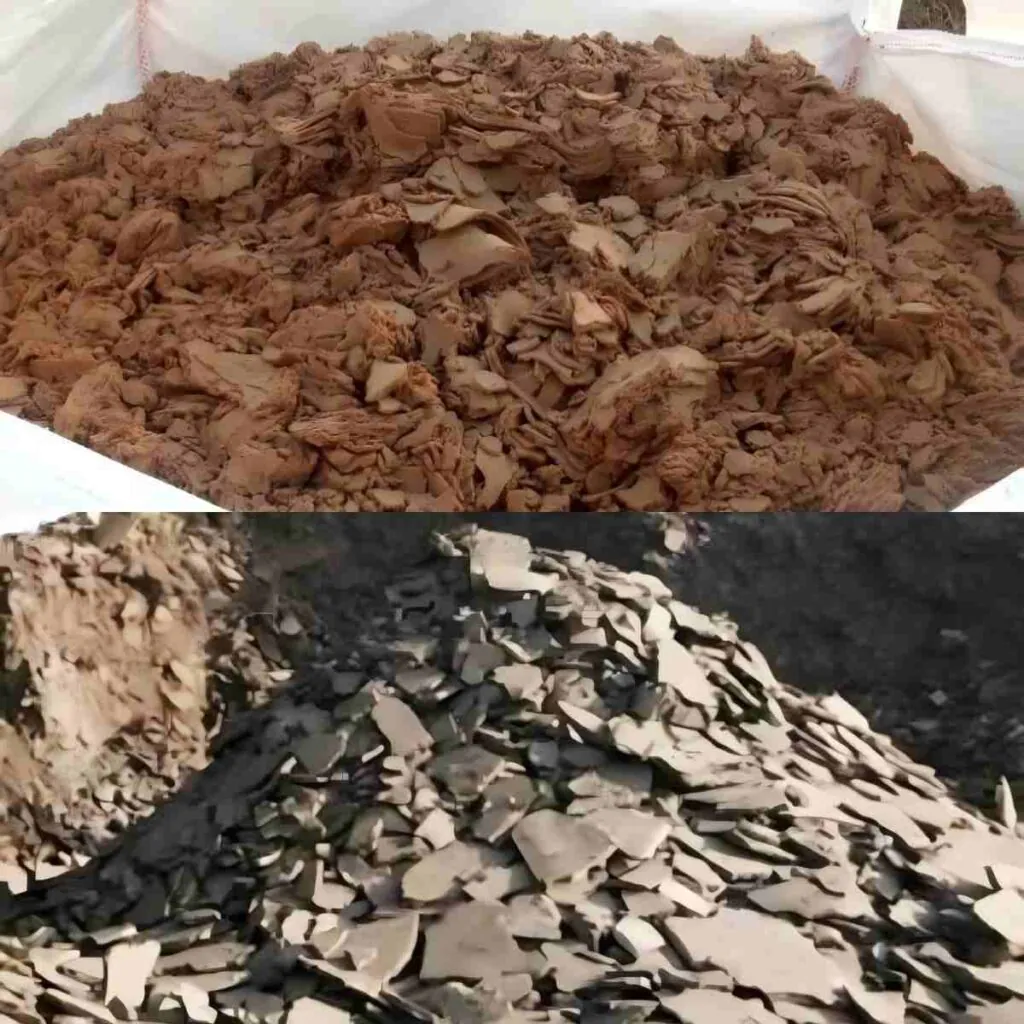
Why Cake Moisture Content Drives Disposal Cost
Sludge cake is predominantly water. At typical dewatering performance levels, 60–80% of the weight of dewatered cake is moisture — not the dry solids that actually require treatment or disposal.
This means that disposal cost scales dramatically with moisture content:
| Cake Moisture | Wet Cake per Tonne Dry Solids | Relative Disposal Volume |
|---|---|---|
| 80% | 5.0 tonnes | 100% (baseline) |
| 75% | 4.0 tonnes | 80% |
| 70% | 3.3 tonnes | 67% |
| 65% | 2.9 tonnes | 57% |
| 60% | 2.5 tonnes | 50% |
Moving from 80% to 70% cake moisture cuts disposal volume by 33% — for the same dry solids throughput. Moving from 80% to 60% cuts it by 50%. These are not marginal improvements; they are transformative reductions in one of the facility’s largest cost line items.
PAM conditioning is the primary operational lever for achieving these moisture reductions. Grade selection, dosage optimization, and preparation quality each contribute to the final cake moisture achieved — and each represents an opportunity for cost reduction.
Lever 1: Optimize PAM Grade for Dewatering Performance
The cationic PAM grade used for sludge dewatering has a larger impact on cake moisture than dosage within the normal operating range. Using the wrong grade — even at optimal dosage — limits achievable cake moisture in ways that no amount of dosage adjustment can overcome.
Grade selection principles for minimum cake moisture:
For belt press applications, medium charge density (30–50%) at high molecular weight (12–18 million Daltons) produces the open floc structure needed for gravity drainage before roller compression. If your current cake moisture is above target despite adequate dosage, trialing a higher MW grade is the most likely route to improvement.
For centrifuge applications, higher charge density (50–80%) at medium molecular weight (8–14 million Daltons) typically produces better solids capture and drier centrate. Emulsion form often outperforms powder in high-speed centrifuge applications due to faster dispersion before the centrifuge applies separation force.
For filter press applications, medium charge density (30–60%) at higher molecular weight (14–18 million Daltons) produces cake structure that maintains filtration channels under press pressure.
How to evaluate grade impact on disposal cost: Run a dewatering jar test with your current grade and one alternative at the same dosage. Measure filtrate volume and cake solids content. A grade producing 5% drier cake at equivalent dosage translates directly into a quantifiable annual disposal cost saving.
Lever 2: Optimize Dosage on a Dry Solids Basis
Sludge dewatering dosage should be expressed and managed as grams of PAM per tonne of dry solids — not as mg/L of sludge volume. Fixed-rate dosing delivers inconsistent active polymer per unit of dry solids when feed concentration changes, producing variable cake moisture that operators cannot easily diagnose or correct.
Typical optimal dosage ranges:
| Application | Sludge Type | Dosage Range |
|---|---|---|
| Belt press | Municipal biosolids | 3–8 kg/tonne dry solids |
| Centrifuge | Municipal biosolids | 4–10 kg/tonne dry solids |
| Filter press | Industrial mixed sludge | 5–15 kg/tonne dry solids |
| Belt press | Industrial organic sludge | 5–12 kg/tonne dry solids |
The optimal dosage is the minimum that achieves target cake moisture — and finding it requires systematic testing rather than conservative high-dosage operation. Overdosing in dewatering applications wastes polymer without proportional moisture improvement and can actually reduce solids capture in centrifuge applications.
Contact our technical team today for a free dewatering optimization assessment and dosage recommendation for your sludge type. → Contact our technical team today
Lever 3: Improve Contact Time Before Dewatering Equipment
PAM conditioning requires adequate contact time between polymer addition and the point where mechanical dewatering force is applied. Insufficient contact time — polymer not fully mixed with sludge before entering the centrifuge bowl or belt press — produces poor conditioning regardless of grade or dosage.
Recommended contact time by equipment type:
- Belt press: 30–90 seconds of moderate mixing between PAM addition and belt entry
- Centrifuge: 10–30 seconds — the centrifuge provides additional mixing, but some pre-conditioning improves performance
- Filter press: 2–5 minutes of gentle mixing before pressing
Facilities where PAM is injected directly into the sludge feed pipe immediately upstream of the equipment — with no conditioning zone — often achieve significantly worse cake moisture than their polymer program would predict. Adding a simple static mixer or short conditioning loop can improve cake moisture by 3–8 percentage points without any product change.
Lever 4: Reduce Coagulant Use in Combined Programs
Where coagulants are used alongside PAM, excess coagulant generates additional chemical sludge that increases disposal volume. Reducing coagulant to the minimum effective dose — using PAM to compensate for floc growth — reduces chemical sludge without compromising treatment performance.
For a facility using alum at 80 mg/L, reducing to 40 mg/L with compensating PAM adjustment on a 5,000 m³/day plant:
- Aluminum hydroxide sludge reduction: approximately 1.5 tonnes/day
- Annual disposal saving at $80/tonne: approximately $44,000/year
- PAM cost increase to compensate: approximately $8,000–$12,000/year
- Net annual saving: $32,000–$36,000/year
For guidance on combined coagulant-PAM optimization, see: PAM vs Alum: Cost Comparison for Wastewater Treatment
Calculating Your Disposal Cost Reduction Potential
Use this framework to estimate the financial value of a 5% cake moisture improvement at your facility:
Step 1: Determine current daily dry solids throughput (tonnes/day)
Step 2: Calculate current wet cake: Wet cake = Dry solids ÷ (1 – moisture fraction)
Step 3: Calculate improved wet cake at 5% lower moisture
Step 4: Daily volume reduction = Current wet cake – Improved wet cake
Step 5: Annual saving = Daily reduction × 365 × Disposal cost per tonne
Example:
- Dry solids: 8 tonnes/day
- Current moisture: 75% → Wet cake: 32 tonnes/day
- Improved moisture: 70% → Wet cake: 26.7 tonnes/day
- Daily reduction: 5.3 tonnes
- Annual saving at $80/tonne: 5.3 × 365 × $80 = $154,760/year
A 5-percentage-point moisture improvement at this facility saves over $150,000 annually — from a polymer optimization that costs a fraction of this saving.
Frequently Asked Questions
What is the minimum cake moisture achievable with PAM optimization?
Achievable minimum depends on sludge type, equipment, and process conditions. Municipal biosolids on a belt press typically achieve 18–25% moisture with optimized PAM conditioning. Industrial mixed sludge on a filter press typically achieves 25–35%. Mineral sludge from mining operations can often achieve below 20%. Our technical team can provide benchmarks for your specific sludge type and equipment.
How do we know if our current cake moisture is above the achievable optimum?
Compare against industry benchmarks for your sludge type and equipment, then conduct a dewatering jar test with your current grade and one alternative. If the alternative achieves meaningfully drier cake at equivalent dosage, your current grade is not optimal. The disposal cost saving calculation above quantifies whether the switch is financially justified.
Does improving cake moisture affect biosolids land application eligibility?
Yes, positively. Many land application programs require biosolids below 20–25% moisture. Improving from 30% to 20% opens land application as a disposal pathway — often cheaper than landfill or incineration — while simultaneously reducing transport volume. The combined financial benefit can be substantial in markets with high alternative disposal costs.
Conclusion
Sludge disposal expense is the most directly controllable major cost in wastewater treatment — and PAM optimization is the most cost-effective lever for reducing it. Grade selection matched to equipment and sludge type, dosage management on a dry solids basis, adequate contact time, and minimized coagulant use deliver cake moisture improvements that translate into annual savings ranging from tens of thousands to hundreds of thousands of dollars.
The calculation framework in this guide gives operators a facility-specific estimate of the saving potential. For most operations that have not systematically reviewed their dewatering polymer program in the past 12 months, the improvement opportunity is real and financially significant.
Contact us today to calculate your specific disposal cost reduction potential and get a dewatering optimization recommendation. → Get in touch today

