 Skip to content
The global water treatment industry is undergoing its most significant transformation in decades. Tightening discharge regulations, accelerating water scarcity, the rise of digital monitoring and control, growing ESG reporting requirements, and increasing pressure on industrial operations to demonstrate environmental responsibility are all reshaping how water treatment is practiced — and what is expected from the chemicals and technologies that make it possible.
Polyacrylamide sits at the center of this transformation. As the dominant flocculant in industrial and municipal water treatment globally, PAM’s role is not diminishing — it is evolving. Understanding the trends shaping this evolution helps procurement managers, plant operators, and environmental engineers anticipate changing requirements and make forward-looking decisions about their polymer programs.
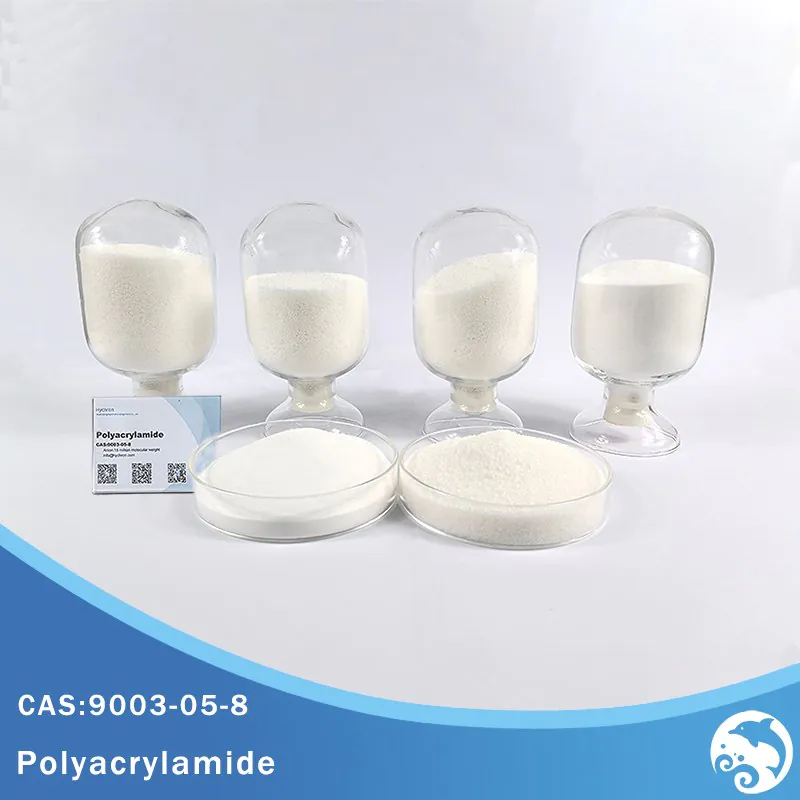
Trend 1: Water Scarcity Driving Higher Recycling Rate Requirements
Water scarcity is the most powerful structural driver of PAM demand growth globally. Approximately 3.6 billion people live in areas experiencing water scarcity for at least one month per year — and industrial facilities in affected regions are facing increasingly strict water allocation limits, rising tariffs, and regulatory requirements to demonstrate water recycling performance.
For industrial operations, this translates directly into pressure to achieve recycling rates of 85–95% rather than the 60–70% typical of operations designed a decade ago. Achieving these higher recycling rates requires treatment performance that natural settlement alone cannot deliver — and PAM is the enabling chemistry that makes high-rate industrial water recycling practically achievable at reasonable cost.
The regions where water scarcity pressure is most acute — Middle East, North Africa, Central Asia, parts of China, India, and Australia — are among the fastest-growing markets for industrial PAM. This geographic growth is expected to continue as water stress intensifies with climate change and industrial development in water-limited regions.
For facilities planning new installations or major upgrades, designing for 90% water recycling from the outset — rather than retrofitting for higher recycling later — will become the industry standard within the next decade in most water-stressed markets.
Trend 2: Tightening Discharge Regulations Globally
Environmental discharge standards are tightening in virtually every major market. The direction of regulatory travel is consistent even where specific timelines vary:
Suspended solids and turbidity: Standard discharge limits are being progressively reduced. Facilities that currently comply comfortably at 100 mg/L TSS are increasingly finding their permit limits moving to 50 mg/L — and in sensitive receiving water areas, below 30 mg/L.
Nutrient limits (phosphorus and nitrogen): Nutrient discharge limits are among the fastest-tightening regulatory areas globally. Municipal and industrial facilities near sensitive water bodies are facing total phosphorus limits below 0.5 mg/L — achievable only with optimized combined coagulant and PAM programs.
Emerging contaminants: Regulatory interest in microplastics, pharmaceuticals, and other trace contaminants in receiving water bodies is growing. While PAM itself is not a regulated contaminant, facilities will face increasing scrutiny of all treatment chemical inputs — making residual acrylamide documentation and supply chain transparency increasingly important.
For polymer programs, tightening discharge limits mean that grade optimization and dosage precision become more critical over time. The compliance margin available to facilities operating on suboptimal polymer programs progressively narrows as limits tighten.
Request product documentation, sustainability data, and technical support that positions your operation for future requirements. → Get in touch today
Trend 3: Digital Monitoring and Automated Dosage Control
The integration of continuous sensors, data logging, automated dosing control, and remote monitoring into water treatment operations — often grouped under Industry 4.0 or smart water technology labels — is advancing rapidly from specialist applications toward standard practice.
For PAM programs specifically, the key developments are:
Online turbidity and suspended solids monitoring: Sensor costs have fallen significantly over the past decade while reliability has improved. Continuous turbidity monitoring — previously affordable only for large municipal plants — is now cost-effective for mid-size industrial operations. This enables the real-time dosage feedback that manual programs cannot provide.
Flow-proportional and turbidity-feedback dosing: Automated dosing control linked to turbidity feedback consistently reduces polymer consumption by 15–25% compared to well-managed manual programs, and by 25–40% compared to fixed-rate programs. As sensor and control technology costs continue to fall, the business case for automation extends to progressively smaller operations.
SCADA integration and remote monitoring: Treatment performance data increasingly feeds into facility-wide operational dashboards and remote monitoring systems. Polymer consumption becomes a tracked metric alongside energy, water, and production efficiency — creating accountability for treatment chemical optimization that was previously difficult to establish.
Predictive dosage optimization: Emerging applications of machine learning to treatment operations use historical data on influent characteristics, weather patterns, and production schedules to predict polymer demand before it occurs — enabling proactive dosage adjustment rather than reactive response.
For guidance on current digital control capabilities, see: Digital Control of Wastewater Treatment with PAM
Trend 4: Sustainability and ESG Reporting Requirements
The growth of formal environmental, social, and governance (ESG) reporting obligations is changing how industrial facilities account for and manage their environmental performance — including water treatment chemical use.
For PAM programs, ESG-driven requirements are creating new expectations:
Chemical consumption intensity reporting: Kilograms of treatment chemical per cubic meter of water treated is becoming a standard operational metric in facilities with ESG reporting obligations. This creates direct financial incentive to optimize PAM consumption — not just for cost reduction but for sustainability disclosure.
Carbon footprint quantification: The carbon impact of sludge handling — transport and disposal emissions — is being quantified and reported by facilities with Scope 3 emissions commitments. PAM-driven dewatering improvements that reduce sludge disposal volume contribute directly to reportable Scope 3 reductions.
Supply chain transparency: ESG reporting frameworks increasingly require disclosure of supply chain environmental and ethical standards. For PAM procurement, this means supplier qualification processes will expand to include environmental management standards (ISO 14001), manufacturing emissions data, and supply chain ethics alongside traditional product quality requirements.
Residual acrylamide transparency: Acrylamide is a monitored substance under various international chemical management frameworks. Facilities will face increasing expectations to demonstrate that their PAM procurement controls residual acrylamide content — requiring batch-specific CoA from suppliers as standard documentation rather than periodic testing.

Trend 5: Green Chemistry and Bio-Based Alternatives
Research into bio-based alternatives to conventional PAM — polymers derived from renewable feedstocks rather than petroleum-derived acrylamide — has accelerated significantly over the past decade.
Several bio-based flocculants have reached commercial application, including:
Modified starch and cellulose derivatives: Available commercially for some municipal and food processing applications. Generally lower molecular weight than synthetic PAM, limiting bridging performance in high-solids industrial applications.
Chitosan: Derived from crustacean shells, cationic by nature — effective for some organic-dominant wastewater streams. Cost significantly higher than equivalent cationic PAM grades; supply more variable.
Polyglutamic acid (PGA): Microbially produced anionic biopolymer with flocculation properties. Early commercial applications emerging in food processing and pharmaceutical wastewater treatment.
The honest assessment for most industrial applications: bio-based alternatives currently cannot match the molecular weight, charge density control, and performance consistency of high-quality synthetic PAM at competitive cost. They are viable in specific niche applications — particularly where regulatory or marketing requirements demand bio-based inputs.
However, this position is evolving. As research matures and production scales, bio-based flocculants are likely to capture growing market share in applications where synthetic PAM’s petroleum origin is a competitive disadvantage. Industrial PAM suppliers who develop or partner for bio-based alternatives position themselves ahead of this trend.
Trend 6: Demand Growth in Emerging Markets
The fastest PAM demand growth is occurring in markets where industrial and municipal water treatment infrastructure is expanding rapidly: Southeast Asia, South Asia, Sub-Saharan Africa, and parts of Latin America.
These markets combine several growth drivers simultaneously:
- Industrial development generating new wastewater treatment requirements
- Growing environmental regulatory enforcement requiring treatment where previously discharge was uncontrolled
- Municipal infrastructure expansion serving rapidly urbanizing populations
- Mining and resource extraction growth in water-stressed regions requiring effective water recycling
For suppliers and procurement teams active in these markets, the key opportunity is establishing quality supply relationships early in the infrastructure development cycle — before specifications and supplier lists are locked in by established practice.
Frequently Asked Questions
Will synthetic PAM be replaced by bio-based alternatives in the next decade?
For most industrial applications — mining, mineral processing, municipal sludge dewatering — no. The performance gap between bio-based alternatives and high-quality synthetic PAM remains substantial, particularly for high-MW applications requiring strong bridging in high-solids systems. In lower-performance applications — agricultural soil conditioning, light industrial clarification — bio-based alternatives may capture meaningful market share as costs decrease and performance improves. The transition will be gradual rather than disruptive.
How will tightening discharge limits affect PAM program requirements?
Tightening limits reduce the compliance margin available to suboptimally managed programs. Facilities that currently pass on average but have occasional exceedances will fail more frequently as limits tighten. The response is systematic optimization — correct grade selection, jar-test-verified dosage, preparation quality control, and automated monitoring — rather than simply increasing dosage. Facilities that invest in systematic program management now will be better positioned as limits tighten.
How should we prepare our PAM program for future regulatory and ESG requirements?
Three practical steps: establish a baseline consumption metric (kg/1,000 m³ treated) and track it monthly; implement batch-specific CoA documentation as standard procurement requirement; and conduct an annual program review including jar testing to confirm grade and dosage remain optimal. These steps simultaneously prepare for ESG reporting requirements, protect against regulatory changes, and create the continuous improvement culture that best-practice environmental management demands.
Conclusion
The future of polymer water treatment is shaped by converging pressures — water scarcity, tightening regulation, digital technology, sustainability reporting, and emerging bio-based alternatives — that are making the performance and transparency demands on PAM programs more rigorous over time.
Facilities and suppliers that anticipate these trends — investing in optimized programs, verified documentation, digital monitoring, and supply chain transparency — will meet future requirements as standard practice rather than scrambling to comply when new obligations arrive.
The fundamental role of polyacrylamide in enabling effective water treatment is not changing. What is changing is the standard of evidence required to demonstrate that it is being used correctly — and the sophistication expected from polymer programs across all scales of operation.
Contact our technical team today to discuss how your PAM program can be optimized and documented for current and future performance and compliance requirements. → Contact our technical team today


