
Polyacrylamide has been in industrial use for over 60 years. In that time, water treatment technology has advanced significantly — membrane systems, advanced oxidation, biological nutrient removal, digital monitoring, and automated control have all transformed what treatment plants can achieve. Yet through all of this technological progress, polyacrylamide has not been displaced. Its role in industrial water treatment has grown, not diminished.
This is not inertia or familiarity. It is because PAM addresses a fundamental challenge — the rapid removal of fine suspended particles from water — in a way that no other technology has matched on the combination of performance, cost, operational simplicity, and scalability.
This article examines why PAM remains not just relevant but essential to modern industrial and municipal water management — and what this means for facilities making long-term treatment decisions.
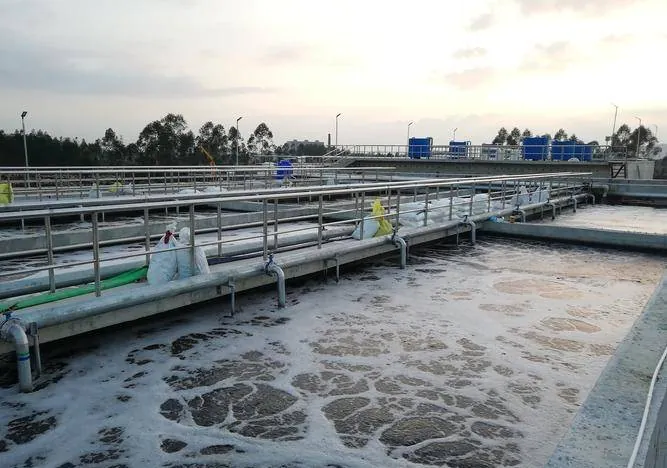
The Problem PAM Solves Has Not Changed
Fine suspended particles are generated by every industrial process that uses water. They resist natural settlement because their small size means gravitational forces are overwhelmed by the electrostatic forces that keep them dispersed. They pass through most filtration systems because they are smaller than filter pore sizes. They cannot be economically removed by membrane systems because the volumes involved are too large for the capital and energy cost to be justified.
This problem — particles too fine to settle, too numerous to filter, too abundant for membrane treatment — is as present in modern industrial operations as it was when PAM was first introduced. In many facilities, it is more present, because tighter discharge limits mean that fine particle concentrations that were acceptable decades ago now require active removal.
The bridging mechanism that PAM uses to solve this problem is elegant in its simplicity: long polymer chains physically connect fine particles into aggregates large enough to settle under gravity. This mechanism does not require energy-intensive processing, sophisticated equipment, or specialist operation. It works at trace concentrations across an enormous range of particle types, water chemistries, and operating scales.
No alternative technology offers this combination of properties. This is why PAM has persisted through decades of treatment technology advancement — not because the industry has failed to find alternatives, but because the alternatives that exist serve different problems.
PAM Enables Technologies That Could Not Function Without It
One of PAM’s most underappreciated roles is as an enabling technology for other treatment processes. Many modern treatment systems that are credited with performance achievements depend on PAM as a prerequisite:
Biological treatment systems: Activated sludge, membrane bioreactors, and sequencing batch reactors all depend on effective solid-liquid separation to return biomass to the reactor and produce clear effluent. Cationic PAM in secondary clarifiers and centrifuges is not incidental to these systems — it is the mechanism by which the biological solids are separated from the treated water.
Chemical phosphorus removal: Coagulant-based phosphorus removal produces fine aluminum or iron phosphate precipitate that cannot be settled without polymer assistance. PAM transforms a chemical process into an operationally practical one by enabling the separation step that completes the removal cycle.
Water recycling systems: Closed-loop industrial water recycling — the foundational technology for water-efficient manufacturing — depends on PAM to maintain recycled water quality within process-acceptable limits. Without effective flocculation and clarification, recycled water carries fine particles back into the production circuit, degrading product quality and process stability.
Mechanical sludge dewatering: Belt presses, centrifuges, and filter presses are the standard technology for industrial biosolids management. Their performance — cake moisture content, solids capture, throughput — is directly determined by polymer conditioning quality. PAM does not compete with dewatering equipment; it is the chemistry that makes dewatering equipment perform to its rated specification.
In each case, PAM is not simply one option among several — it is the chemical foundation on which the operational performance of the broader treatment system depends.
Request a free program assessment, product documentation, and trial quantities today. → Get in touch today
The Economics Remain Compelling Across All Scales
One of PAM’s defining characteristics is that its cost-effectiveness holds across the full range of treatment scales — from a $180/month livestock operation to a $2 million/year mining polymer program.
This scale-independence is unusual in treatment technology. Membrane systems have prohibitive capital costs for small applications. Advanced oxidation requires specialist operation beyond most small facilities. Biological systems need critical mass to function stably.
PAM has no minimum economic scale. The same principles of grade selection, dosage optimization, and preparation quality that deliver $200,000 annual savings at a mineral processing facility deliver proportional value at a livestock farm or small industrial operation. The return on investment — in terms of disposal cost reduction, compliance reliability, and water recycling — is consistently favorable across all application scales.
This economic accessibility is why PAM is used by both Fortune 500 companies managing billion-dollar treatment operations and family-owned farms managing 100 m³/day of livestock wastewater. No other industrial water treatment technology spans this range of application scale with equivalent cost-effectiveness.
Quality Has Become the Defining Competitive Dimension
In PAM’s early decades, the primary market dynamic was simply product availability — access to a functional polymer at a reasonable price. As global manufacturing capacity expanded and supply became broadly available, the competitive landscape shifted. Today, quality — consistent molecular weight, low residual acrylamide, reliable documentation, and genuine technical support — is the primary dimension on which PAM suppliers differentiate.
This shift matters for procurement decisions. In a commodity market, the optimal procurement strategy is price minimization. In a quality-differentiated market, the optimal strategy is total cost minimization — accounting for dosage efficiency, compliance reliability, operational consistency, and supply security alongside purchase price.
The facilities that achieve the best PAM program outcomes are not those that have found the cheapest supply. They are those that have found the most consistent quality at a competitive price — and invested in the systematic program management that extracts full value from that quality.
This is the context in which every PAM procurement decision should be evaluated: not what does this product cost per kilogram, but what does it cost per cubic meter of water treated to the required quality standard.
What the Next Decade Requires
The water treatment industry is entering a period of higher expectations across every dimension: tighter discharge limits, higher recycling rates, lower chemical consumption intensity, more rigorous documentation, and greater transparency in supply chain environmental performance.
Meeting these higher expectations does not require fundamentally new treatment chemistry — it requires better application of the chemistry that already works. For PAM specifically, this means:
Systematic program management: Annual grade review, jar testing at seasonal transitions, consumption tracking, and documented preparation procedures — the operational discipline that transforms a chemical purchase into a managed treatment program.
Quality-verified supply: Batch-specific CoA, consistent molecular weight, and low residual acrylamide from suppliers who can demonstrate their quality claims rather than simply assert them.
Technical partnership: Suppliers who provide application expertise alongside product — helping facilities optimize their programs as conditions change, not just fulfilling orders.
Documentation readiness: Complete supply chain documentation that supports regulatory compliance, ESG reporting, and supply chain due diligence requirements as they evolve.
These are not new requirements — they are the same standards that best-practice facilities have applied for years. What is changing is that they are becoming expectations across the industry, not differentiators of the most sophisticated operations.
Frequently Asked Questions
Will PAM still be the dominant industrial flocculant in 20 years?
Almost certainly yes for most high-performance applications. The molecular weight range achievable with synthetic polyacrylamide — up to 20+ million Daltons — provides a bridging capacity that no bio-based alternative has yet approached at comparable cost. For applications requiring maximum flocculation performance at minimum dosage — high-solids mineral processing, large-scale municipal sludge dewatering — synthetic PAM will remain the standard for the foreseeable future. Niche displacement by bio-based alternatives in lower-performance applications is likely but will not displace the core industrial market.
What is the single most important thing a facility can do to improve its PAM program today?
Conduct a jar test. This single action — testing the current grade at a range of dosages using representative current influent — simultaneously identifies whether the current grade is optimal, whether the current dosage is at the true optimum, and whether a different product might perform better. The cost is negligible; the information value is substantial. Most facilities that conduct their first systematic jar test in years discover meaningful improvement opportunities that immediately justify the effort.
How do we evaluate whether our current PAM supplier is meeting the standard that modern operations require?
Request three consecutive batch CoA and compare: are molecular weight, charge density, and residual acrylamide values consistent? Are they specific numbers, not vague claims? Then ask whether the supplier can provide jar testing support, application guidance for your specific wastewater type, and documentation for your ESG and regulatory reporting needs. A supplier who can answer yes to all of these is meeting the standard. One who cannot is asking you to accept performance uncertainty and documentation risk that modern operations can no longer afford.
Conclusion
Polyacrylamide has been essential to industrial water treatment for six decades. It remains essential today — not through institutional inertia but because it solves a real and persistent problem more cost-effectively than any available alternative across the full range of industrial and municipal applications.
The story of PAM’s role in modern industry is not one of a technology holding on as alternatives emerge. It is the story of a technology whose value has grown as the demands on industrial water management have intensified — higher recycling rates, tighter discharge limits, greater accountability for environmental performance — because PAM enables each of these outcomes at a cost and operational complexity that makes them practically achievable.
The facilities that get the most from PAM are those that treat it as a managed program rather than a commodity purchase — investing in grade selection, dosage optimization, preparation quality, and supply chain verification. These investments return multiples of their cost in chemical savings, compliance reliability, and reduced operational risk.
Thirty years from now, the facilities managing water most effectively will still be using polyacrylamide. The question is not whether PAM will remain essential — it is whether your program is delivering the full value it is capable of providing.
If the answer to that question is uncertain, contact our technical team today. We will help you find out — and help you get there. → Contact our technical team today