Skip to content
Written by the HyChron Technical Team — water treatment specialists with over 15 years of field experience in municipal and industrial systems. Last reviewed: April 2026
Choosing a PAC supplier is not simply a procurement transaction — it is a decision that affects your treatment performance, compliance record, and operational stability for years. A supplier who delivers inconsistent product, cannot provide adequate documentation, or fails to support you technically when problems arise costs far more in operational disruption than the price saving that initially made them attractive.
The global PAC market has expanded significantly over the past decade. Suppliers range from ISO-certified manufacturers with decades of experience and complete quality documentation to intermediaries with no manufacturing capability who resell product of unknown origin. Navigating this landscape requires a structured evaluation approach.
The Regulatory Context for Supplier Selection
For drinking water applications, the regulatory framework provides a starting point: suppliers must hold NSF/ANSI 60, EN 883, or equivalent certification for the specific product you are purchasing. This is a minimum requirement, not a sufficient condition for selecting a reliable supplier.
For industrial applications, no mandatory certification exists in most markets — buyer due diligence is the primary quality assurance mechanism.
Applicable frameworks:
- NSF/ANSI 60: Mandatory for drinking water treatment chemicals in most US and Canadian markets. Certificate verification at nsf.org.
- EU EN 883: Required for drinking water coagulants in EU member states.
- ISO 9001: Quality management system certification — not product-specific, but indicates systematic quality management at the manufacturing level.
For standards detail: PAC Quality Control Standards: NSF, EN 883, GB 15892 Explained
The Seven Criteria for Evaluating a PAC Supplier
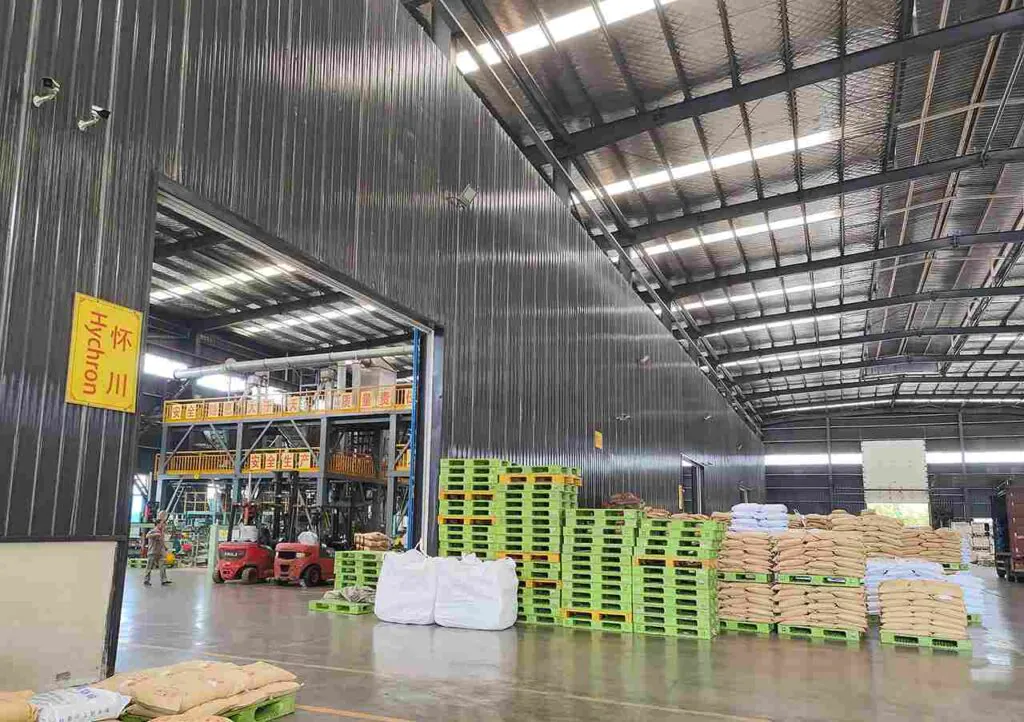
Criterion 1 — Manufacturing Capability (Direct vs Intermediary)
The most fundamental question: does your supplier manufacture PAC, or do they purchase and resell product from an undisclosed source?
Direct manufacturers can:
- Control production parameters to meet your specific requirements
- Trace every batch to its production record
- Provide meaningful technical support based on knowledge of the product they made
- Respond to quality problems with production-level corrective action
Intermediaries can only:
- Pass through documentation from the actual manufacturer (which may or may not be complete)
- Offer limited technical support
- Provide no real control over product consistency between deliveries
Verification: Ask directly whether the supplier manufactures the PAC or purchases it for resale. Request the manufacturing facility address and whether it is the same facility covered by any certification they claim. Visit the facility if the contract volume justifies it.
Criterion 2 — Quality Documentation
A reliable PAC supplier provides:
- Batch-specific COA for every delivery (not a generic product specification)
- COA signed by quality control personnel with contact information
- Heavy metal panel on every COA (not just on request)
- Retention of COA records for a minimum of 3–5 years
Red flag: Suppliers who provide COAs only when asked, who provide the same COA for multiple deliveries, or whose COAs lack batch numbers and dated test results.
Criterion 3 — Batch Consistency
Request COA records for the past 10–20 batches and analyze the basicity distribution. Reliable suppliers show basicity variation within ±3 percentage points of their target value. Variation of ±8 percentage points or more indicates poor process control — a direct predictor of variable treatment performance.
Verification test: Parallel jar tests with samples from three consecutive deliveries. All three should achieve equivalent turbidity removal at the same dosage. Significant dose variation between deliveries confirms batch consistency problems.
Criterion 4 — Technical Support Capability
A good PAC supplier is also a technical resource. Assess:
- Can they explain their product chemistry and how it differs from competitors?
- Do they have engineers or chemists who can support jar testing and dosage optimization?
- Can they provide application-specific guidance (e.g., for your specific industry or water type)?
- Can they respond within 24 hours to technical questions?
Suppliers who cannot provide any technical guidance beyond the product specification are not equipped to support you when operational problems arise.
Criterion 5 — Supply Chain Reliability
Treatment operations depend on uninterrupted chemical supply. Evaluate:
- What is the supplier’s production capacity relative to your order volume? Can they fulfill large or urgent orders?
- What is their typical lead time? Does it fit your procurement planning cycle?
- Do they hold safety stock? Can they supply from existing inventory in an emergency?
- Have they experienced supply disruptions in the past two years? What was the cause and how was it resolved?
- Do they have alternative production sites or supply options if primary production is disrupted?
Criterion 6 — Delivery and Logistics
For liquid PAC: bulk tanker delivery requires appropriate tank facilities at your site, and the supplier’s logistics network must cover your location with acceptable lead times. For powder PAC: packaging options (bags, bulk bags, drums) and freight terms affect landed cost significantly.
Confirm: delivery format options, minimum order quantities, freight terms (CIF/FOB/DDP), and transit time to your facility. For international suppliers, confirm export documentation capability and regulatory compliance for import into your country.
Criterion 7 — Pricing Transparency and Contract Terms
Understand exactly what you are paying for:
- Unit price per kg vs landed price (including freight, insurance, import duties)
- Payment terms and currency risk for international suppliers
- Price adjustment mechanisms — are prices fixed for the contract period or subject to raw material escalation clauses?
- Minimum order quantities and volume discount tiers
Important: The lowest landed price is not always the best total cost. Factor COA verification costs, potential re-testing costs if quality is inconsistent, and the operational cost of variable treatment performance into the total cost calculation.

Supplier Evaluation Checklist
| Evaluation Criterion | Minimum Requirement | Preferred |
|---|---|---|
| Manufacturing | Direct manufacturer | Own production facility with on-site QC laboratory |
| Certification | NSF/ANSI 60 or EN 883 (drinking water) | Current, independently verified, site-specific |
| COA documentation | Batch-specific COA with heavy metal panel | Signed COA with laboratory reference, retained 5 years |
| Basicity consistency | ±5% across recent batches | ±3% across 10+ batches |
| Technical support | Basic product knowledge | Application engineers available within 24 hours |
| Supply reliability | Confirmed delivery track record | Safety stock + alternative supply options |
| Lead time | ≤ 4 weeks for standard orders | ≤ 2 weeks + emergency supply capability |
Frequently Asked Questions
How do I evaluate a supplier I have never worked with, located in another country?
Start with documentation: request current certification certificates, COA samples for recent batches, and ISO 9001 or equivalent quality system certificate. Send a product sample to an independent laboratory before placing a first order. Conduct a video call with the supplier’s technical team to assess their product knowledge. Request references from current customers in similar industries or applications. For significant contract volumes, a facility visit is worth the investment.
Our current supplier has been reliable for three years — should we still evaluate alternatives periodically?
Yes. Market conditions, production ownership, and raw material sourcing can change without visible impact on day-to-day supply. Running a periodic competitive evaluation — every 2–3 years — keeps your current supplier aware that your business is not unconditionally locked in, which is itself a quality assurance mechanism. It also ensures you have a qualified alternative supplier if your primary supplier experiences a disruption.
What should I do if a delivery fails quality testing?
Reject the delivery and notify the supplier in writing with the specific test results that caused the rejection. Request a replacement batch with a new COA confirming compliance before accepting it. Ask for a root cause analysis and corrective action report explaining how the out-of-spec batch occurred and what has been done to prevent recurrence. If the supplier cannot provide this, or if quality failures recur, begin evaluation of alternative suppliers immediately.
Conclusion
A reliable PAC supplier is a manufacturing partner, not just a chemical vendor. The seven criteria in this article — manufacturing capability, quality documentation, batch consistency, technical support, supply reliability, logistics, and pricing transparency — provide a comprehensive evaluation framework for distinguishing reliable long-term partners from suppliers who compete primarily on price at the expense of the quality consistency your treatment operations depend on.
Supplier selection done correctly once saves the operational disruption and compliance risk that comes from discovering a supplier’s limitations after they have become embedded in your supply chain.
Contact our technical team today for our complete supplier qualification documentation package, facility information, and reference list from current customers. We respond within 24 hours.