Skip to content
Written by the HyChron Technical Team — water treatment specialists with over 15 years of field experience in municipal and industrial systems. Last reviewed: April 2026
Procurement managers and plant operators managing PAC inventory face a practical question that affects both product quality and budget planning: how long can PAC be stored before its coagulation performance degrades to a point where it affects treatment results?
The answer depends on PAC form (liquid vs powder), storage conditions, and what performance threshold you define as “acceptable.” Understanding the shelf life parameters for each form — and the conditions under which degradation accelerates — enables better inventory planning and prevents the costly mistake of dosing degraded product without realizing why treatment performance has declined.
What “Shelf Life” Means for PAC
PAC shelf life refers to the period during which the product maintains its stated specification — primarily Al₂O₃ content and basicity — within the tolerances declared by the manufacturer.
Unlike food products where safety is the shelf life driver, PAC shelf life is defined by performance degradation. Expired PAC is not dangerous to use — it simply coagulates less efficiently, requiring higher doses to achieve equivalent turbidity removal. The cost of using degraded PAC is higher chemical consumption and potentially poorer effluent quality, not a safety incident.
Shelf Life by Product Form
Liquid PAC
Stated shelf life: 6–12 months from production date under manufacturer-specified storage conditions (typically 5–35°C, closed container, away from direct sunlight)
What degrades: Basicity decreases gradually over time as aluminum polymer chains undergo continued hydrolysis and precipitation. This process is slow at 5–20°C but accelerates significantly above 30°C.
Rate of degradation:
- At 5–20°C: Basicity decline of approximately 1–3 percentage points over 6 months — usually within specification tolerance
- At 25–30°C: Accelerated — basicity may decline 5–8 percentage points in 6 months, potentially falling below minimum specification
- Above 35°C: Rapid degradation — shelf life may be reduced to 3–4 months
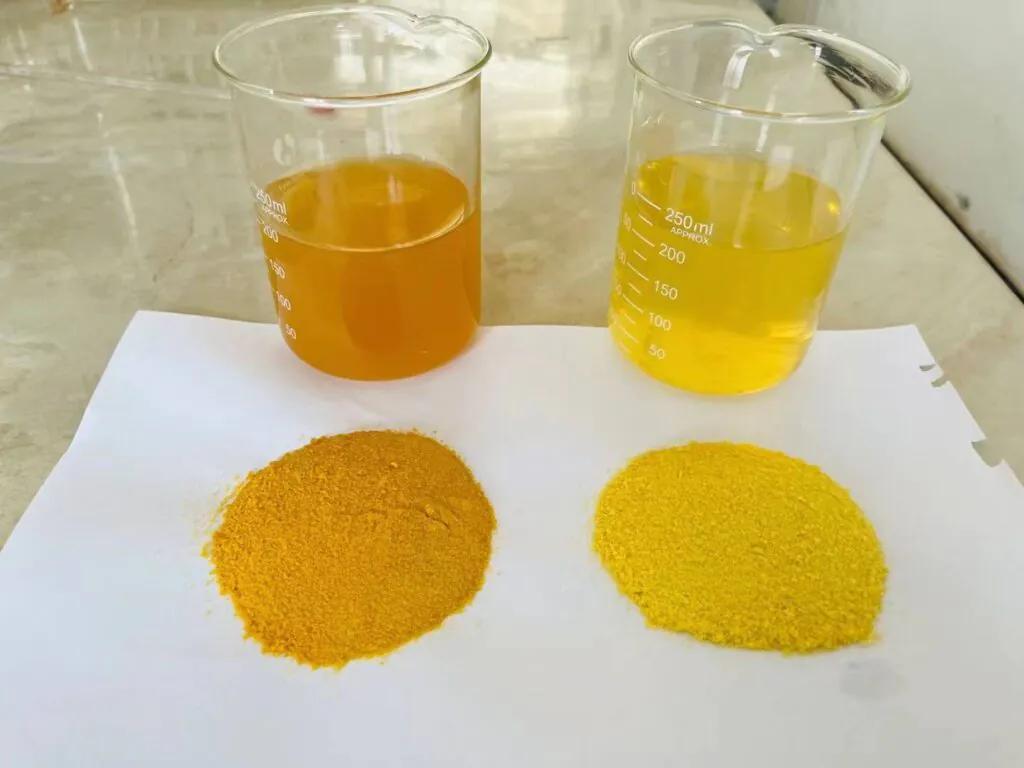
Visible signs of degradation: Increased turbidity in the product, formation of white or gelatinous precipitate, density below 1.18 kg/L (may indicate dilution by condensation or evaporation of HCl). Note that early-stage basicity degradation produces no visible sign — only laboratory analysis confirms it.
Powder PAC
Stated shelf life: 12–24 months from production date in original sealed packaging under dry storage (< 70% relative humidity, normal ambient temperature)
What degrades: Moisture absorption causes surface hydrolysis of aluminum polymer chains, forming aluminum hydroxide lumps. This is primarily a physical problem — the product cakes and dissolves incompletely — rather than a chemical degradation of the bulk product.
Rate of degradation:
- In sealed original packaging at < 70% RH: minimal degradation for 12–24 months
- In opened or damaged packaging at high humidity: caking can begin within days to weeks
- At normal humidity (40–60% RH) in opened bags: product quality maintained for 1–4 weeks if bags are resealed after each use
Visible signs of degradation: Visible lumps, reduced flow when pouring from bag, incomplete dissolution in water leaving white residue.
How Storage Conditions Affect Shelf Life
Temperature is the dominant factor for liquid PAC shelf life. The Arrhenius relationship for chemical reaction rates means that every 10°C increase in storage temperature approximately doubles the reaction rate — including the hydrolysis reaction that degrades PAC basicity. Product stored at 30°C degrades approximately twice as fast as product stored at 20°C.
Humidity is the dominant factor for powder PAC shelf life. Powder PAC stored in sealed packaging is not sensitive to normal temperature variation. Once packaging is opened, high-humidity environments accelerate caking dramatically.
Sunlight exposure: UV radiation accelerates polymer degradation in liquid PAC stored in transparent or semi-transparent containers. Always store liquid PAC in opaque, UV-resistant tanks or away from direct sunlight.
How to Check If Your PAC Is Still Within Specification
Quick Field Checks (No Laboratory Required)
For liquid PAC:
- Visual inspection: Product should be clear to pale yellow, uniformly fluid. Significant cloudiness, white precipitate, or viscosity change is a warning sign.
- Density measurement: Measure with a hydrometer. Liquid PAC at 10–11% Al₂O₃ should give density 1.18–1.22 kg/L at 20°C. Values below 1.15 suggest significant quality change.
- pH of 1% solution: Dissolve 10 mL of PAC in 990 mL of distilled water. Measure pH. Should be 3.5–5.0. Values above 5.5 suggest significant basicity reduction.
For powder PAC:
- Visual inspection: Product should be free-flowing with no visible lumps. If lumps are present, test dissolution.
- Dissolution test: Dissolve a known weight in a known volume of distilled water. Solution should be clear to pale yellow with no insoluble residue after 30 minutes of mixing. White residue indicates compromised product.
Laboratory Verification
For definitive shelf life assessment, send a sample to an independent laboratory for full analysis: Al₂O₃ content, basicity, pH, and density. Compare with the original COA for the batch. If Al₂O₃ is more than 0.5% below specification or basicity has declined by more than 5 percentage points, treat the product as degraded.
Inventory Management to Maximize Shelf Life Value
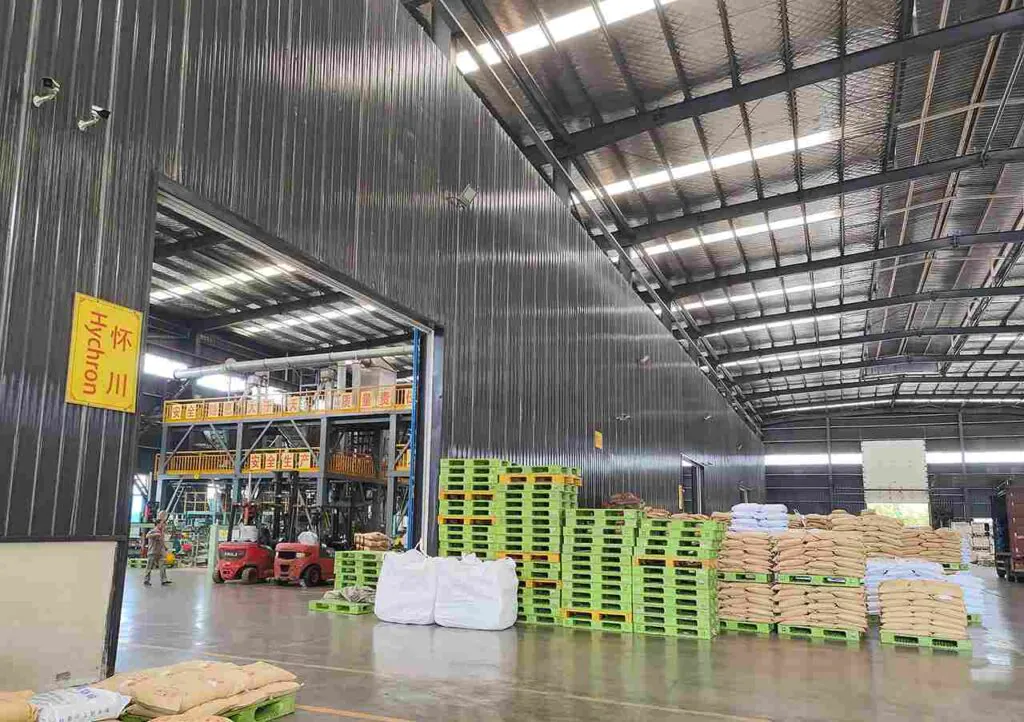
FIFO (First-In, First-Out) rotation: Always use oldest stock first. Mark delivery dates on all tanks and bags. Never allow new deliveries to be used before older stock.
Order frequency vs safety stock balance: Ordering more frequently (smaller batches more often) maximizes product freshness but increases delivery frequency and unit price. The optimal ordering frequency balances freshness, storage capacity, and logistics cost. For liquid PAC with 6–12 month shelf life, monthly ordering maintains good product freshness in most plants.
Consumption forecasting: Build a consumption forecast that accounts for seasonal variation. Order quantities that will be consumed within the product’s shelf life under worst-case consumption scenarios (i.e., the quantity ordered in summer must be consumed before summer ends, not carried over winter at reduced consumption).
Pre-delivery shelf life check: When accepting deliveries, check the production date on the COA. Reject deliveries where the production date leaves less than 60 days of shelf life remaining under your storage conditions.
For storage condition requirements: PAC Storage Guidelines: Liquid and Powder Requirements
Risk Management: What to Do If PAC Approaches or Exceeds Shelf Life
Product approaching shelf life (within 60 days of expiry):
- Accelerate consumption by bringing forward scheduled orders of other products
- Conduct a jar test at current raw water conditions to confirm coagulation performance is normal
- If performance is confirmed normal, continue using the product but monitor closely
Product at or past stated shelf life:
- Conduct laboratory analysis for Al₂O₃ content and basicity before making a use/discard decision
- If within specification (Al₂O₃ ≥ stated minimum, basicity within ±5% of original COA value), the product is likely still usable — conduct a jar test to confirm before resuming normal dosing
- If below specification, dispose of the product according to local regulations and notify your supplier
For drinking water applications: More conservative: any product past stated shelf life should be tested before use, regardless of visual appearance. Residual aluminum compliance is sensitive to basicity degradation.
Frequently Asked Questions
Our supplier says their PAC has a 12-month shelf life, but we have seen basicity drift in product stored for 8 months in warm outdoor tanks — who is right?
Both may be correct on their own terms. Shelf life stated by a supplier typically assumes storage within recommended temperature conditions (usually stated as “store below 30°C” or similar). If your outdoor tanks reach 35–40°C in summer, degradation accelerates beyond the shelf life assumption. The stated shelf life applies to storage within the specified conditions — exceeding those conditions shortens effective shelf life. Add insulation or shading to outdoor tanks, or adjust ordering frequency to account for accelerated degradation in hot conditions.
Can degraded PAC be re-activated or restored?
No. Once aluminum polymer chains have hydrolyzed and precipitated, the reaction is not reversible under normal conditions. Degraded product cannot be restored to its original basicity by mixing, heating, or chemical addition. If a product has degraded below specification, it should be discarded.
We ordered too much PAC and have 6 months of stock that will exceed shelf life before we can use it — what should we do?
Options include:
(1) accelerate usage by increasing dose slightly if treatment performance allows;
(2) offer excess stock to nearby facilities that use the same product;
(3) negotiate with your supplier to return or exchange excess stock (not all suppliers accept returns, but it is worth discussing);
(4) dispose of expired stock through a licensed waste chemical contractor. To prevent this situation in future, work with our team to build a consumption forecast that matches order quantities to realistic consumption rates.
Conclusion
PAC shelf life management is a straightforward inventory planning discipline — the key variables are product form (liquid vs powder), storage temperature (for liquid) and humidity (for powder), and production date tracking to ensure FIFO rotation.
Products stored within recommended conditions and used within their stated shelf life consistently deliver the coagulation performance that was verified at production. Products stored outside recommended conditions or used beyond shelf life introduce an invisible performance variable that is difficult to diagnose without laboratory analysis.
Contact our technical team today for shelf life guidance specific to your storage conditions, storage specification recommendations for your facility, and product samples for pre-procurement quality verification. We respond within 24 hours.