Skip to content
Fruit cracking costs grape growers more than most people outside the industry realize. A single rain event during late ripening can split 20–40% of a berry crop overnight, and cracked fruit doesn’t just lose market value — it becomes an entry point for Botrytis and other fungal pathogens that spread rapidly through the cluster. We work with growers across multiple growing regions, and calcium management is consistently one of the most cost-effective interventions available for reducing cracking losses. This article covers why calcium matters, how to apply calcium chloride effectively, and what application rates actually work in field conditions.
Why Calcium Deficiency Drives Fruit Cracking in Grapes
Calcium is a structural element in plant cell walls, not a metabolic nutrient in the conventional sense. It cross-links pectin molecules in the middle lamella — the layer between adjacent cells — creating the rigid, cohesive structure that gives berry skin its mechanical strength. When calcium supply is insufficient during berry development, cell walls are thinner and more permeable, and the middle lamella loses integrity.
The practical consequence shows up during two specific growth windows. The first is rapid berry enlargement (typically 3–6 weeks post-fruit set), when cell division and expansion create internal growth pressure that weak cell walls can’t contain. The second is the period around véraison and ripening, when rain or irrigation after a dry period causes rapid water uptake through both roots and the berry skin surface. Berries with adequate calcium resist this hydraulic pressure; calcium-deficient berries split.
Calcium also influences several secondary effects that compound the cracking risk. Adequate calcium strengthens the cuticle — the waxy outer layer of the berry skin — which slows direct water absorption through the berry surface during rain events. It also supports cell membrane integrity, reducing electrolyte leakage that weakens cell cohesion under stress. Grapes with sufficient calcium consistently show better tolerance to the rapid moisture fluctuations that trigger cracking in vulnerable varieties.
The challenge with calcium is its movement in the plant. Unlike nitrogen or potassium, calcium travels almost entirely through the xylem with the transpiration stream. Berries transpire very little — particularly after véraison when the cuticle thickens — which means calcium supply to developing berries is inherently limited compared to leaves. This is why foliar and direct cluster applications matter: relying on root uptake alone often delivers insufficient calcium to the fruit at the critical development stages.
Application Method 1: Foliar Spray with Calcium Chloride
Foliar application delivers calcium directly to leaves and berry surfaces, bypassing the transpiration limitation that restricts root-to-fruit calcium movement. It’s the faster-acting of the two methods and the one we recommend as the primary intervention during the key cracking-risk windows.
Timing: When to Start and How Long to Continue
Begin foliar calcium chloride applications at early berry development, approximately 2–3 weeks after fruit set when berries reach 4–6 mm diameter. Continue through the rapid growth phase and into early véraison. Most of the structural calcium that matters for cracking resistance is incorporated during active cell division — by the time berries are fully sized, the window for building cell wall strength has largely closed.
For high-risk varieties or in regions with history of rain events during ripening, continue light applications (0.2–0.3% concentration) through the final 3–4 weeks before harvest, with the last application no later than 7–10 days pre-harvest to avoid residue concerns on fresh market fruit.
Concentration and Frequency
| Growth Stage | Recommended Concentration | Frequency |
|---|---|---|
| Early berry development (4–8 mm) | 0.3–0.5% CaCl₂ | Every 7–10 days |
| Rapid enlargement phase | 0.3–0.5% CaCl₂ | Every 7 days |
| Post-véraison / pre-harvest | 0.2–0.3% CaCl₂ | Every 10–14 days |
Stay within the 0.3–0.5% concentration range for standard applications. Above 0.5%, there is measurable risk of leaf tip burn and berry surface russeting in sensitive varieties, particularly under high-temperature conditions. Field trials on Muscat and Thompson Seedless varieties document phytotoxicity symptoms at concentrations above 0.8% applied during temperatures exceeding 30°C.
Application Technique
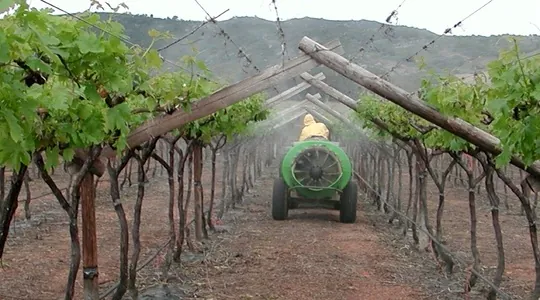
Use a fine mist nozzle calibrated for 150–200 L/ha per application. Coverage quality matters more than volume — calcium chloride only works where it contacts the berry surface. Prioritize full cluster coverage, including the interior of tight clusters where cracking is often worst. Spray leaf undersides for additional calcium absorption through stomata. Apply in the early morning or late afternoon when temperatures are below 28°C and wind speed is low — midday application in hot conditions increases concentration on leaf surfaces as the carrier evaporates and raises phytotoxicity risk.
What Field Data Shows
Foliar calcium chloride programs applied consistently from early berry development through véraison reduce fruit cracking incidence by 30–60% in documented vineyard trials across Vitis vinifera varieties. Berry skin firmness measured by puncture resistance increases by 15–25% in treated versus untreated fruit. Post-harvest Botrytis infection rates in treated fruit are typically 20–35% lower, reflecting the combined effect of stronger skin structure and reduced entry points from cracking.
Application Method 2: Soil Application for Season-Long Calcium Supply
Soil application provides a sustained calcium source through root uptake, complementing foliar programs rather than replacing them. It’s particularly valuable in vineyards where soil calcium levels are genuinely deficient — pH below 6.0, sandy soils with low cation exchange capacity, or heavily leached soils in high-rainfall regions.
Solution Preparation and Application Rate
Dilute calcium chloride to ≤ 1,000 ppm (0.1%) for soil application. Higher concentrations risk salt stress in the root zone, particularly in light-textured soils or during dry conditions when soil solution concentration is already elevated. For a typical vineyard row spacing of 2.5–3.0 m with vine spacing of 1.5–2.0 m, apply 10–20 L of solution per vine per application, directed evenly around the base of each plant to cover the active root zone radius of approximately 0.5–0.8 m from the trunk.
Apply every two weeks during the rapid berry development phase — roughly from fruit set through véraison, covering approximately 8–12 weeks of the growing season. Pair soil calcium applications with irrigation events where possible to improve calcium movement into the root zone rather than surface evaporation.
When Soil Application Is Most Justified
Conduct soil and petiole analysis before committing to a soil calcium program. Soil pH below 6.2 and exchangeable calcium below 60% of cation exchange capacity indicate genuine soil calcium deficiency that soil application can address. Petiole calcium below 1.0% dry weight at bloom is the standard threshold indicating calcium deficiency in the vine. If soil calcium is adequate but fruit cracking persists, the issue is calcium distribution within the vine rather than total supply — foliar applications will be more effective than adding more calcium to the soil.
Best Management Practices That Multiply Calcium Program Effectiveness
Calcium chloride application works best as part of an integrated cracking management approach. These complementary practices address the other contributing factors that calcium alone cannot control.
Irrigation Consistency Sudden water availability changes — drought followed by heavy rain or irrigation — are the most common trigger for acute cracking events. Regulated deficit irrigation during the lag phase followed by consistent moisture supply through ripening reduces the hydraulic stress that causes berries to split under growth pressure. Soil moisture monitoring at 20 cm and 40 cm depth gives early warning of moisture deficit before it creates cracking-risk conditions.
Nitrogen Management Excessive nitrogen — particularly late-season applications that extend shoot growth — diverts photoassimilates away from berry development and weakens skin tissue. Target total nitrogen at 40–60 kg N/ha per season for mature vines, with the majority applied pre-bloom and minimal or no nitrogen after fruit set. Vigorous, high-nitrogen canopies also create humidity and disease pressure that compounds cracking damage.
Canopy Management Adequate leaf removal in the fruit zone improves air circulation, reduces berry surface wetness duration after rain, and allows better spray penetration during calcium applications. Exposed berries also develop thicker cuticles under UV exposure, which improves resistance to direct water absorption — an additional cracking protection mechanism beyond the structural calcium effect.
FAQ
Q: How do I dissolve calcium chloride flakes correctly for foliar spray application in vineyards?
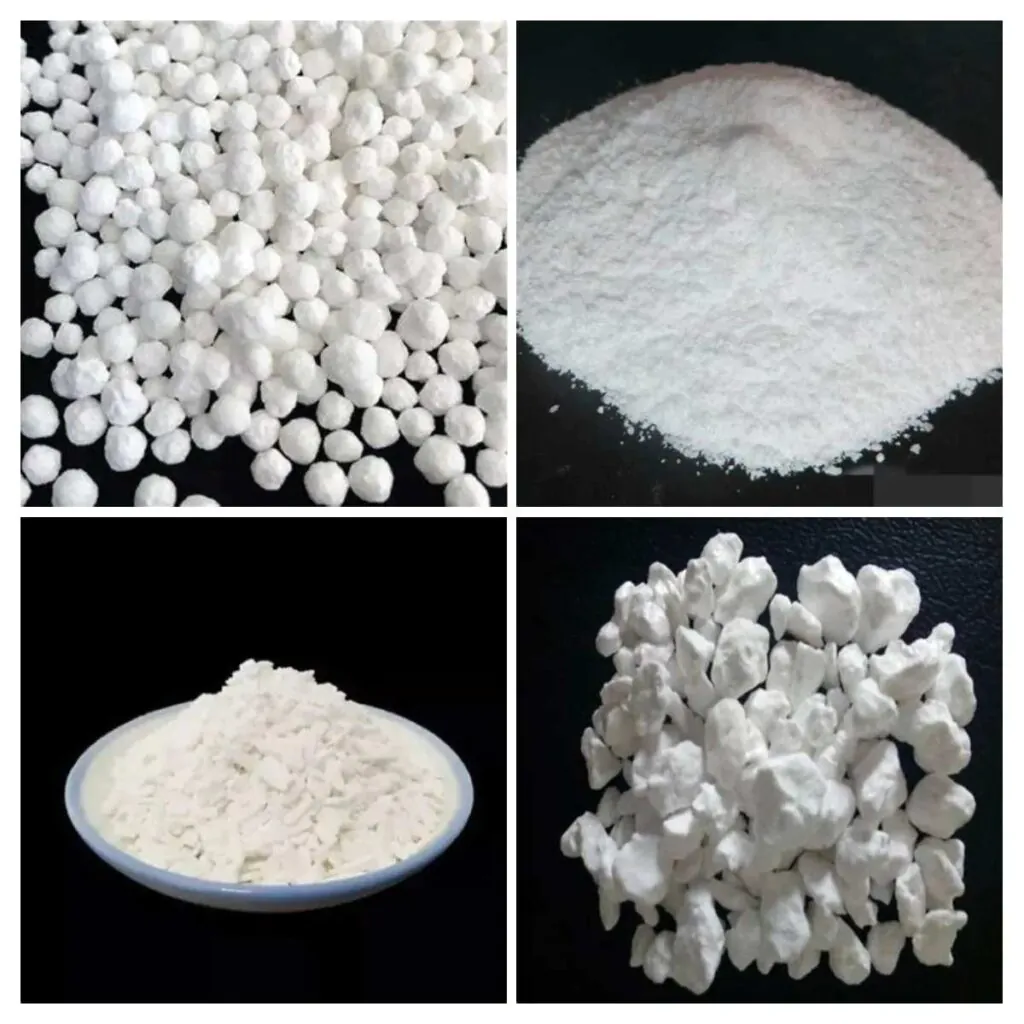
A: Add flakes slowly to clean water while stirring — never add water to dry flakes, as the strong exothermic reaction can cause spattering. For a 0.3% solution, dissolve 3 kg of 94% calcium chloride flakes per 1,000 L of water. Use within 24 hours and apply through a stainless steel or plastic sprayer — calcium chloride is corrosive to mild steel fittings.
Q: What is the difference between calcium chloride and calcium nitrate for preventing grape fruit cracking?
A: Both supply calcium, but calcium nitrate also adds nitrogen — useful early in the season but potentially problematic post-véraison when excess nitrogen weakens skin tissue and extends shoot growth. Calcium chloride delivers calcium without the nitrogen load, making it the better choice for mid-to-late season applications when calcium is needed but additional nitrogen is not. Calcium chloride also has higher water solubility and slightly faster foliar absorption.
Q: What is the shelf life of agricultural-grade calcium chloride flakes and how should I store them between seasons?
A: Calcium chloride flakes maintain full efficacy indefinitely when stored sealed and dry. The practical issue is hygroscopicity — flakes absorb atmospheric moisture and clump or dissolve if packaging is compromised. Store in original sealed bags inside a dry shed, off the ground on pallets. Once opened, transfer to airtight containers and use within 2–3 months. Clumped product that hasn’t liquefied is still usable — dissolve it fully before application and filter through a coarse screen to remove undissolved lumps before spraying.
A Consistent Calcium Program Pays Back in Every Harvest
Fruit cracking losses are largely preventable with the right calcium management strategy applied at the right time. The window that matters most is early berry development through véraison — calcium incorporated during active cell division builds the structural strength that protects berries weeks later when rain events or irrigation fluctuations create cracking pressure. A well-executed foliar program with 0.3–0.5% calcium chloride applied every 7–10 days during this window, combined with consistent irrigation management and appropriate canopy practices, consistently reduces cracking incidence by 30–60% in commercial vineyards.
HyChron supplies agricultural-grade calcium chloride with full technical documentation and application support. Contact our team for product specifications, customized application plans based on your variety and growing conditions, or sample requests.