
Most growers think about calcium only when they see deficiency symptoms — blossom end rot in tomatoes, tip burn in lettuce, bitter pit in apples. By that point, the damage is already done. What we’ve found working with commercial growers across multiple crop types is that proactive calcium management, using calcium chloride as the primary delivery vehicle, does more than correct deficiency. It builds the structural and physiological foundation that makes crops genuinely harder for pathogens to infect and colonize. This article explains the mechanisms behind that protection and how to put them into practice.
How Calcium Chloride Protects Plants Against Disease
The disease protection that calcium provides isn’t a single mechanism — it works through five interconnected pathways that together reduce infection risk, slow pathogen spread, and improve how plants respond when disease pressure is present.

Strengthening Cell Walls: The First Physical Barrier Against Pathogens
Calcium is a structural component of the plant cell wall, where it cross-links pectin polymers in the middle lamella — the layer cementing adjacent cells together. This cross-linking increases cell wall rigidity and mechanical strength, and it directly affects how easily fungal hyphae and bacterial pathogens can penetrate plant tissue.
Research on Botrytis cinerea infection in strawberry and grape demonstrates the relationship clearly: fruit with calcium concentrations above 0.08% dry weight shows significantly slower lesion development than calcium-deficient tissue, because the pathogen must produce more cell wall-degrading enzymes (polygalacturonases and pectinases) to overcome calcium-reinforced pectin structures. At the field level, this translates to longer latent periods after initial infection and slower disease spread through a crop.
The same mechanism applies to bacterial pathogens. Calcium-deficient cell walls are more susceptible to enzymatic maceration — the process by which soft rot bacteria like Erwinia species dissolve tissue rapidly. Adequate calcium doesn’t make plants immune, but it measurably raises the infection threshold and slows pathogen progression after initial penetration.
Calcium chloride foliar sprays at 0.3–0.5% concentration applied during active growth periods maintain tissue calcium at protective levels in high-transpiration crops. For low-transpiration fruit tissue where xylem-delivered calcium is limited — the same transport constraint that causes blossom end rot and bitter pit — direct foliar application is the most reliable delivery method.
Supporting Root Development and Nutrient Uptake Efficiency
Calcium supports root tip meristem function and membrane integrity in root cells. Calcium-deficient roots develop abnormally — root tips become necrotic, lateral root development is suppressed, and root hair density decreases. The practical consequence is reduced water and nutrient uptake capacity at exactly the times when plants need resources to mount disease resistance responses.
Strong, well-developed root systems also compete more effectively with soil-borne pathogens for rhizosphere resources. Pythium and Phytophthora species — the primary oomycete pathogens causing damping-off and root rot in most crops — establish most aggressively in stressed root zones where root exudate chemistry signals plant weakness. Calcium-supported root health changes that chemistry profile and reduces the environmental cues that stimulate zoospore attraction and germination.
Soil applications of calcium chloride at 1–3 kg per 100 m² incorporated before planting, or 0.1% solution applied through drip irrigation during the growing season, maintain root zone calcium availability throughout the crop cycle. For established perennial crops, annual soil applications during the dormant period allow calcium to move into the root zone before the following season’s active growth begins.
Regulating Cell Signaling and Stress Response Mechanisms
Calcium functions as a second messenger in plant cell signaling — when a pathogen attacks or an environmental stress occurs, calcium ion concentration inside plant cells rises rapidly, triggering a cascade of defense responses. This signaling role means that calcium availability directly affects how quickly and effectively plants can mobilize their innate immune responses.
Plants with adequate calcium show faster activation of pathogenesis-related (PR) proteins — enzymes and structural proteins that directly inhibit pathogen growth — after infection challenge. They also show faster closure of stomata in response to pathogen-associated molecular patterns, which limits bacterial entry through the stomatal pathway that many foliar pathogens exploit. Studies on calcium nutrition in tomato show that plants with adequate calcium produce 30–50% higher salicylic acid concentrations in response to infection challenge compared to calcium-deficient plants — salicylic acid being the primary signaling molecule in systemic acquired resistance.
These are not effects of calcium chloride specifically versus other calcium sources — they reflect calcium nutrition generally. Calcium chloride is simply a highly soluble, rapidly available calcium source that delivers calcium to plant tissue faster than less soluble forms like calcium carbonate or calcium sulfate, making it preferable for corrective or preventive programs where speed of delivery matters.
Improving Soil Conditions That Influence Disease Pressure
Calcium chloride applied to soil influences the soil physical and chemical environment in ways that affect soil-borne disease pressure beyond direct plant nutrition effects.
Calcium improves soil aggregate stability by replacing sodium and other monovalent cations on clay particle surfaces, which reduces soil compaction and improves drainage. Better-drained soils maintain aerobic conditions in the root zone, which directly suppresses anaerobic soil-borne pathogens and limits the waterlogged conditions that favor Pythium and Phytophthora zoospore activity. In compacted or poorly draining soils, calcium chloride application at 2–4 kg per 100 m² as part of a soil amendment program can measurably reduce root rot incidence alongside structural improvements like subsoiling or organic matter incorporation.
Calcium also affects soil pH buffering capacity. While calcium chloride itself doesn’t significantly change soil pH in well-buffered soils, the increased calcium availability at the soil-plant interface supports a rhizosphere chemistry less favorable to certain fungal pathogens that thrive under calcium-deficient, low-pH conditions. This effect is most pronounced in acidic, sandy soils where calcium leaching is significant and soil calcium levels are genuinely limiting.
Enhancing Stress Tolerance to Reduce Disease Vulnerability Windows
Plant disease incidence correlates strongly with stress events — drought, heat stress, salinity, and nutrient deficiency all create vulnerability windows when pathogen infection succeeds more readily. Calcium chloride addresses several of these stress pathways directly.
Under drought stress, adequate calcium maintains membrane integrity in water-stressed cells, reducing the electrolyte leakage that signals plant weakness to opportunistic pathogens. Under temperature stress, calcium-regulated enzyme systems maintain function across a wider temperature range, allowing plants to continue producing defense compounds even during temperature extremes that otherwise suppress metabolism. Under salinity stress — increasingly relevant as irrigation water quality declines in many agricultural regions — calcium chloride applications help maintain calcium-to-sodium ratios at plant membranes, preserving membrane selectivity and reducing the ionic toxicity effects that predispose stressed plants to disease.
Trials on tomato under controlled salinity stress showed that calcium chloride foliar applications at 0.3% concentration every 10 days reduced Fusarium wilt incidence by 25–35% compared to untreated controls under equivalent salinity conditions — a result attributed to both improved membrane integrity and maintained systemic resistance signaling capacity.
Practical Application Methods and Rates
| Application Method | Concentration / Rate | Timing | Best Suited For |
|---|---|---|---|
| Foliar Spray | 0.3–0.5% CaCl₂ solution | Every 7–14 days during active growth | Fruit crops, vegetables, high-value crops |
| Soil Application | 1–3 kg per 100 m² | Pre-plant or early season incorporation | Field crops, perennial crops, root zone improvement |
| Drip Irrigation | 0.05–0.1% solution | Continuous or weekly during growing season | High-value crops with drip infrastructure |
| Post-Harvest Dip/Spray | 2–4% CaCl₂ solution | Immediately after harvest | Fruit intended for cold storage |
Foliar spray is the fastest-acting method for building leaf and fruit tissue calcium levels. Apply in early morning or late afternoon when temperatures are below 28°C to avoid evaporation-driven concentration on leaf surfaces that can cause tip burn at the spray margins. Use a fine mist nozzle for even coverage and include coverage of the fruit cluster or developing fruit directly — calcium absorbed through leaf surfaces contributes less to fruit tissue than direct fruit surface absorption.
Soil application provides sustained calcium to the root zone throughout the season but relies on root uptake and xylem transport, which limits delivery to low-transpiration tissues like fruit. It’s most effective for root health and stress tolerance benefits rather than for rapidly building fruit tissue calcium. Apply evenly across the root zone area and incorporate lightly rather than banding at the soil surface.
Drip irrigation delivery combines the consistency of soil application with precise volume control, making it well-suited for intensive production systems where calcium management is part of a comprehensive fertigation program. Keep drip solution concentration at ≤ 0.1% (1,000 mg/L) to avoid salt accumulation in the root zone under high-frequency drip scheduling.
Post-harvest dip or spray at higher concentrations (2–4% CaCl₂) is standard practice for apples and pears destined for long-term cold storage, where bitter pit and storage breakdown are calcium-deficiency-related disorders that develop during refrigeration. This application is separate from the in-season disease management program but represents one of the highest-value uses of calcium chloride in commercial fruit production.
FAQ
Q: How do I apply calcium chloride through a drip irrigation system without causing salt stress in the root zone?
A: Keep solution concentration at or below 0.1% (1 g/L) and apply with sufficient irrigation volume to maintain soil moisture above field capacity in the root zone. Monitor soil electrical conductivity (EC) monthly — if EC exceeds 2.0 dS/m in the root zone, reduce calcium chloride frequency or concentration and apply a leaching irrigation to flush accumulated salts below the root zone.
Q: What is the difference between calcium chloride and calcium nitrate for disease prevention in crops, and which should I use?
A: Both supply calcium effectively, but calcium nitrate also adds nitrogen — useful early in the season but potentially problematic later when excess nitrogen promotes soft, disease-susceptible tissue growth. Calcium chloride delivers calcium without the nitrogen load, making it the better choice for mid-to-late season disease prevention programs and for crops where nitrogen management is critical. Calcium chloride also has higher solubility and faster foliar absorption than calcium nitrate.
Q: What concentration of calcium chloride is safe for foliar application, and how do I avoid leaf burn?
A: Stay within 0.3–0.5% for most crops during the growing season. Apply when temperatures are below 28°C and humidity is moderate — hot, dry conditions cause rapid evaporation that concentrates the solution on leaf surfaces and increases burn risk. Test a small area 48 hours before full application when using a new crop variety or during unusually hot weather. Sensitive crops like lettuce and some herbs may show tip burn above 0.3%; fruit crops and brassicas generally tolerate 0.5% without issue.
Calcium Chloride Works Best as Prevention, Not Rescue
The consistent lesson from field experience is that calcium chloride delivers the most value when it’s part of a planned, season-long program rather than a reactive response to visible deficiency symptoms or disease outbreak. By the time Botrytis lesions appear or root rot has established, tissue calcium levels are already a secondary concern — the infection has succeeded. Applied preventively at consistent intervals through foliar spray, soil incorporation, or drip irrigation, calcium chloride builds the structural and physiological resistance that makes infection harder to initiate and slower to spread.
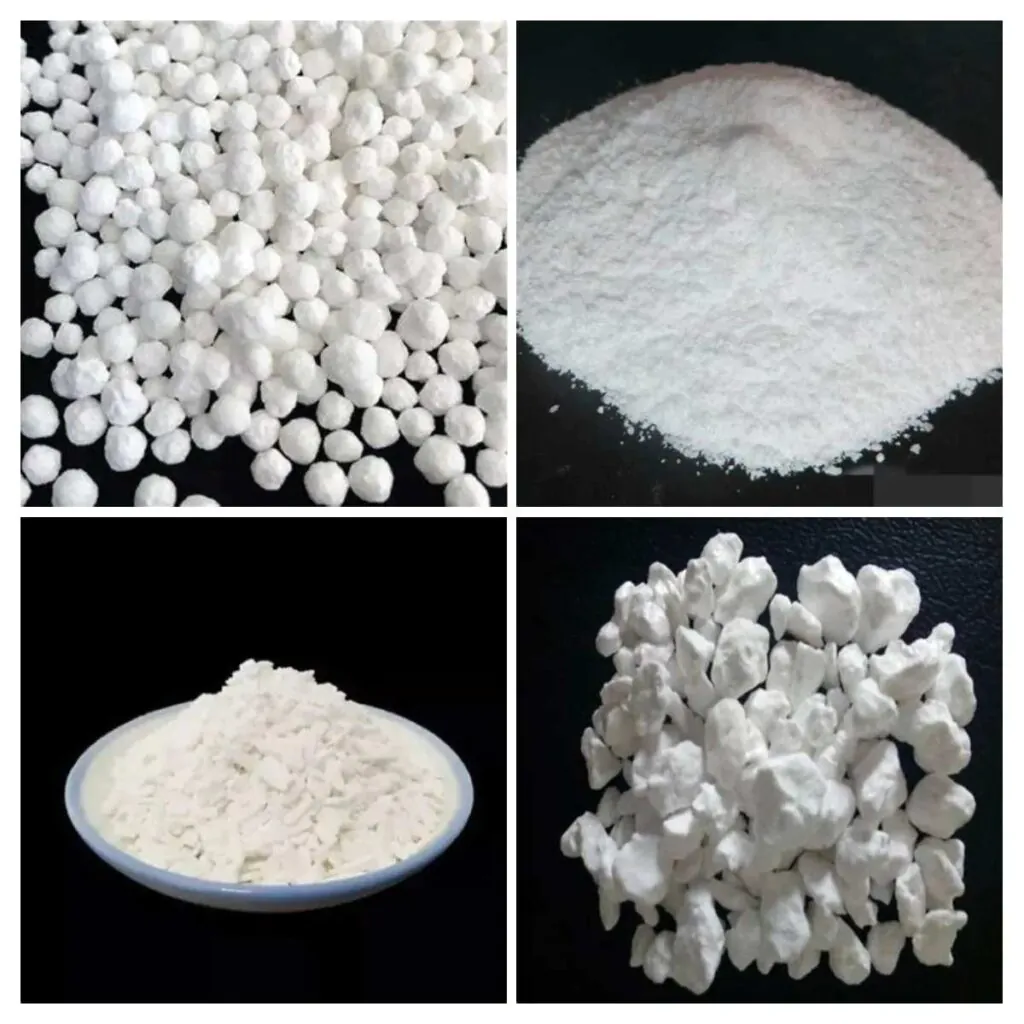
HyChron supplies agricultural-grade calcium chloride in flake and liquid form, with full technical documentation and application guidance for major crop types. Contact our team for product specifications, concentration recommendations for your specific crop and growing system, or bulk supply options.