 Skip to content
We recently received a client inquiry asking an important question in water treatment:
Can different ionic types of polyacrylamide (PAM) be mixed together during use?
This is a common concern, but the answer is clear — in most cases, different ionic types of polyacrylamide should NOT be mixed directly.
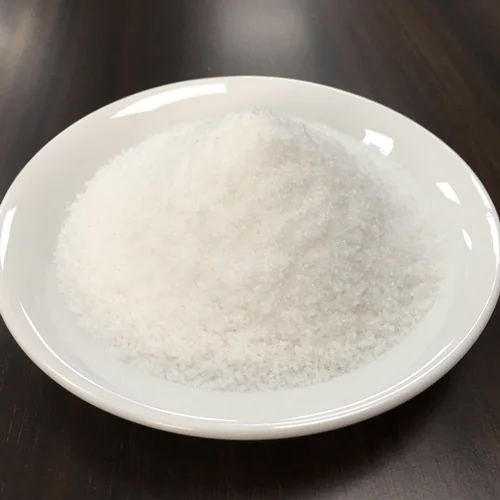
Why Different Polyacrylamide Types Should Not Be Mixed
Polyacrylamide products differ greatly in molecular structure and functional monomers.
For example, anionic and cationic polyacrylamide carry opposite charges.
If they are mixed together in the same treatment stage:
- Electrostatic neutralization occurs
- Flocculation performance drops sharply
- The treatment effect becomes unstable or even fails
In real applications, mixing anionic and cationic PAM usually reduces efficiency rather than improving it.
When Multiple Flocculants Are Used Together
Although different PAM ionic types should not be mixed, it is very common to use multiple water treatment chemicals in one system, but at different stages.
Typical examples include:
- Polyaluminum chloride (PAC) used first for coagulation
- Anionic or cationic polyacrylamide used later for flocculation or sludge dewatering
In municipal wastewater treatment:
- Anionic PAM may be used in the primary clarification stage
- Cationic PAM is commonly applied during the sludge dewatering stage
These products work in different sections of the same process, not at the same dosing point.
Amphoteric Polyacrylamide: Not a Simple Mixture
Some users believe amphoteric polyacrylamide is simply a mix of anionic and cationic products.
This understanding is not correct.
Amphoteric polyacrylamide is a single polymer, synthesized from:
- Cationic monomers
- Acrylamide monomers
- Hydrolysis agents
It forms a linear polymer chain with both positive and negative charges distributed irregularly.
Because of this structure, amphoteric polyacrylamide shows:
- Strong adsorption ability
- Effective turbidity removal
- Good bonding and flocculation performance
- Stable decolorization results

How to Choose the Right Polyacrylamide Product
In industrial water treatment, there are many types of polyacrylamide with different specifications.
Instead of mixing different ionic products, the most economical and effective approach is to:
- Analyze the wastewater characteristics
- Identify the treatment stage
- Select the most suitable PAM model through testing
HyChron recommends targeted product selection, rather than blind combination, to achieve stable performance and lower chemical costs.
Article Summary
Different ionic types of polyacrylamide should not be mixed directly, as this often causes charge neutralization and performance loss.
Multiple flocculants can be used in one treatment system, but only when applied at the correct stages.
Choosing the right polyacrylamide through proper selection and testing is the most reliable and cost-effective solution.


