 Skip to content
Caustic soda (sodium hydroxide, NaOH) is a key chemical in modern textile manufacturing. It helps transform raw fibers into high-quality fabrics with better strength, brighter colors, and improved performance. From pre-treatment to dyeing and finishing, caustic soda supports both production efficiency and fabric quality.
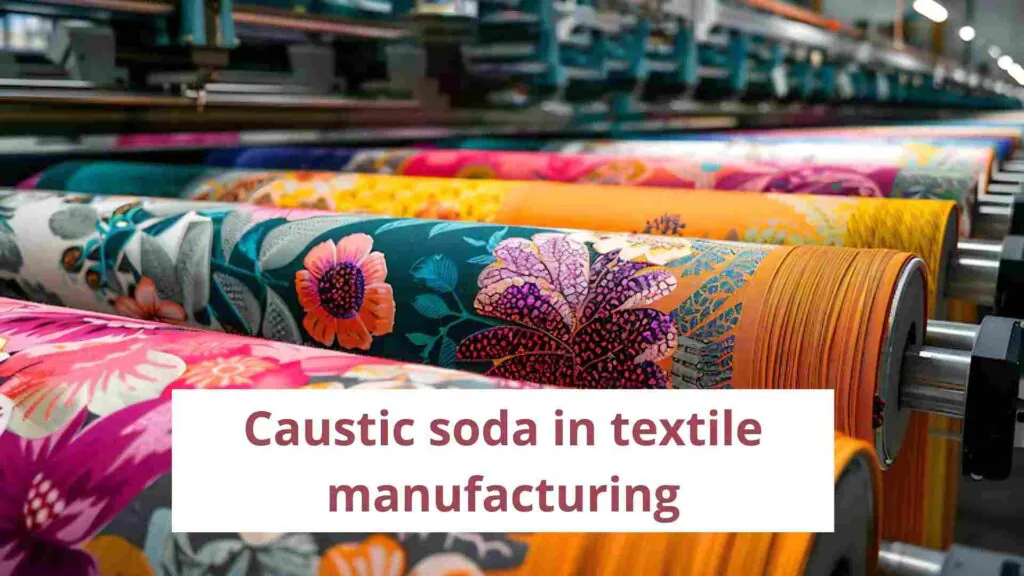
Mercerization: Making Cotton Stronger and Shinier
Mercerization is one of the most important treatments for cotton fabrics. During this process, cotton is treated with a strong caustic soda solution while the fabric is held under tension. The fibers swell and their internal structure changes, which improves fabric performance.
Mercerized cotton reflects light more evenly, giving the fabric a soft silk-like luster. The treatment also increases tensile strength, which reduces yarn breakage during weaving and processing. Another major benefit is improved dye absorption. The modified fiber structure allows dyes to penetrate more deeply, producing brighter and longer-lasting colors. This is especially important in products like high-quality shirts, bed linens, and denim fabrics.
Scouring: Cleaning Fibers Before Dyeing
Raw cotton contains natural waxes, oils, and pectins that block dye penetration. Caustic soda is used in the scouring process to remove these impurities before bleaching or dyeing.
During scouring, fabrics are treated in a hot alkaline solution. The caustic soda reacts with fats and oils, turning them into water-soluble substances that can be washed away. After scouring, the fabric becomes more absorbent, which helps ensure uniform dyeing and reduces defects like streaks or uneven shades.
Dyeing and Printing: Helping Colors Bond to Fabric
Caustic soda plays an important role in both dye preparation and dye fixation. For vat dyes such as indigo, sodium hydroxide helps convert the dye into a soluble form so it can enter the fiber. After exposure to air, the dye becomes insoluble again and remains trapped inside the fabric.
In reactive dyeing, caustic soda activates the dye so it can chemically bond with the cellulose in cotton fibers. This creates strong color fastness, meaning the fabric keeps its color after washing and wearing. Without the correct NaOH level, dyeing results can be dull or uneven.
Additional Textile Applications
Caustic soda is also used in several other textile processes. During desizing, it helps remove starch-based sizing materials applied during weaving. This prepares fabrics for further treatments.
In finishing processes, sodium hydroxide can assist in improving fabric performance. It is used in some treatments that enhance flame resistance or reduce wrinkling. These finishing steps add value and improve the final product quality.
Supporting Sustainable Textile Production
Many textile factories are improving chemical recovery systems to reduce waste. In modern plants, caustic soda from mercerization and scouring can be recovered, purified, and reused. This reduces chemical consumption and lowers wastewater treatment costs.
Although alternative biological treatments are being studied, caustic soda remains the most effective and economical option for large-scale textile processing.
Why Textile Manufacturers Choose Caustic Soda
Caustic soda delivers consistent results, improves fabric quality, and supports efficient large-scale production. It helps manufacturers achieve better dyeing performance, stronger fibers, and higher-grade finished textiles. With proper handling and recovery systems, it remains a reliable and cost-effective solution for textile mills worldwide.
Looking for Reliable Caustic Soda for Textile Use?
We supply high-purity caustic soda suitable for mercerization, scouring, dyeing, and other textile applications. Stable quality, flexible packaging, and technical support are available to match your production needs.
Contact us now to get specifications, pricing, and delivery details.


