
We’ve worked with paper producers across multiple markets, and one pattern stands out: the facilities that manage recycled fiber most effectively aren’t necessarily the ones with the newest equipment — they’re the ones using the right chemistry at the right stage of the process. Polyacrylamide (PAM) sits at the center of that chemistry. This article explains how PAM supports recycled fiber performance, where it fits in the production process, and how to select the right grade for your specific application.
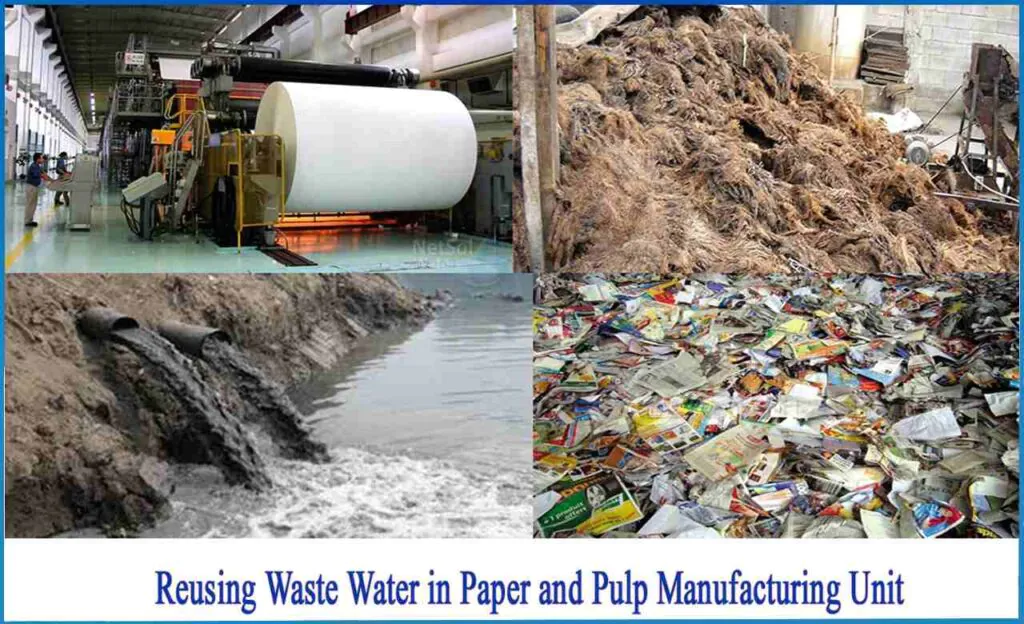
Why Recycled Fiber Quality Deteriorates — and Why It Matters
The paper industry is the third-largest manufacturing sector globally, and recycled fiber now forms the backbone of production in raw-material-limited markets. In China alone, secondary fiber recovery rates climbed from 25.8% in 1996 to approximately 30% by 1999 — and have continued rising since. But volume isn’t the whole story. Every time a fiber goes through pulping, dewatering, and drying, its physical properties take a measurable hit.
What’s happening at the fiber level is well understood. Repeated processing strengthens hydrogen bonds between cellulose molecules, pushing the fiber from an amorphous state toward a more crystalline structure. Once crystallinity increases, the fiber loses its ability to swell, absorb water, and bond effectively with neighboring fibers. The practical result shows up in breaking length, burst index, tear strength, and folding endurance — all of which decline with each recycling cycle. Fiber length shortens, and bonding strength between fibers weakens.
This isn’t a problem that better mechanical processing can solve on its own. Chemical intervention — specifically, well-chosen polymer additives — is what keeps recycled fiber performing close to virgin fiber standards through multiple cycles. That’s where PAM earns its place in the process.
What Polyacrylamide Is and Why It Works in Papermaking
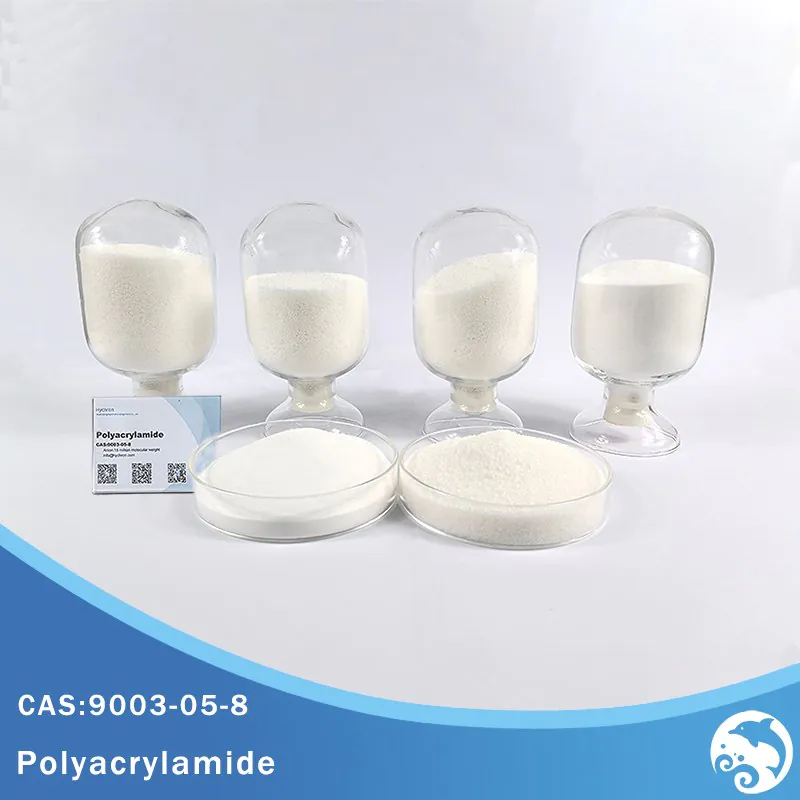
Polyacrylamide is a water-soluble polymer built around highly reactive double bonds and amide groups. These functional groups allow PAM to participate in a wide range of chemical reactions, and by adjusting raw materials and polymerization conditions, manufacturers can produce PAM across a broad spectrum of molecular weights, ionic types, and charge densities — each suited to a different function in the paper machine system.
Basic Identification:
| Property | Detail |
|---|---|
| CAS No. | 9003-05-8 |
| Molecular Formula | (C₃H₅NO)n |
| Appearance | White crystalline powder or emulsion |
| HS Code | 390690 |
| Ionic Types Available | Anionic (APAM), Cationic (CPAM), Nonionic, Amphoteric (ZPAM) |
| Molecular Weight Range | 1,000 – 20,000,000 Da |
The versatility of PAM is what makes it indispensable. No other single polymer class covers dispersant, strength agent, retention aid, and flocculant functions across such a wide operating range.
PAM Classification by Molecular Weight and Function
Molecular weight is the primary variable that determines what PAM does in the system. Using the wrong molecular weight range — even with the correct ionic type — produces poor results and wastes chemical spend.
| Function | Molecular Weight Range | Primary Mechanism |
|---|---|---|
| Dispersant | 1,000 – 10,000 Da | Disperses fibers and fillers; improves pulp uniformity |
| Strength Agent | 500,000 – 1,000,000 Da | Enhances dry and wet paper strength via fiber bonding |
| Retention & Drainage Aid | 2,000,000 – 4,000,000 Da | Increases filler and fiber retention; improves dewatering rate |
| Flocculant (wastewater) | > 7,000,000 Da | Aggregates suspended solids; aids settling and filtration |
These ranges aren’t rigid — sludge type, water chemistry, and pulp furnish all shift the optimum — but they give a reliable starting framework for grade selection.
How to Choose the Right PAM Grade for Each Paper Process Stage
Retention and Drainage — Where PAM Has the Biggest Impact on Machine Performance
Modified PAM products with molecular weights of 2,000,000–4,000,000 Da are the standard choice for retention and drainage applications. The ionic type determines how the polymer interacts with the pulp furnish.
APAM (Anionic PAM) works best in combination with cationic compounds. Paired with aluminum sulfate, APAM bridges fibers, fine fibers, and fillers through a dual-component mechanism — the aluminum salt neutralizes surface charge, and the APAM polymer bridges particles into retainable flocs. Retention rate improvements of 15–30% over baseline are typical in well-optimized systems.
CPAM (Cationic PAM) is the most widely used retention aid globally. High molecular weight, low charge density grades work through charge patch and bridging mechanisms, forming large flocs that the wire captures efficiently. CPAM also combines effectively with anionic microparticles like bentonite. In that microparticle system, high shear after CPAM addition breaks flocs into smaller fragments; bentonite then reconnects them into more uniform, shear-stable structures. The result is better formation, improved retention, and faster drainage simultaneously — something single-component systems rarely achieve.
ZPAM (Amphoteric PAM) handles contaminated furnishes better than purely anionic or cationic grades. Its anionic groups repel negatively charged contaminants in the white water loop, while its cationic groups bind directly to fibers. In recycled fiber systems where contaminant load fluctuates, ZPAM provides more consistent retention performance than single-charge polymers.
Strength Enhancement — Supporting Fiber Bonding in Recycled Pulp
PAM in the 500,000–1,000,000 Da molecular weight range targets fiber-to-fiber bonding rather than retention. This is the application where grade selection has the most direct impact on finished paper quality.
CPAM forms ionic bonds with negatively charged fiber surfaces and hydrogen bonds between fiber cell walls. Both bond types contribute to dry strength, and the combination is particularly effective in recycled fiber systems where natural fiber bonding has been weakened by repeated processing.
APAM, when used alongside rosin sizing and aluminum sulfate, contributes additional strength through a bridging mechanism. One practical limitation: strength contribution from APAM decreases as filler content increases, so it performs better in low-filler grades than in high-filler printing or writing papers.
ZPAM shows the most consistent strength improvement specifically in waste paper pulp — which makes it the grade we most often recommend for mills running high proportions of OCC (old corrugated containers) or mixed office waste. The amphoteric charge balance appears to compensate for the charge variability that characterizes heavily recycled furnishes.
Dispersion and Wastewater Treatment — the Applications Often Underestimated
Low molecular weight cationic PAM (1,000–10,000 Da) works as a dispersant by using its carboxyl groups to separate negatively charged fibers, reducing pulp viscosity and improving suspension uniformity. This matters most for long-fiber pulps — softwood kraft and similar furnishes — where uneven fiber distribution shows up as formation defects in the finished sheet.
For wastewater treatment, amphoteric PAM consistently outperforms traditional inorganic flocculants in paper effluent applications. Its amide groups form hydrogen bonds with fine particles and colloidal material in the effluent, promoting rapid aggregation and settling. Compared to alum or polyaluminum chloride used alone, amphoteric PAM typically requires lower dosage, generates less sludge volume, and produces cleaner filtrate — all of which reduce downstream treatment costs.
FAQ
Q: How do I select the right PAM ionic type for a recycled fiber paper machine?
A: Start with a jar test using your actual white water. CPAM works for most recycled furnishes; switch to ZPAM if your system has high contaminant load or unstable charge demand. We can walk you through the test protocol if needed.
Q: What is the difference between using CPAM alone versus a CPAM-bentonite microparticle system for retention?
A: CPAM alone forms larger flocs but can hurt formation uniformity. The CPAM-bentonite system breaks and reforms flocs under shear, giving better retention and formation at the same time. It adds complexity but delivers measurably better results on high-speed machines.
Q: What are the storage requirements and shelf life for PAM products used in papermaking?
A: PAM powder lasts 24 months in sealed bags below 35°C, away from moisture. Emulsion grades last 12 months under the same conditions. Keep opened bags resealed and use within 30 days. MOQ typically starts at 500 kg for standard grades.
PAM as a Long-Term Strategy for Recycled Fiber Performance
Fiber quality loss in recycled pulp is inevitable — but how fast it degrades, and how much it affects finished paper quality, depends heavily on the chemistry supporting the process. From retention and drainage to dry strength and wastewater clarification, PAM covers more ground in the paper machine system than any other polymer additive class. The key is matching molecular weight and ionic type to your specific furnish and process stage.
If you’re evaluating PAM grades for a recycled fiber line or troubleshooting retention and strength issues, our technical team is happy to review your current setup and recommend a starting point. Contact us for product data sheets or to arrange a sample for on-site trials.