Skip to content
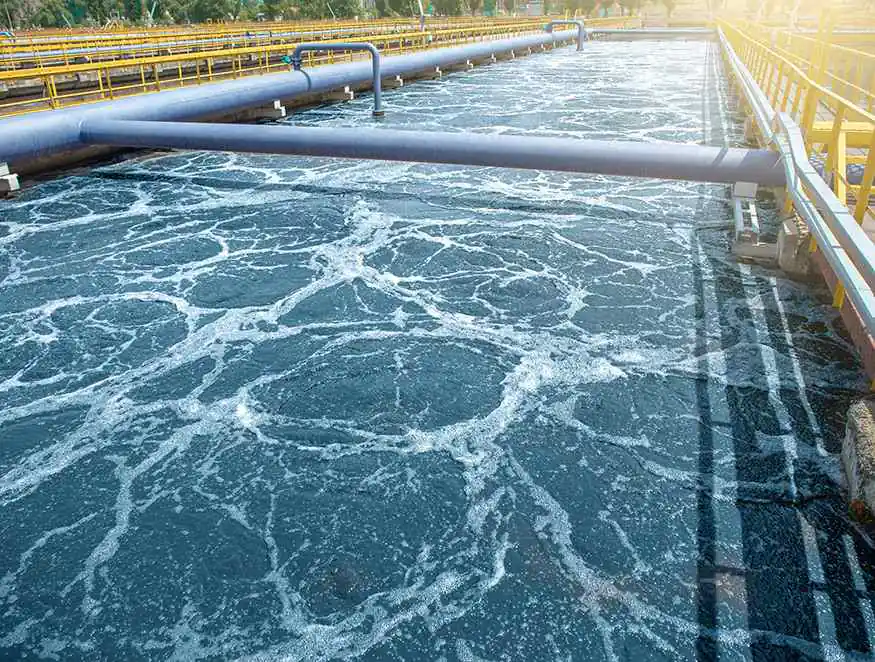
In the sewage treatment process, polyacrylamide (PAM) is widely used as a flocculant to improve solid–liquid separation and effluent quality. When applied at the correct dosage, PAM significantly enhances floc formation and settling performance. However, excessive PAM dosage is a common operational problem in many treatment plants. Overdosing not only reduces treatment efficiency but may also cause secondary water quality issues and increase operating costs. Understanding how to identify and control excessive PAM dosage is essential for stable system operation.
How to Identify Excessive PAM Dosage
When PAM is overdosed, the flocculation performance often shows opposite results compared to normal operation. Even though the dosage is increased, the treated water may remain turbid, and flocs appear weak or poorly structured. Instead of forming dense and compact flocs, excessive PAM can cause flocs to become overly fine, loose, and difficult to settle in sedimentation tanks.
In addition, high PAM concentration increases water viscosity. This can lead to filter blockage, pipeline fouling, and higher resistance in dewatering equipment, forcing operators to stop systems frequently for cleaning. In severe cases, effluent water quality deteriorates. Excess PAM may increase COD and BOD levels, interfere with biological treatment processes, and even cause odor problems by affecting microbial activity.
Common Causes of PAM Overdosing
Excessive PAM dosage is usually not caused by a single factor. In many cases, operators lack systematic dosing knowledge and rely heavily on experience rather than test data. Equipment issues are another major reason. Metering pumps, flow meters, or dosing controllers may malfunction or lose accuracy over time, resulting in uncontrolled chemical addition.
Fluctuations in influent water quality also make dosage control difficult. Sudden changes in suspended solids, organic load, or pH can cause operators to increase PAM dosage without proper jar testing. Human errors, such as incorrect records or delayed adjustments, further increase the risk of overdosing.
Practical Solutions for Controlling PAM Dosage
To prevent excessive PAM usage, operational management should focus on both technical and human factors. Regular training helps operators understand the relationship between PAM dosage, water quality, and flocculation performance. Clear dosing principles reduce blind chemical addition and improve treatment stability.
Routine inspection and maintenance of dosing equipment are equally important. Accurate metering ensures that the actual dosage matches the designed setting. At the same time, frequent water quality monitoring allows operators to detect influent changes early and adjust PAM dosage in time.
Establishing standardized operating procedures also plays a key role. Detailed guidelines for PAM preparation, dilution, and dosing steps reduce operational errors. In larger plants, intelligent dosing systems can be introduced to automatically adjust PAM addition based on real-time water quality data, minimizing human interference.
Why Proper PAM Selection Matters
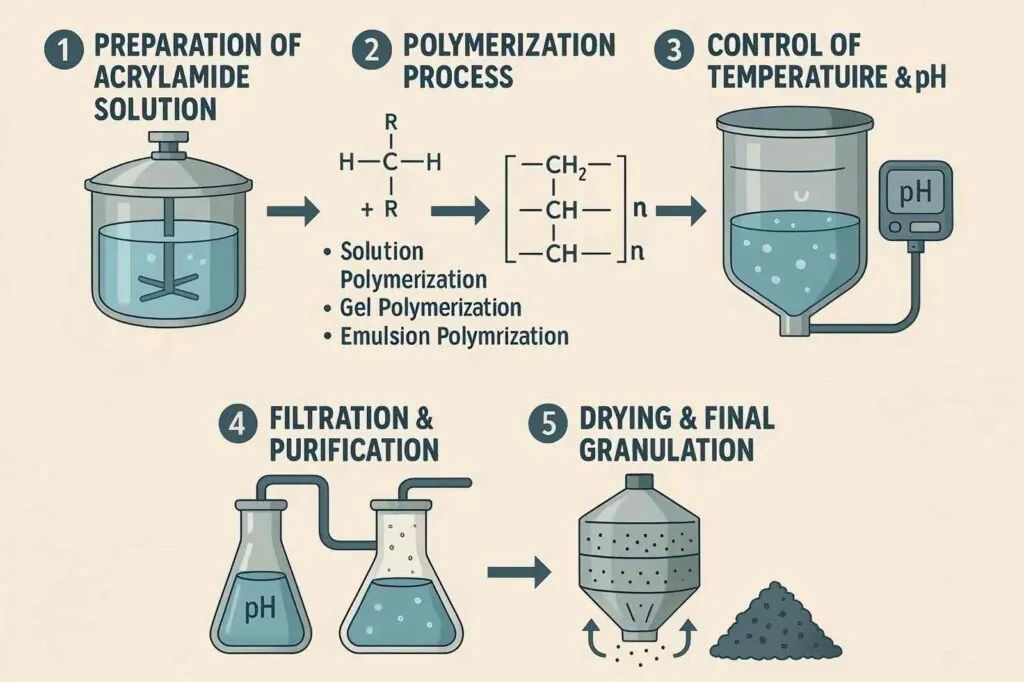
It is important to note that dosage control is closely related to PAM type and molecular characteristics. Different wastewater conditions require different ionic types and molecular weights of PAM. Choosing an unsuitable product often leads to higher dosage and unstable performance. Working with a reliable PAM supplier who can provide technical guidance and dosage optimization helps reduce chemical consumption and improve overall treatment efficiency.
Conclusion
Excessive PAM dosage is a common but avoidable problem in sewage treatment. By carefully observing flocculation performance, maintaining accurate dosing equipment, strengthening operator training, and selecting suitable PAM products, treatment plants can effectively control dosage and maintain stable effluent quality. Proper PAM management not only improves treatment performance but also reduces operating costs and environmental risks.
If you are facing PAM overdosing issues or need help selecting the right PAM model for your wastewater system, our technical team can provide dosage guidance, product recommendations, and on-site application support. Feel free to contact us for more details.