 Skip to content
Efficient treatment of piling slurry is critical in construction and foundation drilling projects. Selecting the right polyacrylamide (PAM) flocculant can significantly improve dewatering efficiency, lower disposal costs, and ensure environmental compliance.
Because slurry composition varies by geology—clay, silt, sand, or mixed soils—a tailored chemical approach is essential.
Why PAM Selection Matters in Piling Slurry Treatment
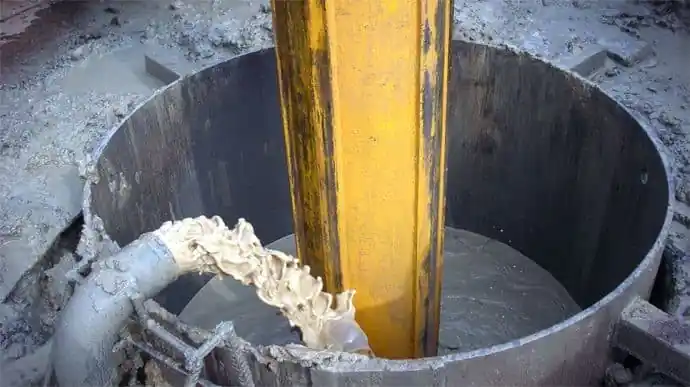
Piling slurry typically contains fine suspended particles, bentonite, and drilling additives. Without proper treatment, it can be difficult to separate solids from water.
The right piling slurry flocculant enables:
- Rapid solid-liquid separation
- Clear water recovery for reuse
- Dense, stable sludge cake
- Reduced overall treatment cost
Key Factors in PAM Selection
1. Ionic Type – The Primary Decision
Polyacrylamide is available in three ionic types:
Cationic PAM (CPAM)
- Most commonly used for piling slurry
- Effective for negatively charged clay particles
- Strong electrostatic neutralization
Recommended starting point:
Medium to high cationicity (40–60%) for clay-rich slurry.
Anionic PAM (APAM)
- Suitable for sand-dominated slurry
- Works well after inorganic coagulants (PAC, iron salts)
- Primarily relies on polymer bridging
Nonionic PAM (NPAM)
- Suitable for extreme pH conditions
- Less sensitive to acidity or alkalinity
2. Molecular Weight – Floc Size & Settling Speed
High Molecular Weight (>15 million)
- Forms large, strong flocs
- Fast settling
- Ideal for slurry dewatering
Medium Molecular Weight
- Balanced diffusion and bridging
Low Molecular Weight
- Rarely used for slurry dewatering
3. Ionic Degree (For Cationic PAM)
- 10–30%: Focus on bridging; mixed soils
- 40–60%: Strong charge neutralization; clay slurry
- >60%: Usually for municipal sludge under pressure filtration
4. Physical Form – Powder vs Emulsion
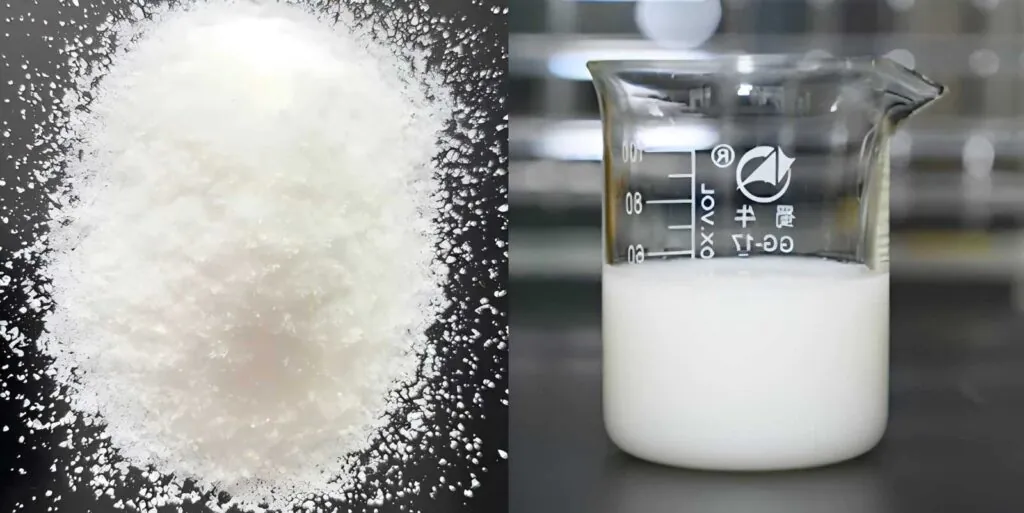
PAM Powder
- Lower cost
- 40–60 min dissolution time
- 2-year shelf life
- Suitable for long-term projects
PAM Emulsion
- Dissolves in 5–10 minutes
- Easier for temporary sites
- Higher cost
- ~6-month shelf life
Step-by-Step PAM Selection Methodology
Phase 1: Laboratory Jar Testing (Essential)
Never skip bench-scale testing.
1. Collect Representative Samples
Use fresh slurry from active drilling areas.
2. Visual Assessment
- Gritty texture → sand-rich
- Sticky/smooth → clay-rich
3. Prepare 0.1% Polymer Solutions
Test different types (e.g., CPAM 30%, CPAM 50%, APAM).
4. Standard Mixing Procedure
- Rapid mix: 200 rpm for 30 seconds
- Slow mix: 50 rpm for 60 seconds
5. Evaluation Criteria
Observe:
- Floc size and strength
- Settling speed
- Supernatant clarity
- Sludge-water interface sharpness
Phase 2: Field Optimization
- Determine minimum effective dosage
- Avoid overdosing (prevents colloidal re-stabilization)
- Adjust injection point and mixing energy
- Confirm compatibility with centrifuges, filter presses, or dewatering screens
Application Guidelines
Proper Dissolution
- Use clean water only
- Avoid excessive shear
- Prevent undissolved “fish eyes”
Typical Dosage Range
- 0.1‰ to 1‰ (dry polymer to slurry weight)
- Final dosage must be determined by jar testing
System Integration
PAM enhances separation, but mechanical equipment completes the dewatering process.
Environmental and Economic Benefits
Choosing the correct drilling mud flocculant provides measurable gains:
- 80–90% water recovery for reuse
- 50–70% sludge volume reduction
- Lower transportation and landfill costs
- Improved regulatory compliance
- Faster project progress
Work with a Professional PAM Supplier
Every piling project is different. Expert support ensures optimal performance.
Professional services should include:
- Free sample testing
- Multiple PAM grade evaluation
- On-site optimization guidance
- Customized products for complex soil conditions
- Global supply capability
Conclusion
Proper selection of polyacrylamide for piling slurry treatment directly impacts dewatering efficiency, environmental compliance, and overall project cost.
Through careful jar testing, dosage optimization, and system integration, construction projects can achieve faster solid-liquid separation and significant operational savings.


