
Heavy metal wastewater from electroplating, PCB manufacturing, metal finishing, and leather processing requires precise treatment — discharge violations for copper, nickel, zinc, and cadmium carry serious regulatory consequences. Chemical precipitation is the most practical approach for most facilities, but choosing the wrong method for the metal speciation present is the most common reason systems fail to meet discharge limits consistently.
Why Metal Speciation Determines Your Treatment Approach
Not all heavy metals behave the same way in wastewater. Free ionic metals — Cu²⁺, Zn²⁺, Ni²⁺, Cd²⁺ — respond well to standard pH adjustment. But metals bound to cyanide, EDTA, ammonia, or citrate from plating baths exist as stable complexes that resist precipitation even at pH 11–12. The complexed fraction passes through clarifiers dissolved, and effluent metals stay above discharge limits despite apparently correct treatment.
Before selecting a precipitation method, determine what proportion of your total metals are free versus complexed. A simple test: measure dissolved metals at current pH, adjust to pH 11, settle for 30 minutes, and measure again. If residual metals drop less than 50%, significant complexation is present and standard hydroxide precipitation won’t achieve compliance.
Three Chemical Precipitation Methods and When to Use Each
Hydroxide Precipitation — For Free Ionic Metals
Raise pH to 9.5–10.5 using lime or sodium hydroxide. Metal ions react with hydroxide to form insoluble precipitates. Each metal has an optimal pH range:
| Metal | Optimal pH | Achievable Effluent Level |
|---|---|---|
| Copper (Cu²⁺) | 8.0–9.5 | < 0.5 mg/L |
| Zinc (Zn²⁺) | 9.0–10.5 | < 0.5 mg/L |
| Nickel (Ni²⁺) | 10.0–11.0 | < 1.0 mg/L |
| Cadmium (Cd²⁺) | 10.0–11.5 | < 0.1 mg/L |
| Chromium Cr³⁺ | 7.5–9.0 | < 0.5 mg/L |
Note: Zinc and copper are amphoteric — they resolubilize above pH 11–12, so avoid excessive alkali addition. Hexavalent chromium (Cr⁶⁺) must be chemically reduced to Cr³⁺ first before hydroxide precipitation will work.
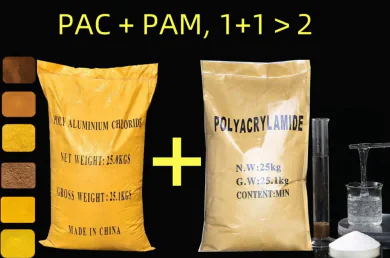
After precipitation, dose PAC at 50–200 mg/L for coagulation, followed by anionic PAM at 1–3 mg/L for flocculation. Metal hydroxide precipitates are colloidal without this step and will pass through clarifiers in the effluent.
Complex-Breaking Precipitation — For Chelated Metals
When organic ligands like EDTA or citrate are present, destroy them with Fenton’s reagent (H₂O₂ + FeSO₄ at pH 3–4) before attempting precipitation. For cyanide complexes, oxidize with sodium hypochlorite at pH > 10 to prevent toxic HCN gas release. Once the ligand is destroyed, free metal ions precipitate normally with pH adjustment and PAC + PAM coagulation.
This adds process steps and chemical cost, but it’s the only reliable path to compliance when complexation is confirmed.
Heavy Metal Capturing Agents — For Mixed or Resistant Streams
Chelating precipitants such as sodium dimethyldithiocarbamate (SDTC) react directly with metal ions — including many complexed forms — at near-neutral pH (5–10), forming highly insoluble metal-sulfur complexes. They achieve effluent metals below 0.1 mg/L for most target species and work across a broader pH range than hydroxide methods, making effluent quality more consistent when influent chemistry fluctuates.
Dose at 1.5–3.0× stoichiometric equivalent of total metal concentration, then follow with PAC + PAM for flocculation. The main limitation is cost — capturing agents are significantly more expensive than lime or NaOH. Use them when hydroxide precipitation consistently fails discharge limits or when metal speciation is complex and variable.
How to Select the Right Method
Use this decision sequence rather than defaulting to the same method for every stream:
Free metals (> 80% ionic) → Hydroxide precipitation + PAC + PAM. Simple, low cost, reliable.
Organic chelates (EDTA, citrate, tartrate) → Fenton oxidation to break ligands → hydroxide precipitation + PAC + PAM.
Cyanide complexes → Alkaline chlorination → hydroxide precipitation + PAC + PAM.
Cr⁶⁺ → Reductive treatment at pH 2.5–3.0 → precipitation at pH 7.5–9.0 + PAC + PAM.
Mixed or unknown speciation → Capturing agent method. Higher cost but handles most metal forms without speciation testing.
FAQ
Q: Why does my system meet pH targets but still fail effluent metal limits?
A: Complexed metals are almost certainly present. Standard hydroxide precipitation only works on free ionic metals — EDTA, cyanide, or ammonia complexes remain dissolved regardless of pH. Run the 30-minute pH 11 settling test described above to confirm, then apply complex-breaking chemistry before precipitation.
Q: What is the difference between using lime versus sodium hydroxide for metal precipitation?
A: Lime is cheaper and generates co-precipitation benefits via calcium carbonate, but produces more sludge and is harder to control precisely. NaOH gives tighter pH control and less sludge volume. Use lime for large-volume streams where sludge disposal cost matters; NaOH for smaller systems requiring precise pH management.
Q: How should metal-containing sludge be disposed of after precipitation?
A: Metal hydroxide sludge is classified as hazardous waste in most jurisdictions — confirm local regulations before disposal. Dewater with a plate-and-frame filter press using PAM conditioning to reach 65–75% moisture. High-copper or high-nickel sludge may have recovery value; contact local metal recyclers before committing to landfill disposal.
Match the Method to the Metal — That’s Where Compliance Starts
Chemical precipitation works reliably when the right method is matched to the actual metal speciation in the wastewater. The facilities that struggle with heavy metal compliance aren’t usually using wrong chemicals — they’re applying the right chemicals to the wrong problem. Characterize your stream first, then select the method.
HyChron supplies PAC, anionic PAM, and heavy metal capturing agents with technical support for treatment process selection. Contact us for product specifications or a recommendation based on your wastewater characteristics.