 Skip to content
Many people are surprised to see calcium chloride (CaCl₂) listed on bottled water labels or food ingredient lists, especially since the same chemical is widely used as ice melt on winter roads.
This naturally raises an important question:
How can the same substance be safe to drink, yet strong enough to melt ice and control dust?
The answer lies in purity, application grade, and dosage.
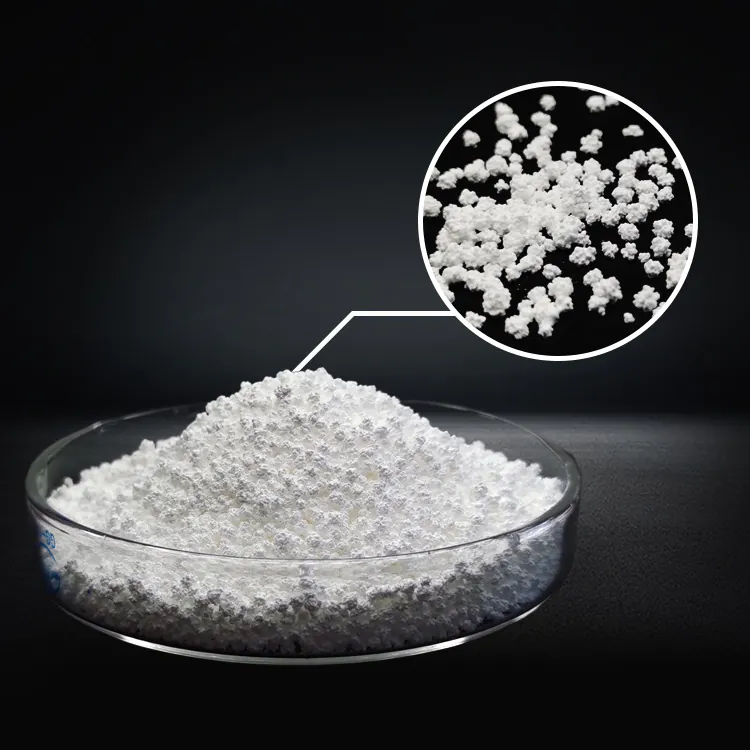
Calcium Chloride in Drinking Water: An Essential Electrolyte
Calcium chloride is a salt, and like other natural salts, it acts as an electrolyte in the human body.
Electrolytes help regulate:
- Fluid balance
- Muscle contraction
- Nerve function
- Sweating and hydration
Natural spring water and freshwater often contain dissolved minerals such as calcium and chloride ions. In fact, pure distilled water without minerals is not ideal for long-term consumption, as it lacks essential electrolytes.
Why Calcium Chloride Is Added to Bottled Water and Sports Drinks
During physical activity, sweating causes the body to lose electrolytes. To compensate, calcium chloride is commonly added to:
- Bottled mineral water
- Sports drinks
- Functional beverages
Unlike sodium chloride (table salt), calcium chloride provides calcium ions without adding sodium, making it suitable for people on low-sodium diets.
Calcium Chloride in Food Processing and Home Kitchens
Calcium chloride is widely used as a food processing aid, not a preservative.
Common food applications
- Cheese making (improves curd formation)
- Pickling (maintains crisp texture)
- Low-sodium foods
- Beer and beverage brewing (flavor profile adjustment)
You may recognize it under the name “Pickle Crisp”, which helps pickles retain firmness without affecting taste.
Calcium Chloride vs. Rock Salt: Why Roads Use CaCl₂
Calcium chloride’s industrial-grade form is commonly used for:
- Road deicing
- Dust control on unpaved roads
Why CaCl₂ outperforms rock salt
| Property | Calcium Chloride | Rock Salt (NaCl) |
|---|---|---|
| Effective temperature | Down to -52°C | Down to -21°C |
| Heat release | Yes (exothermic) | No |
| Moisture absorption | Very high | Low |
Because CaCl₂ releases heat when dissolving and absorbs moisture from the air, it continues working even in extreme cold.

Dust Control and Equipment Protection
Calcium chloride can absorb up to twice its weight in water, making it ideal for dust suppression on:
- Mining roads
- Quarries
- Construction sites
Reducing airborne dust:
- Protects worker health
- Extends equipment life
- Improves visibility and safety
Other Industrial Uses of Calcium Chloride
Beyond water and roads, CaCl₂ is used in:
- Concrete acceleration in cold weather
- Swimming pool water hardness adjustment
- Fertilizer formulations
- Desiccants and dehumidifiers
Each application uses different grades and specifications, reinforcing why safety depends on proper selection and dosage.
Food Grade vs Industrial Grade Calcium Chloride: Key Difference
| Aspect | Food Grade CaCl₂ | Industrial Grade CaCl₂ |
|---|---|---|
| Purity | Very high | Lower |
| Heavy metals | Strictly controlled | Not suitable for food |
| Usage | Food, beverages, water | Deicing, dust control |
Food-grade calcium chloride is produced under strict standards, making it safe for consumption.
Industrial-grade products are never used in food or drinking water systems.
Conclusion
Calcium chloride is a versatile and beneficial compound used across food, water treatment, and industrial sectors. Its safety depends not on the chemical itself, but on:
- Purity level
- Application purpose
- Proper dosage
When the correct grade is used, calcium chloride is both safe and essential, from bottled water to winter road safety.


