
In the global search for fresh water, seawater desalination has become a vital technology. While reverse osmosis (RO) membranes and thermal systems receive most of the attention, their performance depends heavily on effective pre-treatment.
Polyacrylamide (PAM), a high-performance flocculant, plays an essential role in this stage.
The short answer is yes—polyacrylamide is widely used in seawater desalination. However, it does not remove salt directly. Instead, it ensures that the feed water entering RO membranes meets strict quality standards.

Why Seawater Requires Pre-Treatment
Seawater contains more than dissolved salts. It also includes:
- Suspended solids
- Colloidal particles
- Organic matter
- Algae and microorganisms
If untreated seawater enters RO membranes directly, it can cause severe membrane fouling, leading to:
- Reduced water flux
- Increased energy consumption
- Frequent chemical cleaning
- Shortened membrane lifespan
Effective pre-treatment is therefore essential—and this is where coagulants and flocculants come into play.
The Role of Polyacrylamide in Desalination
Polyacrylamide acts as a powerful flocculant in the pre-treatment process. It is typically used after primary coagulants such as polyaluminum chloride (PAC).
Its main mechanisms include:
1. Charge Neutralization
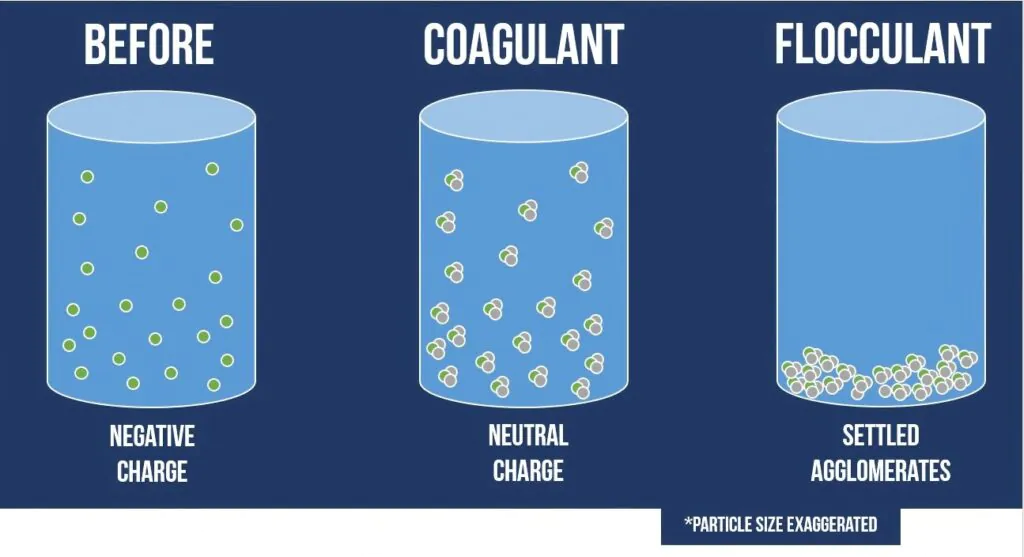
Most colloids and organic particles in seawater carry negative charges.
Cationic polyacrylamide (CPAM) neutralizes these charges, destabilizing the particles and allowing them to aggregate.
2. Bridging Effect
The long polymer chains of PAM adsorb onto multiple particles simultaneously, forming large, dense flocs that settle quickly or can be removed through filtration.
Benefits of Using PAM in Desalination Pre-Treatment
- Achieves low turbidity in feed water
- Reduces Silt Density Index (SDI)
- Minimizes RO membrane fouling
- Lowers operating pressure and energy consumption
- Extends membrane service life
Proper pre-treatment directly improves the economic efficiency of desalination plants.
Key Considerations When Using PAM
Type Selection
Cationic polyacrylamide is most commonly used due to the negatively charged nature of seawater organics.
Charge density and molecular weight should be selected through jar testing based on raw water quality.
Optimal Dosage
Accurate dosing is critical:
- Underdosing leads to poor flocculation
- Overdosing may cause re-stabilization and increased costs
Product Quality & Safety
High-purity PAM with low residual acrylamide content is essential to meet international drinking water standards. Always source from a reputable water treatment chemical supplier.
Conclusion
Polyacrylamide is not directly involved in salt removal, but it is a fundamental component of seawater desalination pre-treatment. By improving feed water quality, PAM protects RO membranes, reduces energy consumption, and enhances long-term operational stability.
Investing in high-quality polyacrylamide ensures more efficient desalination and sustainable freshwater production.
For customized desalination-grade PAM solutions, contact our technical team today.