
When growing lettuce, tipburn is one of the most frustrating problems. It shows up as brown or black dry spots on the edges of leaves. The leaves become brittle and break easily. This reduces quality and market value.
One effective solution is food-grade anhydrous calcium chloride. When used correctly, it can greatly reduce tipburn and improve leaf quality.
What Is Lettuce Tipburn?
Tipburn is a calcium deficiency disorder. Even if the soil contains enough calcium, lettuce may still not get enough calcium to the fast-growing leaf tips.
This usually happens when:
- The plant grows too fast
- Transpiration is high
- Calcium movement inside the plant is limited
As a result, leaf edges develop dead (necrotic) tissue.
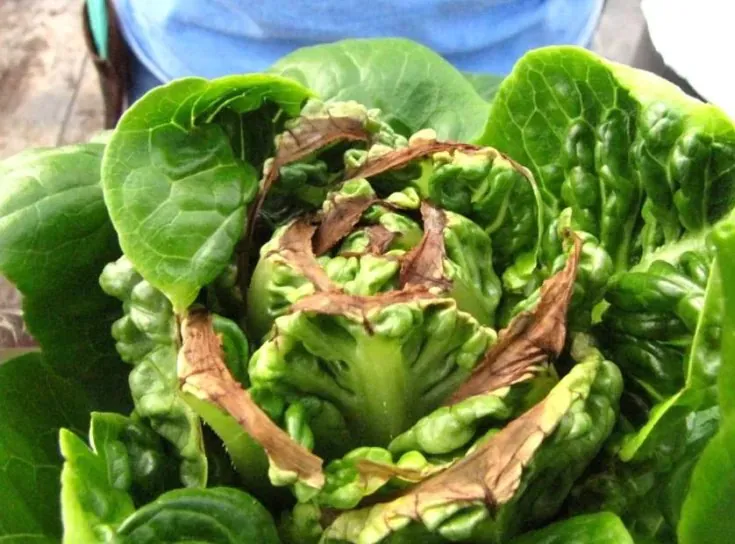
Main Symptoms of Tipburn
Brown or Black Leaf Edges
Dry, burned-looking spots appear along the margins of young leaves.
Brittle Leaves
The affected leaves become fragile and break during harvest and packing.
Reduced Growth and Quality
Severe tipburn can slow plant development and reduce marketable yield.
Why Use Food-Grade Anhydrous Calcium Chloride?
From practical growing experience, this material works very well for foliar calcium supply.
1. Highly Soluble
Anhydrous calcium chloride dissolves quickly in water. It is easy to prepare spray solutions.
2. Fast Leaf Absorption
When sprayed on leaves, calcium is absorbed directly. This helps correct deficiency faster than soil application.
3. Cost-Effective
It is affordable and can significantly reduce losses caused by tipburn.
4. Safe for Edible Crops
Food-grade quality ensures it is suitable for use on vegetables and meets food safety standards.
How to Use Calcium Chloride for Tipburn
Step 1 – Prepare the Solution
- Concentration: 0.5%–1.0% solution
- That means 5–10 grams per liter of water
- Stir until fully dissolved
Step 2 – Spray Application
- Spray during early morning or late afternoon
- Avoid spraying under strong sunlight
- Use a fine mist sprayer
- Focus on young inner leaves
Step 3 – Application Frequency
- Repeat every 7–10 days
- Adjust based on plant growth speed and symptom severity

Advantages of Foliar Calcium Sprays
Targeted Treatment
Calcium goes directly to leaves where deficiency happens.
Bypasses Soil Problems
Soil pH or root stress will not limit calcium uptake as much.
Better Leaf Strength
Leaves become firmer and less likely to develop necrotic edges.
Higher Marketable Yield
Healthier leaves mean better appearance and higher selling price.
Important Safety Tips
- Wear gloves and eye protection
- Do not exceed recommended concentration
- Avoid spraying during very hot weather
- Store calcium chloride in a dry, sealed container
Extra Growing Tips to Reduce Tipburn
Calcium spray works best together with good crop management:
- Keep stable soil moisture
- Avoid sudden fast growth caused by excess nitrogen
- Ensure proper airflow in greenhouse production
- Harvest on time to avoid over-mature leaves
Conclusion
Lettuce tipburn is mainly caused by calcium deficiency in fast-growing leaves. Foliar spraying with food-grade anhydrous calcium chloride is a simple and effective solution. With regular application and proper crop management, growers can reduce tipburn, improve leaf strength, and increase marketable yield.
If you need product specifications or technical support, feel free to contact us.