 Skip to content
Written by the HyChron Technical Team — water treatment specialists with over 15 years of field experience in municipal and industrial systems. Last reviewed: April 2026
Electroplating facilities face some of the strictest wastewater discharge standards in manufacturing. Heavy metals — chromium, nickel, zinc, copper, cadmium — at concentrations that are acutely toxic to aquatic ecosystems must be reduced to parts-per-million or parts-per-billion levels before discharge is permitted.
Plants that rely on simple pH adjustment and sedimentation frequently find themselves failing inspection. The colloidal and complexed metal fractions that pass through conventional treatment are exactly what coagulation with PAC is designed to capture.
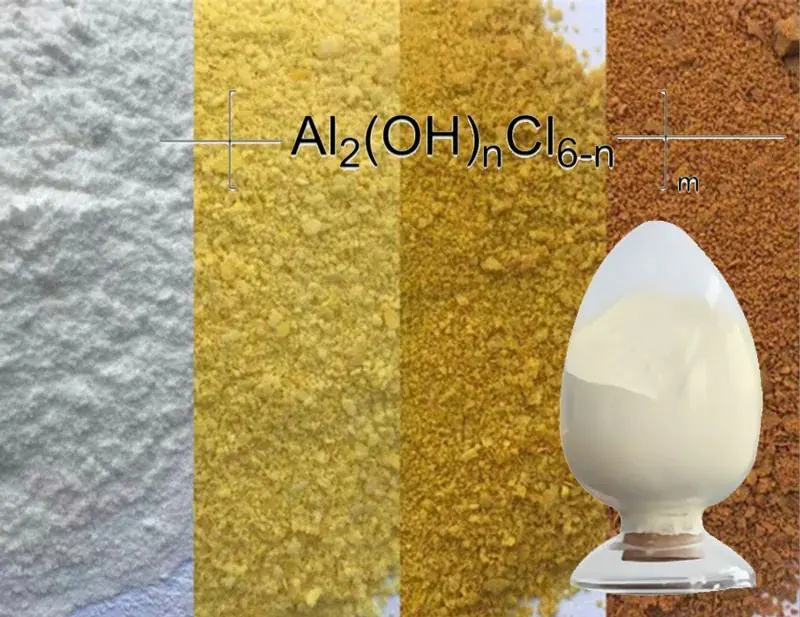
PAC (Poly Aluminum Chloride) is widely used in electroplating wastewater pre-treatment as a primary coagulant for suspended solids removal, metal hydroxide floc enhancement, and COD reduction — preparing the effluent for final polishing before discharge.
Facing heavy metal discharge compliance challenges at your electroplating facility? Contact our technical team for a free assessment and PAC recommendation.
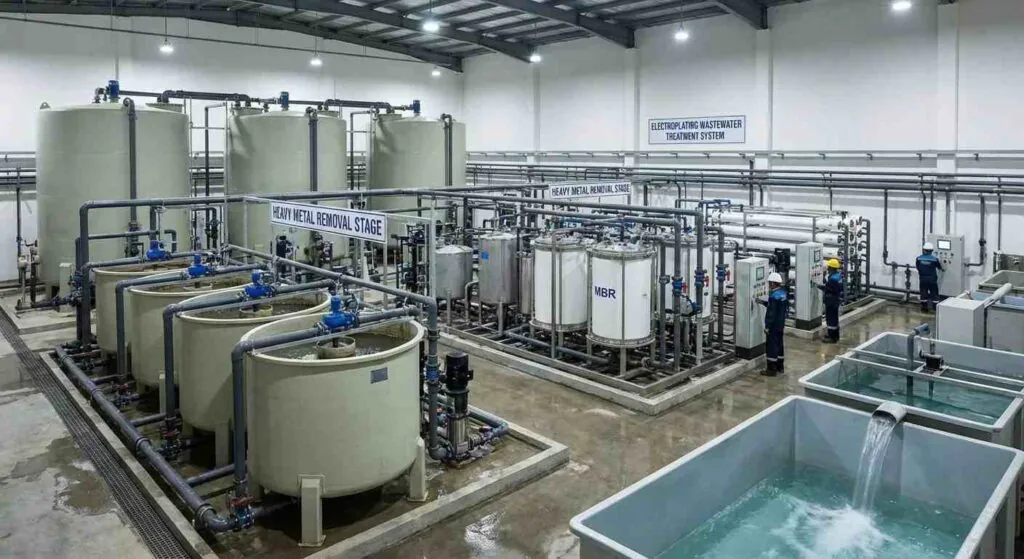
What Electroplating Wastewater Contains
Electroplating effluent is a complex mixture that varies with the plating process, cleaning chemicals, and rinse water management:
- Heavy metals — chromium (Cr³⁺ and Cr⁶⁺), nickel, zinc, copper, cadmium, lead, and tin depending on the plating process
- Cyanide compounds — from cyanide-based plating baths (require pre-treatment before PAC addition)
- Chelating agents — EDTA, citrates, and gluconates from cleaning formulations that complex metals and prevent conventional precipitation
- Surfactants and defoamers — from cleaning and plating bath additives
- Suspended solids — filter cake residues, anode sludge, and particulate drag-out
- High COD — from organic bath additives and cleaning chemicals
PAC addresses suspended solids, metal hydroxide floc formation, and colloidal COD directly. For complexed metals and cyanide, pre-treatment steps are required before PAC is applied.
How PAC Works in Electroplating Wastewater Treatment
Stage 1 — pH Adjustment and Metal Precipitation
Before PAC dosing, pH adjustment to 8.5–10.0 precipitates dissolved heavy metals as metal hydroxides. This is standard practice in electroplating treatment and is not replaced by PAC — it is the prerequisite step.
Stage 2 — PAC Coagulation
After pH adjustment and initial metal hydroxide precipitation, PAC is added to:
- Coagulate fine metal hydroxide precipitates that are too small and light to settle efficiently on their own
- Capture colloidal metal species that resist conventional hydroxide precipitation
- Remove suspended solids — filter cake fines, particulates, and colloidal organic matter
- Reduce COD by coagulating the colloidal organic fraction
PAC’s charge neutralization mechanism aggregates the negatively charged metal hydroxide flocs and colloidal particles into larger, denser, faster-settling flocs — significantly improving the efficiency of subsequent sedimentation.
Stage 3 — Sedimentation and Polishing
PAC-treated effluent settles in a clarifier or tube settler. The clarified supernatant is then polished — by sand filtration, activated carbon adsorption, or ion exchange — to achieve final discharge standard compliance.
Key Applications and Performance
Chromium removal. Cr⁶⁺ must be reduced to Cr³⁺ by chemical reduction (sodium bisulfite or ferrous sulfate) before pH adjustment and PAC coagulation. PAC then coagulates the Cr(OH)₃ precipitate efficiently. Combined treatment achieves total chromium levels below 0.1 mg/L in most applications.
Nickel and zinc removal. Both metals precipitate as hydroxides at pH 9–10. PAC coagulation captures the fine hydroxide precipitates that settle poorly without chemical conditioning, improving nickel and zinc removal efficiency significantly.
COD reduction. Organic bath additives, surfactants, and chelating agents contribute to high COD in electroplating effluent. PAC removes the colloidal fraction of this COD — typically 30–50% reduction — reducing the load on downstream biological or adsorption treatment.
Dosage Guidelines
| Electroplating Application | Typical PAC Dosage |
|---|---|
| General electroplating effluent | 30–80 mg/L |
| High suspended solids rinse water | 40–100 mg/L |
| Mixed metal plating effluent | 50–120 mg/L |
| Pre-treatment before ion exchange | 20–50 mg/L |
Jar testing (ASTM D2035) is essential — metal speciation, chelating agent type, and pH history all affect the required PAC dose.
Critical Dosing Notes
- Always dose PAC after pH adjustment, not before — PAC coagulation of metal hydroxides requires the metals to be in precipitated form
- Avoid overdosing — excess PAC can re-stabilize metal hydroxide flocs through charge reversal, reducing rather than improving removal
- Combine with PAM — anionic PAM addition after PAC dosing produces larger, denser metal hydroxide flocs that dewater more efficiently
Integrating PAC with Electroplating Treatment Systems
A standard electroplating treatment train using PAC:
- Equalization tank — homogenizes variable effluent composition
- Cyanide destruction (if applicable) — chemical oxidation before any further treatment
- Cr⁶⁺ reduction (if applicable) — chemical reduction at low pH before neutralization
- pH adjustment — raise to 8.5–10.0 for metal hydroxide precipitation
- PAC dosing — flash mixing at G-value 200–400 s⁻¹ for 30–60 seconds
- Slow-mix flocculation — G-value 20–60 s⁻¹ for 15–25 minutes
- Sedimentation — clarifier or tube settler
- Polishing — sand filter, activated carbon, or ion exchange for final compliance
For industrial wastewater treatment overview: PAC for Industrial Wastewater Treatment
Frequently Asked Questions
Can PAC alone achieve electroplating discharge standards for heavy metals?
PAC significantly improves heavy metal removal compared to pH adjustment and sedimentation alone, but for the strictest discharge limits (below 0.1–0.5 mg/L for most metals), a downstream polishing step — sand filtration, activated carbon, or ion exchange — is typically needed after PAC coagulation and sedimentation.
Does PAC interfere with cyanide treatment?
PAC should not be dosed before cyanide destruction is complete. Cyanide complexes metals and prevents effective coagulation. Always complete cyanide oxidation before the pH adjustment and PAC coagulation stages.
How does PAC sludge from electroplating treatment need to be handled?
Electroplating sludge is classified as hazardous waste in most jurisdictions due to heavy metal content. PAC produces 30–50% less sludge than alum, directly reducing hazardous waste volumes. Sludge must be characterized for metal content and disposed of through a licensed hazardous waste contractor.
Conclusion
PAC is a key component of effective electroplating wastewater treatment — capturing the fine metal hydroxide precipitates, colloidal metal species, and suspended solids that conventional pH-and-settle treatment misses. Combined with proper pH adjustment, PAC coagulation reliably improves heavy metal removal efficiency and reduces sludge volume compared to alum-based systems.
For electroplating facilities facing heavy metal discharge compliance challenges, adding PAC to the coagulation stage is one of the most direct and cost-effective process improvements available.
Contact our technical team today for a free electroplating effluent assessment, PAC product samples, and a treatment protocol recommendation for your specific plating process. We respond within 24 hours.


