
Paper Mill Wastewater: Why It Is Difficult to Treat
Paper mill wastewater is one of the most complex industrial effluents in the water treatment industry. Its composition varies widely depending on raw materials, pulping methods, and paper grades.
Typical Characteristics of Paper Mill Wastewater
- High suspended solids (SS)
Fibers, fines, fillers (calcium carbonate, kaolin) - High COD and BOD
Lignin, hemicellulose, starch, sizing agents - High color (chromaticity)
Especially from recycled paper and pulping processes - Unstable water quality
Large daily and seasonal fluctuations
These characteristics make simple sedimentation ineffective. A high-performance coagulant is required at the front end of the system.
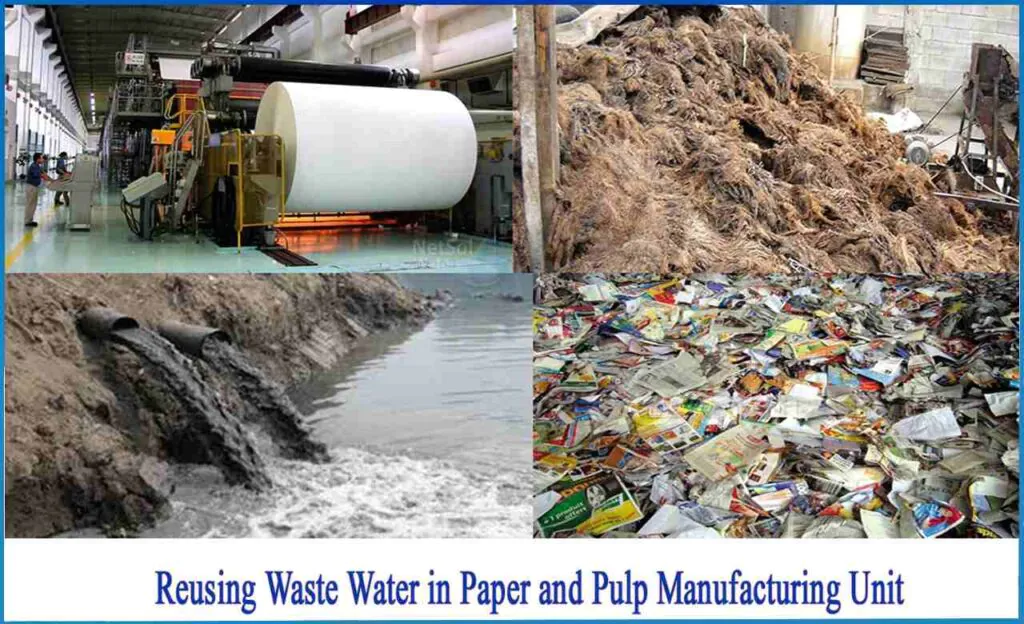
industrial wastewater treatment chemicals
Why Polyaluminium Chloride Is Preferred in Paper Mills
Compared with alum or ferric salts, Polyaluminium Chloride (PAC) offers clear advantages for paper wastewater.
Key Reasons Paper Mills Choose PAC
- Stronger charge neutralization
PAC contains polymerized aluminum species that neutralize negatively charged fibers and colloids more efficiently. - Better fiber and filler capture
PAC forms dense flocs that trap fine fibers and fillers, reducing fiber loss. - Lower sludge volume
Compared to alum, PAC produces less sludge with higher solids content. - Stable performance under variable conditions
PAC works well even when pH, temperature, and load fluctuate.
From a cost-control perspective, PAC also helps mills recover fibers and reduce chemical consumption downstream.
How PAC Works in Paper Mill Wastewater Treatment
PAC mainly functions at the primary treatment stage, before biological or advanced treatment.
Step-by-Step Working Mechanism
1. Charge Neutralization
Paper fibers and fillers carry negative charges. PAC releases highly charged aluminum polymers that rapidly neutralize these charges.
2. Adsorption and Bridging
PAC adsorbs onto fiber fines, fillers, and colloidal organic matter, forming larger agglomerates.
3. Floc Formation and Separation
The flocs formed are:
- Dense
- Fast-settling
- Easy to remove by sedimentation or DAF
This significantly reduces SS, COD, and color before biological treatment.
Typical Treatment Processes Using PAC in Paper Mills
PAC can be applied in different process designs depending on wastewater characteristics.
1. Coagulation–Sedimentation Process
Application scenario:
High SS wastewater from pulping and paper machines
Process flow:
PAC dosing → Rapid mixing → Flocculation → Sedimentation tank
Performance:
- SS removal: >85%
- COD reduction: 25–40%
2. Coagulation + DAF (Dissolved Air Flotation)
Application scenario:
Wastewater with light fibers and fillers that do not settle easily
Advantages:
- Faster separation
- Better fiber recovery
- Smaller footprint
PAC improves bubble–floc attachment efficiency, making DAF systems more stable.
3. PAC + PAM Combined System (Most Common)
In most modern paper mills, PAC alone is not enough.
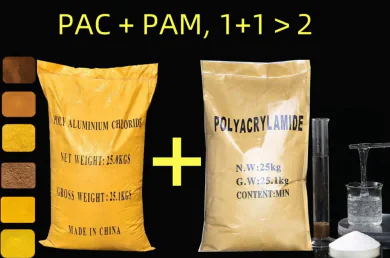
Why Combine PAC with PAM?
- PAC: charge neutralization
- PAM: polymer bridging and floc strengthening
Result:
- Larger flocs
- Faster separation
- Lower PAC dosage
- Improved sludge dewatering
PAC Dosage in Paper Mill Wastewater Treatment
Typical Dosage Range
- PAC: 50–200 mg/L
- PAM: 0.5–3 mg/L
⚠️ Exact dosage depends on:
- Fiber content
- COD level
- pH and alkalinity
- Type of paper produced
Why Jar Tests Are Essential
Paper wastewater composition changes frequently. Jar testing allows operators to:
- Determine optimal PAC basicity
- Avoid overdosing
- Minimize sludge volume
- Reduce operating cost
Common Problems in Paper Mills and PAC Solutions
Problem 1: Poor SS Removal
Cause: PAC dosage too low or insufficient mixing
Solution: Increase dosage gradually and improve rapid mixing intensity
Problem 2: High Color in Effluent
Cause: Organic colloids not fully destabilized
Solution: Use medium-to-high basicity PAC and extend flocculation time
Problem 3: Excessive Chemical Cost
Cause: PAC used alone
Solution: Introduce low-dose anionic PAM to reduce total PAC usage
Problem 4: Sludge Difficult to Dewater
Cause: Flocs too loose
Solution: Optimize PAC–PAM ratio and sludge conditioning
Economic and Environmental Benefits of Using PAC
From a procurement perspective, PAC delivers long-term value, not just short-term treatment results.
Economic Benefits
- Reduced fiber loss
- Lower sludge disposal cost
- Reduced biological treatment load
- Stable compliance with discharge standards
Environmental Benefits
- Lower aluminum residuals
- Less secondary pollution
- Improved water reuse potential
How to Select the Right PAC for Paper Mills
When purchasing PAC, paper mills should focus on:
- Al₂O₃ content
- Basicity (%)
- Water solubility speed
- Compatibility with PAM
High-basicity PAC is usually preferred for high-SS and high-COD paper wastewater.
Conclusion
Polyaluminium Chloride (PAC) is a core chemical in paper mill wastewater treatment. Its strong coagulation ability, adaptability, and cost-effectiveness make it an ideal solution for removing fibers, fillers, COD, and color at the primary treatment stage.
When combined with PAM and supported by proper jar testing and process control, PAC helps paper mills achieve:
- Stable effluent quality
- Lower operating costs
- Improved environmental compliance