Skip to content
Written by the HyChron Technical Team — water treatment specialists with over 15 years of field experience in municipal and industrial systems. Last reviewed: April 2026
Understanding how PAC is manufactured helps buyers evaluate supplier quality claims, understand why batch consistency matters, and assess whether a supplier’s production capabilities are appropriate for the application. It also explains why PAC products from different manufacturers — even at the same stated Al₂O₃ content and basicity — can behave differently in treatment systems.
PAC production is not a simple mixing operation. The reaction conditions during manufacture — temperature, pressure, reaction time, and the sequence of raw material addition — directly determine the distribution of aluminum species in the final product, which in turn determines coagulation performance.
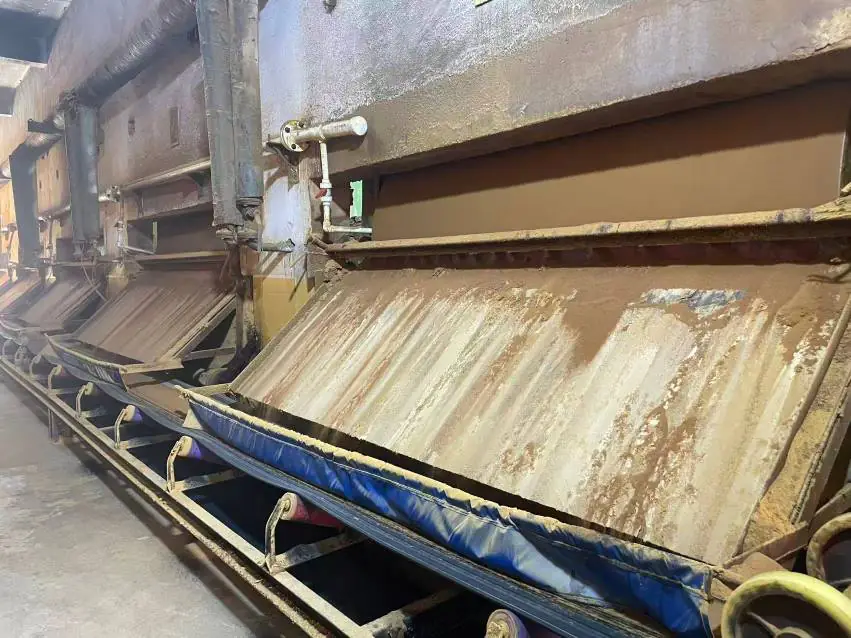
Raw Materials for PAC Production
Primary Raw Materials
Aluminum-bearing feedstocks:
- Aluminum hydroxide (Al(OH)₃): The most common and highest-purity feedstock for PAC production. Produces PAC with low heavy metal impurities and predictable basicity.
- Aluminum oxide (Al₂O₃): Used in some production processes; requires dissolution in acid before reaction.
- Aluminum sulfate (alum): Some manufacturers convert existing alum production to PAC by controlled reaction with alkali. This pathway can introduce sulfate into the PAC product.
- Bauxite: Lower-purity feedstock used in some lower-cost production. Higher impurity content — including iron, silicon, and trace heavy metals — is a concern for drinking water grade PAC.
Acid source:
- Hydrochloric acid (HCl): The standard acid for PAC production. Reacts with aluminum hydroxide to form aluminum chloride, which is then basified to produce PAC.
Alkalinity source (for basification):
- Calcium carbonate, lime, or aluminum hydroxide — added in controlled quantity to achieve the target basicity ratio.
Raw Material Impact on Quality
The single most important factor in PAC quality is the purity of the aluminum feedstock. Aluminum hydroxide from Bayer process refining is typically high-purity and produces consistent, high-quality PAC. Bauxite-derived feedstocks introduce variability that is difficult to control, particularly for heavy metal impurities that are problematic in drinking water applications.
The Manufacturing Process
Step 1 — Dissolution
Aluminum hydroxide is dissolved in hydrochloric acid at controlled temperature and concentration. This step forms aluminum chloride solution (AlCl₃), which is the precursor to PAC.
Critical control point: Dissolution temperature and acid concentration determine the initial distribution of aluminum species. Incomplete dissolution at this stage limits the final product’s basicity ceiling.
Step 2 — Polymerization / Basification
Controlled quantities of alkali (typically aluminum hydroxide slurry, calcium carbonate, or lime) are added to the AlCl₃ solution under controlled temperature and agitation. This step converts mononuclear AlCl₃ into the polynuclear aluminum hydroxide species that give PAC its coagulation performance.
The basicity of the final product is directly controlled by the molar ratio of OH to Al added in this step.
Critical control point: This is the most technically demanding step in PAC production. The rate of alkali addition, temperature control, and mixing intensity during basification determine the distribution of aluminum species — particularly the proportion of the highly active Al₁₃ polycation (Al₁₃O₄(OH)₂₄⁷⁺) in the final product.
Higher Al₁₃ content = higher coagulation efficiency = better treatment performance at lower dose.
Step 3 — Aging / Maturation
After basification, the PAC solution is held under controlled conditions for a maturation period. This allows the polymerization reactions to reach equilibrium and the polymer chain length distribution to stabilize.
Products that are not adequately matured may show inconsistent performance in field applications — the aluminum species distribution continues to shift during storage, leading to variable coagulation behavior.
Step 4 — Quality Control Testing
Before release, each batch is tested for: Al₂O₃ content, basicity, pH of 1% solution, density, insoluble content, and heavy metal panel. Only batches meeting all specification limits are released with a Certificate of Analysis.
Step 5 — Spray Drying (for Powder PAC)
Liquid PAC intended for powder product is spray-dried to remove water. The spray drying conditions (inlet temperature, droplet size, residence time) affect the physical properties of the powder — dissolution rate, particle size, and flow characteristics.
High-quality spray drying preserves the aluminum species distribution developed during polymerization. Poor spray drying can cause partial hydrolysis or crystallization, reducing effective basicity and dissolution rate.
How Production Affects Product Quality
Basicity Control
Basicity is set during the basification step. Well-controlled production maintains basicity within ±3 percentage points of target across batches. Poorly controlled production shows basicity variation of ±10 percentage points or more — translating directly into variable dosage requirements and inconsistent treatment results for the buyer.
Al₁₃ Content
The proportion of Al₁₃ polycation in the product is not routinely reported on COAs (it requires specialized ²⁷Al NMR spectroscopy to measure). However, it correlates strongly with basicity — higher basicity products generally contain more Al₁₃. This is one reason why high-basicity PAC consistently outperforms low-basicity products at equivalent Al₂O₃ dose.
Heavy Metal Control
Heavy metal content is primarily controlled through raw material selection. Manufacturers using high-purity aluminum hydroxide feedstock consistently achieve low heavy metal levels. Manufacturers using bauxite or aluminum scrap feedstocks face greater variability and higher impurity levels that require downstream removal steps.
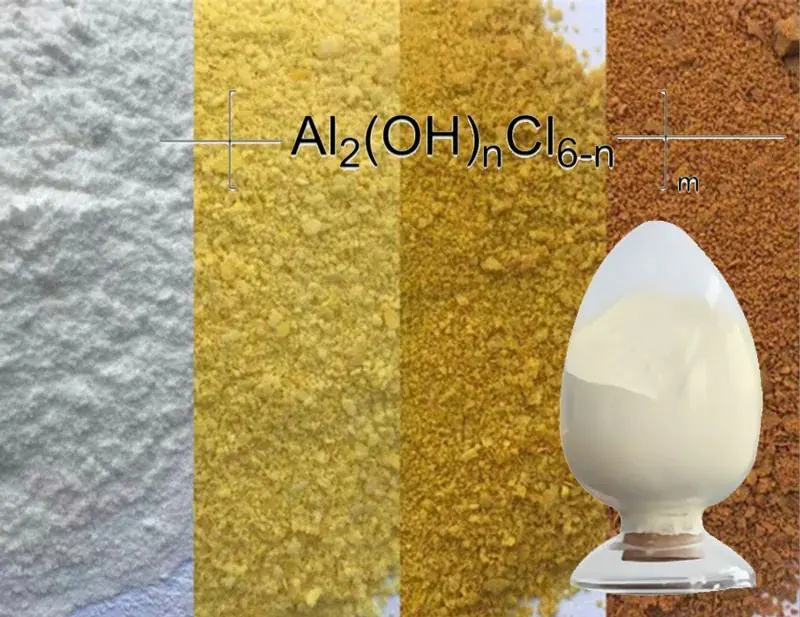
What Buyers Should Know About Production Differences
Single-site vs multi-site production: NSF/ANSI 60 certification is site-specific. A manufacturer with certified production at one facility may supply from an uncertified second facility without buyer awareness. Always confirm that the specific production facility supplying your PAC holds the applicable certification.
Batch vs continuous production: PAC can be produced in batch or continuous processes. Continuous production typically achieves tighter batch-to-batch consistency than batch production. Ask suppliers whether they use batch or continuous polymerization — this is a legitimate technical question with implications for product consistency.
Maturation period: Some manufacturers accelerate production by shipping product before the maturation period is complete. This can result in variable coagulation performance as the product continues to change in storage. A reliable supplier ships only fully matured product with confirmed COA results before dispatch.
For quality verification: How to Identify High-Quality PAC
Frequently Asked Questions
Why does PAC from different suppliers behave differently at the same stated basicity?
The stated basicity is the molar ratio of OH to Al — this determines the proportion of the product that is in the form of aluminum hydroxide versus aluminum chloride. However, the specific distribution of aluminum polymer species within the hydroxide fraction (mononuclear, oligomeric, Al₁₃, and higher polymers) is not captured by the basicity number alone. Two products at 75% basicity can have very different Al₁₃ content depending on their production conditions — and Al₁₃ is the species most responsible for efficient charge neutralization.
How can I tell if a PAC product has been diluted after manufacture?
The most accessible check is liquid density. Liquid PAC at 10–11% Al₂O₃ should have density of 1.18–1.22 kg/L at 20°C. Density below 1.15 strongly suggests dilution. Independent Al₂O₃ analysis at a laboratory is the definitive test. For powder PAC, comparative dissolution tests — dissolving a weighed sample in distilled water and measuring Al₂O₃ by ICP — confirm whether Al₂O₃ content matches the stated specification.
Does manufacturing location affect product quality?
Manufacturing location per se does not determine quality — process control does. High-quality PAC is manufactured in China, Europe, the US, and other markets. The relevant questions are: what feedstocks are used, what is the basicity consistency across batches, does the product hold applicable drinking water certification, and will the supplier provide independently verifiable COA documentation? Our production facility holds ISO certification and we provide full production process documentation for major account buyers.
Conclusion
PAC quality is fundamentally determined by raw material purity and the precision of the polymerization reaction during manufacturing. Buyers who understand the production process can ask better questions of suppliers — about feedstock sources, basicity consistency, maturation protocols, and certification scope — and make more informed procurement decisions.
The key insight: Al₂O₃ content and basicity are necessary but not sufficient quality indicators. Batch-to-batch consistency of basicity, heavy metal freedom from feedstock contamination, and confirmation that the product has been fully matured before shipping are the production-related quality factors that separate reliable suppliers from those offering price-competitive but inconsistent products.
Contact our technical team today for a full production process overview, manufacturing facility documentation, and batch COA samples for qualification testing. We respond within 24 hours.