Skip to content
Written by the HyChron Technical Team — water treatment specialists with over 15 years of field experience in municipal and industrial systems. Last reviewed: April 2026
River water is the most challenging surface water source to treat consistently — and the most widely used. Rivers carry turbidity, natural organic matter, agricultural runoff, industrial discharge, and microbial contamination in proportions that shift with every rainfall event, every season, and every upstream land use change.
For water utilities treating river water for drinking, the regulatory stakes are high and the operational margin is narrow. A coagulant that performs at 10 NTU in dry season must also perform at 500 NTU during flood events, at pH 9 during algal bloom periods, and at 3°C during winter low-flows — all within the same treatment train, often within the same week.
PAC has become the standard coagulant for river water treatment in most countries precisely because it handles this variability better than any alternative.
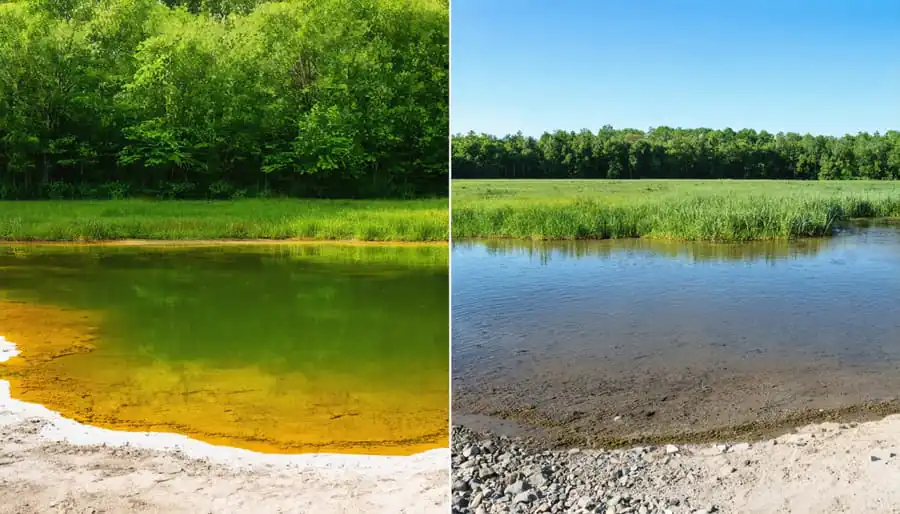
Why River Water Is Uniquely Challenging
Extreme turbidity variability. Rivers can shift from 5 NTU baseline to 1,000+ NTU within hours of heavy rainfall in the catchment. Alum-based systems, with their slower hydrolysis and narrower operating window, struggle to respond fast enough during these events. PAC’s faster floc formation and wider pH range enable more effective dose response during rapid quality changes.
Agricultural and industrial contamination. Rivers receiving agricultural runoff carry pesticide residues, nitrates, and suspended soil — including fine clay particles that require effective charge neutralization to coagulate. Rivers with industrial inputs may carry heavy metals, process chemicals, or elevated organic loading that increases coagulant demand unpredictably.
Seasonal NOM variation. Autumn leaf fall, spring snowmelt, and summer algal blooms each produce characteristic NOM profiles that affect PAC dosage requirements and disinfection byproduct formation potential. River water NOM management requires seasonal dosage recalibration — not a set-and-forget approach.
Regulatory compliance under variable conditions. Drinking water from river sources must meet turbidity, microbial, and chemical standards regardless of source water quality. This means the treatment system must be capable of achieving compliance during worst-case conditions (flood events, pollution incidents), not just average conditions.
Regulatory Framework for River Water Treatment
River-sourced drinking water treatment typically falls under:
- US EPA Surface Water Treatment Rule (SWTR) and Long Term 2 ESWTR: Coagulation-filtration required for surface water; turbidity ≤ 0.3 NTU after filtration (95th percentile); Giardia and Cryptosporidium log removal credits based on treatment performance
- WHO Guidelines for Drinking-water Quality (4th Ed.): Turbidity ≤ 1 NTU in finished water; aluminum ≤ 0.2 mg/L
- EU Drinking Water Directive 2020/2184: Turbidity ≤ 1 NTU; aluminum ≤ 0.2 mg/L; strict requirements for microbial parameters
- China GB 5749-2022: Turbidity ≤ 1 NTU; aluminum ≤ 0.2 mg/L; COD limits
PAC optimized coagulation is the first treatment barrier addressing all turbidity, NOM, and microbial-indicator parameters before disinfection.
PAC as the River Water Treatment Solution
Why PAC Outperforms Alum for River Water
| Challenge | Alum Limitation | PAC Advantage |
|---|---|---|
| Turbidity spikes to 500+ NTU | Slow floc formation, poor response | Fast floc — responds within minutes of dose increase |
| pH fluctuates 6–9 | Effective only at 6.5–7.5 | Effective from 5.0–9.0 — covers full natural river pH range |
| Cold water (< 10°C) | Major performance deterioration | Pre-polymerized — stable coagulation maintained |
| Agricultural runoff (fine clay) | Higher dose needed | Efficient charge neutralization of clay colloids |
| High NOM (humic water) | Elevated dosage, poor NOM removal | Sweep flocculation captures NOM effectively |
Step-by-Step Operational Guide for River Water Treatment
Step 1 — Real-Time Source Water Monitoring
River water treatment requires continuous monitoring, not periodic sampling:
- Online turbidity at the intake — real-time early warning of quality changes
- Online pH at the dosing point — confirms PAC is operating in effective range
- Temperature monitoring — triggers seasonal protocol adjustments
- Periodic UV₂₅₄ measurement — quantifies NOM loading for dosage adjustment

Step 2 — Flood Event Protocol
River water quality can change within hours of upstream rainfall. Establish a flood event protocol:
- Trigger: Intake turbidity rises above 2× baseline
- Action: Increase PAC dose by 30% and begin continuous monitoring
- Escalation: If turbidity exceeds 200 NTU, increase dose by additional 20%; add PAM at flocculation stage
- Recovery: Reduce dose in 10% increments as turbidity returns to baseline, with jar test verification before full restoration
Step 3 — Seasonal Dosage Protocols
| Season / Condition | PAC Protocol |
|---|---|
| Spring snowmelt | High turbidity + high NOM: jar test required; +30–50% dose vs summer baseline |
| Summer algal bloom | Monitor pH daily; pH > 8.5 triggers mild acid pre-dosing; +20–30% dose |
| Autumn leaf fall | Elevated NOM; +15–25% dose; consider PAM addition for improved NOM capture |
| Winter low-flow | Cold water; extend flocculation time 30–40%; PAM addition recommended |
Step 4 — Dosage Reference for River Water
| River Water Turbidity | PAC Dose Range |
|---|---|
| < 10 NTU | 8–20 mg/L |
| 10–50 NTU | 15–35 mg/L |
| 50–200 NTU | 25–60 mg/L |
| 200–500 NTU | 50–80 mg/L |
| > 500 NTU | 70–120 mg/L + PAM |
All doses must be confirmed by jar test at current river water conditions. These are guidance ranges only.
Step 5 — Compliance Verification
Target finished water parameters:
- Turbidity: < 0.3 NTU (post-filtration)
- Residual aluminum: < 0.2 mg/L
- Giardia/Cryptosporidium: regulatory log removal credit based on turbidity performance records
Frequently Asked Questions
How do I manage PAC dosing during a sudden pollution incident upstream?
Sudden industrial discharge incidents in river catchments can dramatically change water chemistry — pH, COD, and turbidity can all shift simultaneously. The response is: (1) increase PAC dose by 50% immediately and monitor effluent closely; (2) conduct an emergency jar test with current river water as quickly as possible to establish the correct dose for the new water chemistry; (3) consider temporary suspension of intake if contamination is severe. Contact our technical team immediately for emergency dose guidance — we respond within hours for critical situations.
Does PAC reduce organic micropollutant concentrations in river water?
PAC coagulation has limited direct effect on dissolved organic micropollutants (pesticides, pharmaceuticals, endocrine disruptors). These require activated carbon adsorption or ozone oxidation for effective removal. PAC does remove the colloidal NOM fraction that carries some adsorbed micropollutants — providing partial removal. For river water with known micropollutant concerns, contact our team for a combined treatment program assessment.
Can PAC handle river water with high conductivity from agricultural runoff?
Moderate conductivity (up to 2,000–3,000 µS/cm) from agricultural runoff does not significantly impair PAC coagulation. Very high conductivity (above 5,000 µS/cm) may affect coagulation efficiency — contact our technical team for high-conductivity source water guidance.
Conclusion
River water treatment is one of the most operationally demanding applications in water treatment — requiring a coagulant that performs reliably across extreme turbidity variation, seasonal pH and temperature change, and variable NOM loading, all within tight regulatory compliance requirements.
PAC’s combination of wide pH range, fast floc formation, cold-water stability, and effective NOM removal makes it the optimal coagulant for river water purification. With proper seasonal dosage management, flood event protocols, and continuous monitoring, PAC-based treatment systems consistently deliver finished water that meets the strictest international drinking water standards — regardless of what the river brings.
Contact our technical team today for a free river water treatment assessment, PAC product samples, and a seasonal dosage protocol tailored to your catchment characteristics. We respond within 24 hours.