
Steel and metallurgical wastewater presents a different treatment challenge from organic industrial effluent — the dominant pollutants are inorganic, the suspended solids load is extremely high, and continuous large-volume discharge leaves little margin for treatment upsets. PAC is well-suited to this environment because its rapid hydrolysis and high charge density address inorganic suspended solids and heavy metal removal more effectively than organic-oriented coagulants, and its performance remains stable under the high alkalinity and elevated temperature conditions typical of rolling and cooling process discharge.
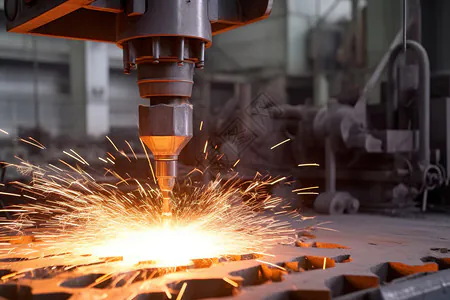
What Makes Steel Wastewater Different
Most steel plant wastewater streams combine four characteristics that drive treatment system design:
Extremely high suspended solids: Iron oxide scale, ore fines, and slag particles at concentrations of 500–5,000 mg/L are the primary treatment target. These particles are dense and settle well once flocculated, but their high concentration demands robust coagulation to achieve < 10 NTU effluent for water reuse or discharge compliance.
Heavy metal ions: Zinc, lead, chromium, and manganese enter the wastewater from galvanizing lines, acid pickling, and alloy processing. Concentrations vary by process but typically require reduction to discharge limits of < 1–2 mg/L for most metals.
High alkalinity and temperature: Cooling water and hot rolling discharge arrive at elevated pH (often 8.5–10.5) and temperatures of 40–70°C. Both factors affect coagulant selection and dosage.
High continuous flow rates: Steel plants generate wastewater volumes of thousands of cubic meters per hour in continuous operation, making chemical efficiency — performance per kilogram of coagulant — a direct operating cost variable.
Why PAC Performs Well in Steel Wastewater
PAC’s polynuclear aluminum structure provides higher charge density than conventional aluminum sulfate or iron salts, which translates to faster floc formation at lower dosage — critical for high-flow steel plant applications where treatment residence time is limited.
Three specific mechanisms drive PAC performance in this environment:
Rapid flocculation of iron fines: Iron oxide particles carry negative surface charge that PAC neutralizes efficiently. At optimal dosage, floc forms within 30–60 seconds of PAC addition — fast enough for inline treatment before settling tanks without extended reaction chambers.
Heavy metal co-precipitation: Al(OH)₃ floc formed during PAC hydrolysis adsorbs heavy metal ions — Zn²⁺, Pb²⁺, Cr³⁺, Mn²⁺ — onto its surface and entraps them in the floc matrix as it settles. This co-precipitation mechanism removes metals that wouldn’t precipitate as hydroxides at the operating pH of the treatment system.
Alkalinity tolerance: Standard PAC maintains effective coagulation at pH up to 9.0. For steel plant streams above pH 9.5 — particularly from lime-treated pickling neutralization or alkaline cleaning discharge — PAFC (iron-modified PAC) extends effective coagulation to pH 10.5–11.0 through the broader pH range of iron hydroxide precipitation.
Treatment Process Configurations
Configuration 1: PAC Coagulation-Sedimentation (Standard)
The baseline configuration for most steel plant water treatment circuits. PAC at 50–150 mg/L is dosed into a rapid mix chamber before a lamella settler or conventional clarifier.
| Performance Parameter | Typical Result |
|---|---|
| SS removal | > 85% |
| Effluent turbidity | < 10 NTU |
| Zn²⁺, Pb²⁺ removal | 70–90% |
| Cr³⁺ removal | > 85% |
| PAC dosage | 0.5–1.5‰ of flow volume |
This configuration handles the majority of cooling water treatment, descaling water recycling, and general process water applications in steel plants.
Configuration 2: PAC + PAFC for High-Alkalinity Streams
Pickling neutralization discharge, lime-softened cooling water blowdown, and some slag quench water streams operate above pH 9.5 where standard PAC loses effectiveness. Blending PAC with PAFC (polyaluminium ferric chloride) — or substituting PAFC entirely — maintains coagulation performance in this pH range. Iron hydroxide species in PAFC remain active above pH 10, producing denser floc and faster settling than aluminum hydroxide alone at elevated pH.
Configuration 3: PAC + PAM for Sludge Thickening
Steel plant sludge — iron oxide scale mixed with aluminum hydroxide floc — dewaters readily but benefits from PAM conditioning before thickening. Anionic PAM at 2–5 mg/L added after PAC coagulation bridges floc particles into larger, denser aggregates that settle faster in thickeners and release water more efficiently in filter presses. Optimized PAC + PAM conditioning typically reduces sludge moisture content by 5–10 percentage points and decreases filter press cycle time by 20–30%, reducing sludge disposal volume and transport cost.
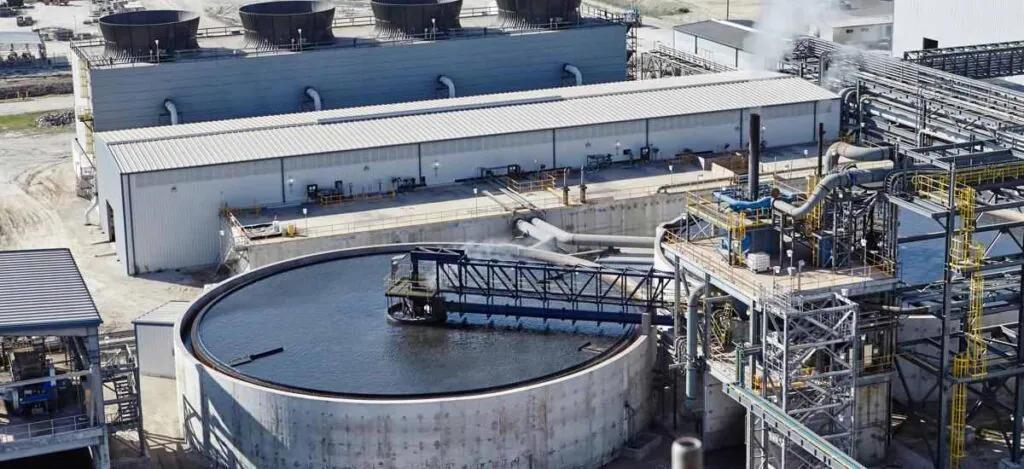
Dosage Optimization and Cost Control
Steel plant wastewater composition changes with production — ore type, processing line in operation, and maintenance cycles all affect suspended solids load and heavy metal concentration. Fixed PAC dosing that performs adequately during normal operation often under-treats during high-production periods or over-treats during low-load periods.
We recommend:
Flow-proportional dosing control as the baseline — PAC dosage tracks wastewater flow rate, maintaining consistent coagulant-to-solids ratio as flow varies through production shifts.
Turbidity-triggered dosing adjustment as the secondary control layer — online turbidity measurement at the clarifier inlet triggers dosage increase when suspended solids load spikes above the normal range, and dosage reduction during low-load periods.
Jar testing at ore composition changes — when raw material input changes significantly (new ore source, alloy grade change, new pickling chemistry), run bench-scale jar tests to confirm current PAC dosage and grade remain optimal. Ore composition changes are the most common reason for unexplained treatment performance shifts in steel plant water treatment.
Facilities implementing flow-proportional dosing control consistently report 10–25% reduction in PAC consumption compared to fixed-rate dosing, with equivalent or improved effluent quality.
FAQ
Q: How do I choose between standard PAC and PAFC for my steel plant wastewater?
A: Measure the pH of your wastewater stream at the treatment inlet. If pH is consistently below 9.0, standard PAC is appropriate and more cost-effective. If pH regularly exceeds 9.5 — common in streams receiving lime neutralization or alkaline cleaning discharge — PAFC delivers significantly better floc formation and heavy metal removal. For streams that fluctuate across this boundary, a PAC-PAFC blend ratio can be adjusted seasonally based on measured inlet pH.
Q: Can PAC-treated steel plant sludge be recycled or sold rather than disposed of as waste?
A: Steel plant sludge treated with PAC contains iron oxide, aluminum hydroxide, and co-precipitated heavy metals. Iron-rich sludge with low heavy metal content may qualify for return to the sintering process or sale to secondary iron producers — check iron content and heavy metal specification against sinter plant acceptance criteria. Sludge with elevated zinc, lead, or chromium content typically requires hazardous waste disposal or specialist metal recovery processing. Characterize sludge composition by batch before assuming recyclability.
Q: What Al₂O₃ content should I specify when purchasing PAC for steel wastewater treatment?
A: For liquid PAC used in steel plant applications, specify Al₂O₃ content of 10–12% minimum. For powder PAC, specify 28–30%. Higher Al₂O₃ content means more active coagulant per kilogram delivered — lower-content product requires higher dosage volume, increasing pumping capacity requirements and storage turnover. Request batch-specific CoA confirming Al₂O₃ content and basicity (60–75% is optimal for most steel wastewater pH ranges) with each delivery.
PAC Delivers the Speed and Stability Steel Plant Water Treatment Requires
High-volume, continuous discharge with variable suspended solids load and heavy metal content leaves little tolerance for slow-responding or unstable coagulation chemistry. PAC’s rapid flocculation, effective heavy metal co-precipitation, and adaptability across the pH range of steel plant wastewater streams make it the practical coagulant choice for this application. Combined with PAM for sludge thickening and PAFC for high-alkalinity streams, PAC-based coagulation handles the full range of treatment requirements in modern steel plant water management.
HyChron supplies PAC and PAFC for metallurgical wastewater applications with batch-specific quality documentation. Contact our team for product specifications or a dosage recommendation based on your process stream characteristics.