
Paint wastewater is one of the most complex industrial effluents, typically characterized by:
- High organic load (resins, solvents, additives)
- Intense color from dyes and pigments
- Toxic components (phenols, formaldehyde, heavy metals)
- High stability due to surfactants and colloidal particles
Because of its strong colloidal stability and emulsified structure, paint wastewater is resistant to natural sedimentation. Effective treatment requires a well-designed coagulation–flocculation system, primarily using Polyaluminum Chloride (PAC) and Polyacrylamide (PAM).
1. Polyaluminum Chloride (PAC) – The Coagulant
PAC is an inorganic polymer coagulant responsible for destabilizing wastewater.
Mechanism of Action
Charge Neutralization
- Colloidal particles in paint wastewater carry negative charges.
- PAC hydrolyzes in water to form positively charged complexes.
- These neutralize particle charges and destabilize the system.
Adsorption and Micro-Floc Formation
- Aluminum hydroxide flocs form during hydrolysis.
- These flocs adsorb destabilized particles.
- Initial micro-flocs are created through coagulation.
Advantages in Paint Wastewater Treatment
- Strong demulsification capability
- Excellent color removal performance
- Dense and fast-settling flocs
- Wide pH adaptability
- Cost-effective primary treatment
In summary: PAC breaks wastewater stability and forms initial micro-flocs.
2. Polyacrylamide (PAM) – The Flocculant
PAM is an organic polymer flocculant responsible for building large settleable flocs.
Mechanism of Action
Polymer Bridging
- Long-chain molecules adsorb multiple particles
- Connect micro-flocs created by PAC
- Form large, dense, and strong flocs
Sweep Flocculation
- Large flocs trap fine suspended particles
- Improve overall solid removal
Advantages in Paint Wastewater Treatment
- Produces large, shear-resistant flocs
- Significantly increases settling velocity
- Enhances supernatant clarity
- Improves sludge dewatering performance
- High efficiency at low dosage
In summary: PAM aggregates micro-flocs into large masses, accelerating clarification.
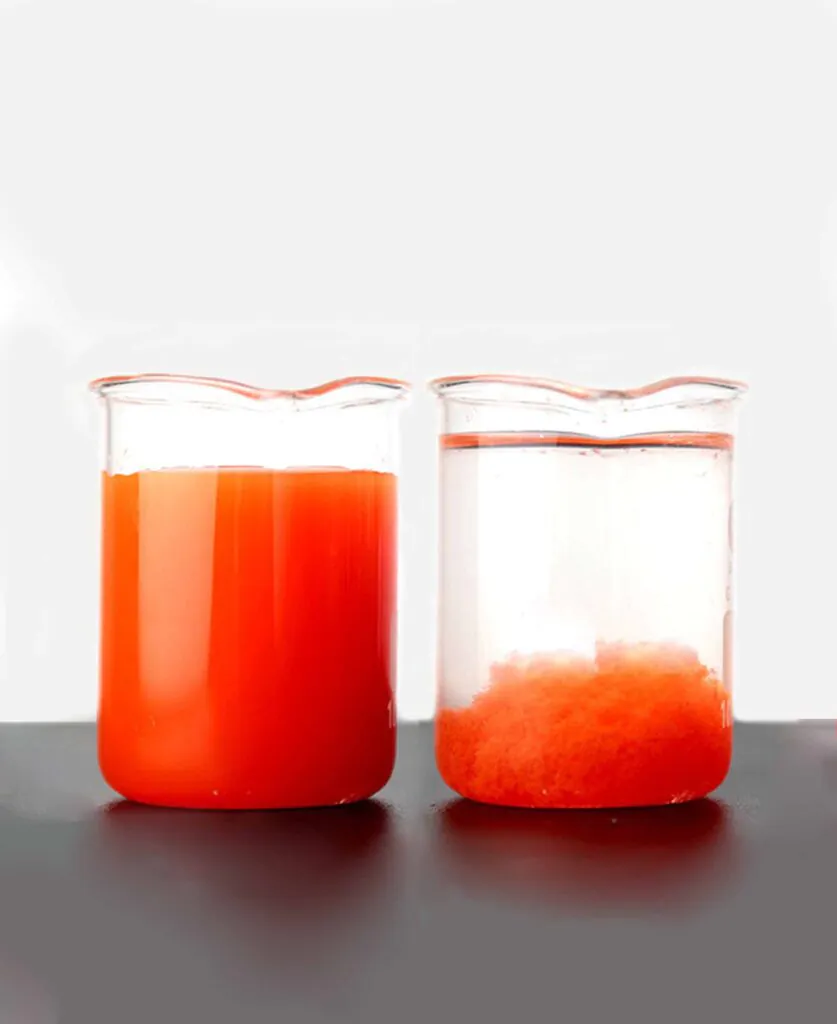
3. Synergistic Effect of PAC and PAM
In practical applications, PAC and PAM are used sequentially:
Paint Wastewater → pH Adjustment → PAC (Rapid Mix) → PAM (Slow Mix) → Sedimentation → Clear Water Reuse → Sludge Dewatering
Why the Combination Works
1+1 > 2 Synergy
- PAC neutralizes charges and forms initial aggregates.
- PAM bridges and strengthens flocs.
- Achieves deep removal of COD, SS, and color.
Increased Treatment Capacity
- Faster solid-liquid separation
- Higher clarifier loading rate
- Improved throughput
Optimized Operating Cost
- Reduced total chemical dosage
- Lower sludge handling costs
- Stable and predictable performance
Improved Sludge Characteristics
- Denser sludge formation
- Better dewatering efficiency
- Reduced disposal volume
Conclusion
In paint wastewater treatment, Polyaluminum Chloride (PAC) and Polyacrylamide (PAM) form a highly effective treatment system.
- PAC acts as the coagulant to destabilize colloids and emulsions.
- PAM serves as the flocculant to create large, fast-settling flocs.
- Together, they deliver efficient, stable, and cost-effective treatment performance.
For challenging industrial effluents like paint wastewater, this synergistic chemical approach is essential for regulatory compliance and sustainable water management.