
Choosing between cationic and anionic polyacrylamide is one of the most fundamental decisions in polymer-assisted wastewater treatment — and one of the most commonly made incorrectly.
The two types look identical. They dissolve the same way. They are dosed through the same equipment. But in the wrong application, each one fails completely, while the other works exactly as intended.
The difference comes down to charge. Cationic PAM carries a positive charge. Anionic PAM carries a negative charge. And because the particles in wastewater also carry charges — almost always negative — the interaction between polymer and particle determines everything about flocculation performance.
This guide explains the practical differences between cationic and anionic PAM, where each one works, and how to make the right selection for your specific application.
Why Charge Type Matters
Suspended particles in wastewater carry surface charges that keep them dispersed. The charge on most inorganic particles — silica, clay, metal oxides, mineral fines — is negative. The charge on organic particles — biological solids, food processing waste, municipal sewage solids — is also typically negative, but often with a higher charge density that responds differently to polymer types.
For a polymer to adsorb onto a particle surface and form bridges, it needs to interact effectively with that surface charge. This is where cationic and anionic PAM diverge:
Anionic PAM works primarily through polymer bridging — its negative charge does not neutralize particle charge, but the long high-MW chains physically connect particles across the gaps between them. This works best when particles are already partially destabilized by a coagulant, or when particles are large enough and concentrated enough for bridging to be effective without charge neutralization.
Cationic PAM works through both charge neutralization and bridging — its positive charge directly attracts negatively charged particle surfaces, improving adsorption efficiency and reducing the amount of polymer needed to achieve flocculation.
Where Each Type Performs Best
Anionic PAM — Primary Applications
Anionic PAM is the workhorse of industrial wastewater treatment. Its high molecular weight grades produce strong bridging across a wide range of inorganic particle types, making it the standard choice for:
Mining and mineral processing: Coal washing, sand and gravel, iron ore, phosphate, and potash processing all generate high-solids inorganic slurries that respond well to high-MW anionic PAM in thickeners and clarifiers.
Construction materials: Concrete washout, aggregate washing, and quarry runoff treatment.
Agricultural runoff and erosion control: Anionic PAM is widely used in irrigation channels and field runoff systems to reduce soil erosion and sediment loading.
Industrial clarifiers (with coagulant pre-treatment): When used after alum or ferric coagulant, anionic PAM bridges the fine precipitate particles formed by the coagulant into rapidly settling flocs.
Typical specifications:
- Molecular weight: 10–20 million Daltons
- Charge density: 10–40% anionic
- pH range: 6–10
Cationic PAM — Primary Applications
Cationic PAM performs best where organic solids dominate, or where direct charge neutralization improves flocculation efficiency without requiring coagulant pre-treatment.
Municipal wastewater treatment: Primary and secondary clarifiers treating municipal sewage — where organic biological solids carry strong negative charges — respond significantly better to cationic than anionic PAM.
Sludge dewatering: Belt presses, filter presses, and centrifuges all use cationic PAM to condition sludge before mechanical dewatering. The positive charge binds to negatively charged biological and organic solids, producing denser, better-draining cake.
Food and beverage processing: Dairy, meat, potato processing, and beverage plant wastewater contain high organic loads that respond well to cationic PAM.
Paper and pulp: Retention and drainage aids in papermaking are almost exclusively cationic grades.
Typical specifications:
- Molecular weight: 6–15 million Daltons
- Charge density: 20–80% cationic
- pH range: 4–9
Request samples of both cationic and anionic grades to run a comparative jar test at your facility. → Get in touch today
Head-to-Head Comparison
| Anionic PAM | Cationic PAM | |
|---|---|---|
| Charge | Negative | Positive |
| Primary mechanism | Polymer bridging | Charge neutralization + bridging |
| Best for | Inorganic mineral solids | Organic biological solids |
| Typical MW range | 10–20 million Da | 6–15 million Da |
| Coagulant required? | Often yes | Usually no |
| Sludge dewatering | Limited effectiveness | Highly effective |
| Municipal sewage | Poor to moderate | Excellent |
| Mining/mineral slurry | Excellent | Poor to moderate |
| Cost per kg | Generally lower | Generally higher |
| Sensitivity to salinity | Moderate | Low |
The Consequences of Using the Wrong Type
Using anionic PAM in an application that requires cationic — or vice versa — does not just reduce performance. In some cases it actively worsens treatment outcomes.
Dosing anionic PAM into a cationic-demand application such as municipal sludge dewatering typically produces little visible flocculation. Operators often respond by increasing dose significantly — consuming far more chemical than the correct grade would require at its optimal dose — without achieving the target dewatering performance.
Dosing cationic PAM into a high-solids inorganic slurry application can destabilize the slurry differently than intended, sometimes producing very fine, poorly settling flocs that pass through clarifiers and increase effluent turbidity.
In both cases, the problem is not dosage — it is grade selection. More of the wrong product never compensates for using the wrong product.
For guidance on matching PAM grade to your specific wastewater stream, see: Choosing the Right PAM Grade for Your Industry
When to Use Both
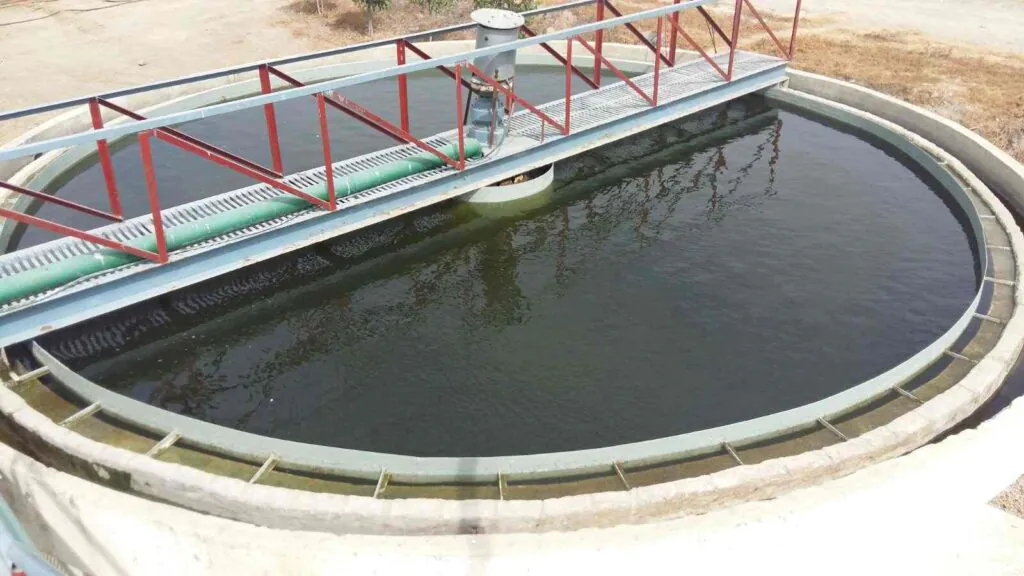
Many industrial wastewater treatment systems use both cationic and anionic PAM at different stages — and this is often the most cost-effective approach.
A common configuration in mining and municipal treatment:
- Thickener / primary clarifier: High-MW anionic PAM for inorganic solid settlement
- Sludge dewatering (belt press / centrifuge): Cationic PAM for organic solids conditioning
Using the right type at each stage — rather than trying to find a single grade that performs adequately across all stages — typically reduces total polymer consumption and improves performance at both stages simultaneously.
Frequently Asked Questions
Can I use anionic PAM for sludge dewatering?
In most cases, no. Municipal and biological sludge contains predominantly negatively charged organic solids that require the charge neutralization mechanism of cationic PAM for effective dewatering. Anionic PAM produces poor cake formation and wet, difficult-to-handle sludge in these applications. For mineral sludge dewatering with low organic content, anionic grades can sometimes perform adequately.
Does higher charge density always mean better performance?
Not necessarily. Higher charge density improves charge neutralization efficiency but reduces bridging length. For applications requiring large, fast-settling flocs in dilute suspensions, lower charge density with higher molecular weight often outperforms high charge density grades. The optimal balance depends on your specific wastewater and must be confirmed by jar testing.
Is cationic PAM more expensive than anionic?
Generally yes — cationic PAM typically costs 20–40% more per kilogram than comparable anionic grades. However, cationic PAM often achieves the same treatment result at lower dosage in organic-dominant applications, which can offset the price difference. Total cost per unit of treated water is a more meaningful comparison than price per kilogram.
Conclusion
Cationic and anionic PAM are not interchangeable. Each type is optimized for a specific category of wastewater — and using the wrong one is one of the most common and costly mistakes in polymer program management.
The decision framework is straightforward: inorganic mineral solids lean toward high-MW anionic PAM; organic biological solids and sludge dewatering applications lean toward cationic. When in doubt, jar testing with both types on your actual wastewater removes any ambiguity.
Not sure which type is right for your application? Contact our technical team today for a free grade recommendation based on your wastewater characteristics. → Contact our technical team today