
Polyacrylamide is not a commodity where price alone determines value. Two products with identical labels and similar prices can deliver dramatically different treatment performance — because molecular weight, charge density, residual acrylamide content, and batch-to-batch consistency vary significantly between manufacturers.
The cost of choosing a poor PAM supplier is rarely visible in the purchase price. It shows up later: in higher dosage requirements, inconsistent treatment performance, compliance risk from elevated acrylamide residuals, and the operational disruption of switching suppliers mid-season when problems become undeniable.
A structured supplier evaluation process — conducted before committing to volume supply — protects against these hidden costs and identifies suppliers capable of delivering consistent value over the long term.
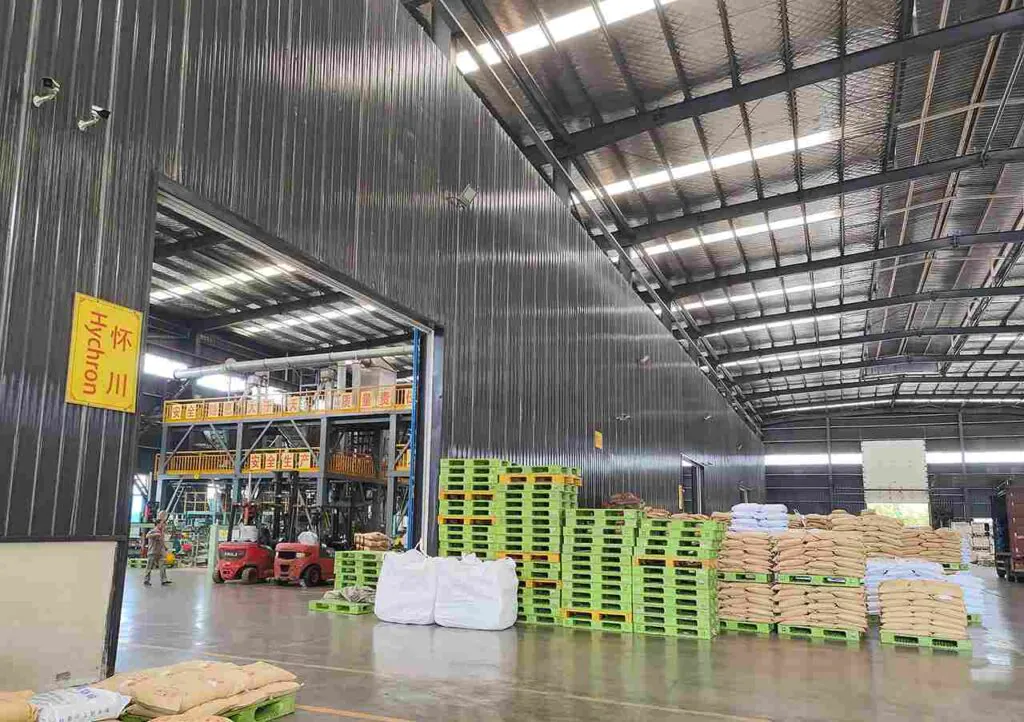
The Five Pillars of PAM Supplier Evaluation
Pillar 1: Product Documentation Quality
The quality of a supplier’s documentation is one of the most reliable indicators of their manufacturing quality. Suppliers who invest in rigorous quality control produce detailed, batch-specific documentation. Those who do not cannot produce what they do not measure.
What to request before purchasing:
Certificate of Analysis (CoA) — batch specific: Request CoA from at least three recent production batches. Each CoA should specify:
- Molecular weight (in Daltons or intrinsic viscosity)
- Charge density (% for ionic grades)
- Moisture content (%)
- Residual acrylamide monomer content (mg/kg or %)
- Particle size distribution (for powder grades)
- Production batch number and date
A supplier who provides a single generic product specification sheet instead of batch-specific CoA is not conducting batch-level quality testing. This is a significant red flag.
Safety Data Sheet (SDS): Must comply with GHS/UN format (16 sections). Should be in the language required for your country of use. Should specify residual acrylamide content and its associated hazard classification.
Product Technical Data Sheet: Should include preparation guidelines, recommended dosage ranges by application, storage requirements, and shelf life. Generic datasheets that apply to an entire product range rather than a specific grade indicate limited application expertise.
Pillar 2: Manufacturing Quality Systems
ISO 9001 certification is the baseline indicator of a structured quality management system. It does not guarantee product performance, but it confirms that the supplier has documented processes, conducts systematic quality testing, and is subject to third-party audit.
Questions to ask prospective suppliers:
- Are you ISO 9001 certified? Can you provide a current certificate?
- What quality tests are conducted on each production batch?
- What is your batch-to-batch variation specification for molecular weight and charge density?
- How do you handle batches that fall outside specification?
- Can we audit your manufacturing facility?
Suppliers who decline facility audit requests or cannot answer specific questions about their quality testing procedures should be treated with caution regardless of price.
Pillar 3: Technical Support Capability
PAM is an application chemical. Its performance depends not just on product quality but on correct grade selection, preparation procedure, dosage optimization, and troubleshooting when problems arise. A supplier who can only provide product — without the technical knowledge to help you use it effectively — delivers less value than their price suggests.
Indicators of genuine technical capability:
- Application engineers available for grade selection consultation
- Willingness to conduct jar testing on your specific wastewater samples
- Ability to provide application-specific dosage recommendations rather than generic ranges
- Track record of supporting similar applications in your industry
- Responsiveness to technical questions before the sale — this predicts responsiveness after it
A practical test: Before purchasing, ask a specific technical question about your application — optimal grade for your wastewater type, expected dosage range, or preparation procedure for your climate. The quality and specificity of the response reveals the supplier’s actual technical depth.
Pillar 4: Supply Reliability and Logistics
The best PAM product delivers no value if it does not arrive on time in usable condition. Supply reliability considerations are often underweighted in supplier evaluation — until a supply disruption causes a treatment emergency.
Key supply reliability factors:
Production capacity and lead time: Can the supplier meet your volume requirements consistently? What is standard lead time from order to delivery? What is their policy during periods of high demand or raw material shortage?
Minimum order quantities: MOQ requirements vary significantly between suppliers. Large manufacturers may require container-load minimums that exceed the requirements of smaller facilities. Confirm MOQ before evaluating pricing.
Export documentation: For international procurement, confirm the supplier can provide all required export documentation — commercial invoice, packing list, certificate of origin, bill of lading, and any country-specific import requirements. Incomplete documentation causes customs delays that disrupt supply schedules.
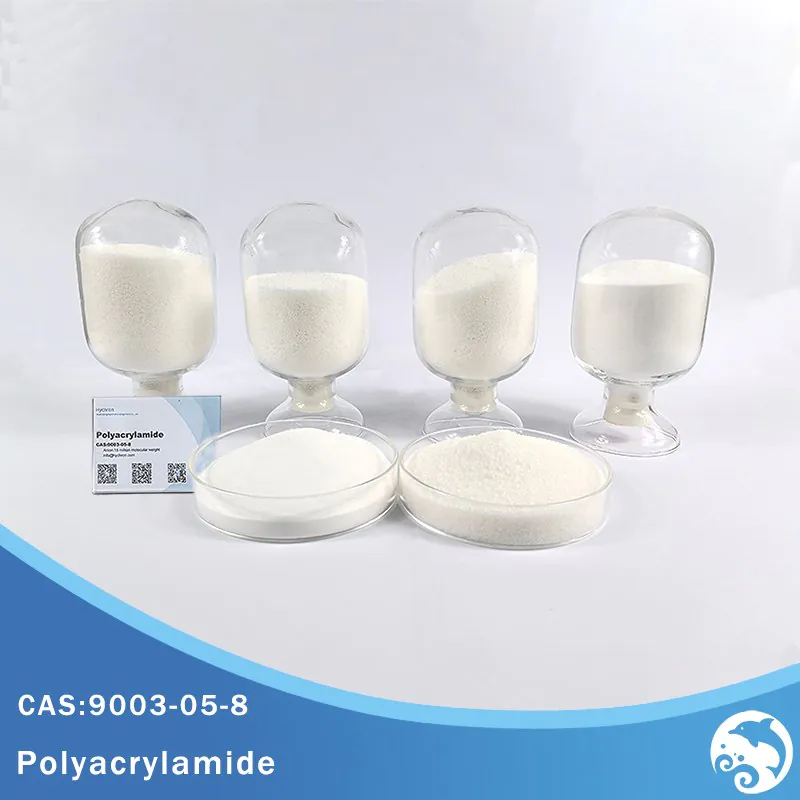
Pillar 5: Trial Before Volume Commitment
No documentation review or reference check replaces actual performance testing of the specific product in your specific application. Before committing to volume supply, always:
Request a trial quantity: A supplier confident in their product quality will provide trial quantities — typically 25–50 kg of dry powder or one drum of emulsion — for performance evaluation. Suppliers who decline trial requests or impose unreasonable minimum trial quantities are reducing your ability to verify their claims before commitment.
Conduct comparative jar testing: Test the trial product alongside your current grade under identical conditions. Evaluate floc size, settling rate, supernatant clarity, and optimal dosage. A product that requires significantly higher dosage than your current grade to achieve equivalent performance is not cost-competitive regardless of purchase price.
Evaluate dissolution quality: Prepare solution at standard conditions and assess dissolution time, fish eye formation, and solution clarity. Consistent, rapid dissolution with minimal fish eyes indicates quality manufacturing and particle size control.
Contact our technical team today to request a trial quantity, full product documentation, and jar testing support for your application. → Contact our technical team today
Red Flags: When to Walk Away
Certain supplier behaviors consistently predict problems after the purchase is made:
Unable to provide batch-specific CoA: Generic specification sheets are not CoA. If a supplier cannot provide batch-specific test data, they are not testing batches individually.
Residual acrylamide data unavailable or vague: “Meets regulatory requirements” without specific numbers is not acceptable. Require actual mg/kg values from batch testing.
No ISO 9001 certification and no explanation: Not all quality manufacturers are ISO certified, but suppliers without certification should be able to explain their quality management approach in detail.
Declining trial requests: Confidence in product quality is demonstrated by willingness to let customers test it. Reluctance to provide trials often indicates awareness of performance limitations.
Price significantly below market: PAM production involves acrylamide monomer, polymerization equipment, and quality testing. Prices significantly below market norms typically indicate compromises in raw material quality, molecular weight consistency, or residual acrylamide content.
Inconsistent specifications between quotes: If molecular weight or charge density specifications shift between quotations without explanation, the supplier may be quoting based on whatever material is available rather than consistent manufacturing to specification.
Supplier Evaluation Scorecard
Use this framework to compare suppliers objectively:
| Evaluation Criterion | Weight | What to Look For |
|---|---|---|
| Batch-specific CoA available | High | 3+ recent batches, all key parameters included |
| Residual acrylamide data | High | Specific mg/kg values, not vague claims |
| ISO 9001 certification | Medium | Current certificate, not expired |
| Technical support quality | High | Specific answers, jar test willingness |
| Trial quantity available | High | Reasonable minimum, no excessive conditions |
| Supply lead time | Medium | Confirmed lead time in writing |
| Export documentation capability | Medium | Full set available, no gaps |
Frequently Asked Questions
How many suppliers should we evaluate before making a decision?
For standard industrial applications, evaluating two to three suppliers through documentation review and trial testing provides sufficient basis for a decision. For critical applications — pharmaceutical, drinking water, large municipal contracts — a more thorough evaluation including facility audits and extended trial periods is justified.
Should we always choose the lowest-cost qualified supplier?
Price is one factor among several. A supplier with better technical support, more consistent product quality, or more reliable supply may deliver lower total cost of ownership than a cheaper alternative with higher dosage requirements or more frequent supply disruptions. Evaluate total value, not purchase price alone.
How often should we re-evaluate our current PAM supplier?
Annual review of supplier performance — CoA consistency, dosage stability, responsiveness, delivery reliability — identifies emerging problems before they become operational issues. Conduct a comparative trial of an alternative supplier every two to three years to confirm your current supplier remains competitive on both quality and price.
Conclusion
Supplier evaluation is the most important procurement decision in a PAM program — more impactful than dosage optimization or grade selection, because it determines the baseline quality from which all other improvements must be made.
The five-pillar framework in this guide — documentation quality, manufacturing systems, technical support, supply reliability, and trial testing — provides a structured basis for comparing suppliers objectively. Applied consistently, it identifies the suppliers capable of delivering consistent product quality and genuine technical partnership over the long term.
Ready to evaluate us against your current supplier? Request a trial quantity, full product documentation, and a technical consultation today. → Get in touch today

