
Iron ore processing generates three overlapping challenges that chemical treatment must address simultaneously: separating fine tailings particles efficiently to minimize storage footprint, recovering and recycling process water to reduce fresh water consumption, and transporting high-density slurry economically over long distances. PAM addresses all three — not as a universal fix, but as a precisely selected polymer matched to the specific conditions of each application point in the processing circuit. This article covers where PAM delivers the most measurable value in iron ore operations and how to use it correctly.
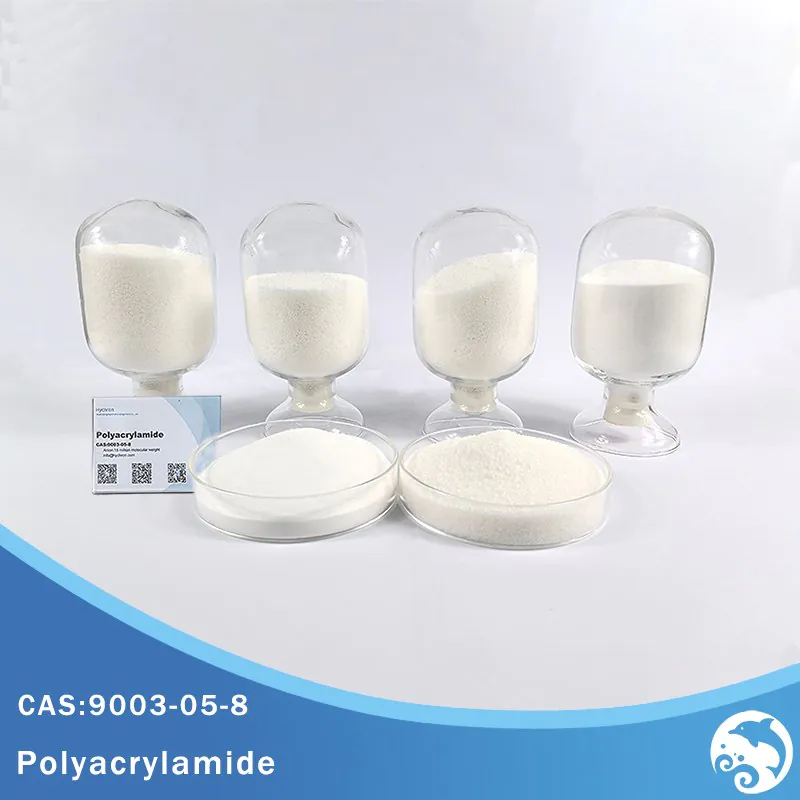
Four Core Applications in Iron Ore Processing
1. Tailings Thickening and Solid-Liquid Separation
Iron ore tailings — the fine gangue mineral residue after magnetic separation or flotation — contain suspended particles at concentrations of 5,000–30,000 mg/L that settle extremely slowly without chemical assistance. Untreated tailings require large pond areas and long residence times, creating both land use pressure and environmental liability from heavy metal-containing supernatant water.
Anionic PAM at 20–80 g/tonne of dry solids promotes rapid aggregation of fine hematite, silica, and clay particles into large, dense flocs that settle in thickeners at rates 30–50% faster than unassisted settling. Faster settling translates directly into:
- Higher thickener throughput for the same tank diameter
- Denser underflow (typically 55–70% solids) reducing tailings pond volume requirements by up to 50%
- Cleaner overflow water suitable for process water recycling without further treatment
For iron ore tailings specifically, anionic PAM with ionic degree 20–40% and molecular weight 12–18 million Da performs best in the alkaline circuit conditions (pH 9–11) typical of iron ore processing, where calcium and magnesium ions from process water provide the divalent cation bridges that link anionic PAM to negatively charged mineral surfaces.
2. Process Water Purification and Recycling
Iron ore washing, classification, and flotation consume large water volumes. Process water recovered from thickeners and tailings ponds contains residual suspended solids, colloidal silica, and heavy metal ions that limit its direct reuse in sensitive process stages.
PAM at 5–20 mg/L — often combined with PAC at 50–150 mg/L for colloidal destabilization — achieves suspended solids removal above 90% and reduces colloidal silica sufficiently for process water recycling to grinding and classification circuits. Water recycling rates of 40–60% are consistently achievable in well-designed closed-loop systems, with corresponding reductions in fresh water intake and effluent discharge volume.
The economic value of water recycling in iron ore operations extends beyond water cost — in water-stressed regions, fresh water availability is often the primary constraint on production capacity, making recycling a strategic operational requirement rather than simply a cost optimization.
3. Slurry Thickening Before Dewatering
Before filtration or pressure dewatering equipment, iron ore concentrate slurry must be thickened to reduce the liquid volume entering the filter. PAM in the pre-filter thickener increases underflow solids concentration by 15–20 percentage points compared to unassisted thickening — reducing filter press cycle time, improving cake moisture, and lowering the energy cost per tonne of dry concentrate produced.
The interaction between thickener underflow density and downstream filter performance is direct: every percentage point increase in feed solids to the filter press reduces cycle time and energy consumption proportionally. PAM optimization in the thickening stage therefore benefits the entire dewatering circuit.
4. Pipeline Slurry Transport — Drag Reduction
Long-distance pipeline transport of iron ore concentrate slurry — common in operations where the processing plant is distant from the port or pellet plant — experiences significant friction pressure drop that drives pumping energy cost. PAM’s polymer chains align with flow at the pipe wall under shear, reducing the turbulent boundary layer thickness and cutting friction resistance.
At concentrations of 10–50 mg/L in the transport slurry, PAM reduces pipeline friction by 20–30%, which at high-volume transport rates represents significant pumping energy savings. This application requires careful PAM grade selection — mechanical degradation of polymer chains under pump shear is the primary failure mode, and shear-stable grades with optimized molecular weight for the specific pipeline velocity and slurry density must be confirmed through pilot testing before full-scale implementation.
PAM Grade Selection for Iron Ore Applications
| Application | PAM Type | Molecular Weight | Ionic Degree | Typical Dosage |
|---|---|---|---|---|
| Tailings thickening | Anionic | 12–18 million Da | 20–40% | 20–80 g/t DS |
| Process water clarification | Anionic | 10–15 million Da | 15–30% | 5–20 mg/L |
| Pre-filter slurry thickening | Anionic | 12–16 million Da | 20–35% | 15–50 g/t DS |
| Pipeline drag reduction | Anionic (shear-stable) | 8–12 million Da | 10–25% | 10–50 mg/L |
| Organic-contaminated wastewater | Cationic | 6–12 million Da | 20–50% | 2–8 kg/t DS |
Anionic PAM dominates iron ore applications because the alkaline circuit conditions and high divalent cation concentration in process water (Ca²⁺ from lime addition, Mg²⁺ from ore dissolution) create ideal bridging conditions for anionic polymer flocculation. Cationic PAM applies specifically where process water contains organic contamination from flotation reagents — frothers, collectors, depressants — that creates positive-charge demand not addressed by anionic grades.
Dissolution and Dosing Protocol
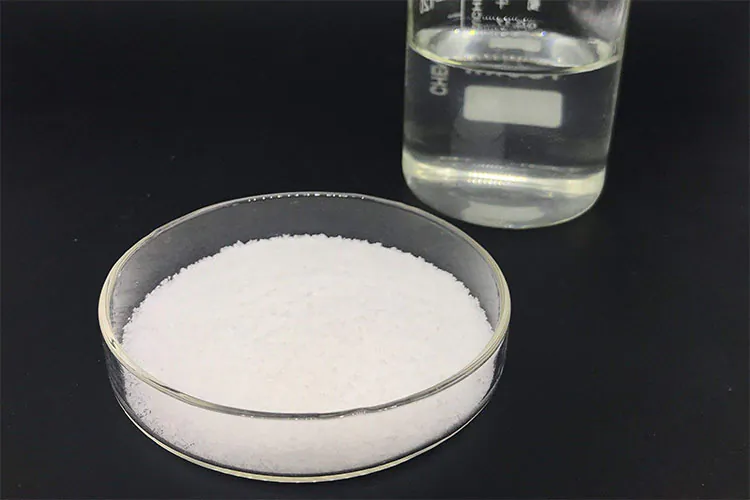
PAM performance in iron ore applications depends heavily on complete dissolution and correct dosing point location — two variables that are frequently managed poorly at remote mine sites.
Dissolution: Prepare PAM at 0.1–0.3% concentration in clean water (below 500 mg/L TDS preferred — high ionic strength slows chain extension). Add powder slowly to stirred water over 5–10 minutes; avoid adding all at once, which causes gel clumping. Allow 40–60 minutes maturation time before the solution goes to the dosing point. At cold temperatures (< 15°C), extend maturation to 60–90 minutes.
Dosing point: Add PAM solution to the thickener feedwell at a point of controlled turbulence — enough mixing to distribute polymer through the feed stream, but not high enough shear to break flocs immediately after formation. Feedwell design significantly affects PAM efficiency: a well-designed feedwell with controlled energy dissipation can reduce PAM dosage requirement by 15–25% compared to a poorly designed feedwell on the same thickener.
Dosage optimization: Run settling tests using actual process slurry at three PAM dosages — low, medium, and high within the recommended range for your ore type. Measure settling rate at 5 and 15 minutes and overflow clarity. The dose achieving the fastest initial settling with clear overflow at minimum PAM consumption is the operating target. Retest when ore type or process water chemistry changes.
FAQ
Q: How do I determine whether anionic or nonionic PAM is better for my iron ore tailings circuit?
A: Measure your process water conductivity and divalent cation content (Ca²⁺ + Mg²⁺). If divalent cations exceed 50 mg/L — common in lime-treated iron ore circuits — anionic PAM at 20–40% ionic degree performs well because bridging via Ca²⁺ is effective. If process water is very soft (< 20 mg/L divalent cations) or circuit pH is below 7, nonionic PAM avoids the charge-screening problem that reduces anionic PAM performance in low-ionic-strength water. Run a parallel settling test with both grades on your actual tailings slurry to confirm.
Q: What is the difference between using PAM in a conventional thickener versus a high-rate thickener for iron ore tailings?
A: Conventional thickeners rely primarily on gravity settling with long residence time — PAM improves settling rate and overflow clarity but the large tank area provides tolerance for dosage variation. High-rate thickeners (paste thickeners, high-density thickeners) operate at much higher feed rates with shorter residence time and depend more critically on PAM performance — dosage errors that are tolerable in conventional thickeners cause overflow turbidity exceedances in high-rate units. For high-rate thickeners, install online turbidity monitoring on the overflow and implement automatic PAM dosage adjustment rather than fixed-rate dosing.
Q: How should PAM be stored at a remote iron ore mine site with limited temperature control?
A: Store powder PAM in sealed bags inside a weatherproof building, off the ground on pallets, away from direct sunlight. Temperature range 5–35°C is acceptable; avoid freezing (causes clumping) and sustained temperatures above 40°C (accelerates degradation). Shelf life is 24 months from manufacture date under correct conditions. For sites in tropical climates with warehouse temperatures regularly exceeding 35°C, emulsion PAM dissolves faster and may be more practical despite shorter shelf life (12 months). Maintain minimum 30-day inventory and rotate stock first-in, first-out.
PAM Optimization Pays Back Faster Than Most Process Improvements in Iron Ore Operations
The combination of tailings pond footprint reduction, process water recycling, improved thickener throughput, and pipeline energy savings from optimized PAM use represents one of the highest-return chemical optimization opportunities available to iron ore operations. The investment is primarily in grade selection testing and dissolution protocol improvement — both low-cost relative to the operational savings they enable. For operations currently using a single PAM grade across all applications, application-specific grade optimization typically reduces total PAM consumption while improving performance at each stage.
HyChron supplies anionic PAM for iron ore tailings, process water, and pipeline applications with batch-specific quality documentation and technical support for grade selection and thickener optimization. Contact our team for product specifications or settling test support based on your ore type and process water chemistry.