Skip to content
Livestock and poultry farms generate significant volumes of wastewater rich in organic matter, nitrogen, phosphorus, and suspended solids. Without proper treatment, this wastewater can cause environmental pollution, odor issues, and regulatory non-compliance. Polyacrylamide (PAM) has become a critical tool in addressing these challenges. This guide explains how PAM can enhance the efficiency of livestock wastewater treatment, reduce costs, and ensure compliance.
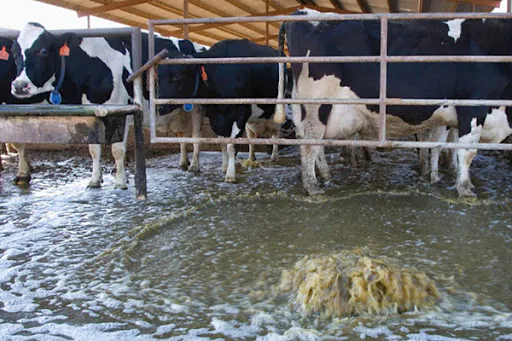
Why Livestock Wastewater Needs Effective Treatment
Wastewater from livestock operations contains high concentrations of:
- Suspended solids: Manure, feed residues, and bedding materials.
- Nutrients: Nitrogen (N) and phosphorus (P) that can cause eutrophication.
- Organic matter: Measured as COD/BOD, leading to oxygen depletion in water bodies.
Traditional settling ponds often struggle with slow sludge separation, producing high volumes of thick sludge that are expensive to handle. PAM accelerates floc formation, making solids removal faster and more efficient.
How PAM Works in Livestock Wastewater
Polyacrylamide acts primarily through charge neutralization and polymer bridging:
- Charge neutralization: Many particles in manure-laden wastewater are negatively charged. Cationic PAM neutralizes these charges, destabilizing the suspension.
- Polymer bridging: Long-chain polymer molecules link particles together, forming larger flocs that settle quickly.
Results: Proper PAM application can reduce sludge volume by 30–50% and improve water clarity by over 90% in livestock wastewater lagoons.
Key Application Tips
- Polymer Type: Cationic PAM is most effective for manure-rich wastewater, while anionic or amphoteric types may be suitable for mixed nutrient streams.
- Molecular Weight: Medium to high molecular weight PAM (8–15M Da) forms strong, dense flocs ideal for thick wastewater.
- Dosage Range: Typically 1–5 mg/L depending on solid concentration and wastewater characteristics. Conduct jar tests to optimize.
Temperature & pH: PAM works best at pH 6–8 and temperatures above 10°C. Cold or highly acidic wastewater may require pH adjustment or slight heating.
Benefits of Using PAM for Livestock Wastewater
- Faster Sludge Settling: Reduces retention time in lagoons and clarifiers.
- Lower Disposal Costs: Less sludge means fewer truckloads to transport or treat.
- Enhanced Nutrient Removal: PAM helps trap phosphorus bound to solids, improving compliance with discharge limits.
- Odor Reduction: Rapid solid-liquid separation reduces anaerobic conditions that generate odor.
- Cost Efficiency: Effective PAM dosing can cut chemical costs compared to coagulants like alum or ferric chloride.

Real-World Applications
Dairy Farms
- Medium-weight cationic PAM improves suspended solids removal in washwater lagoons.
- Reduces sludge handling costs by 40–50%.
Poultry Farms
- High-solids poultry litter wastewater responds well to high-cationic PAM.
- Achieves 80–90% solids removal within 30–60 minutes.
Swine Operations
- Combined lagoon and mechanical clarifier systems benefit from PAM dosing.
- Enhances phosphorus removal and improves water reuse quality.
Implementing PAM Treatment Successfully
- Jar Testing: Always test different polymer types and dosages before full-scale application.
- Automated Dosing: Use flow-paced dosing pumps to maintain consistent floc formation.
- Monitoring: Measure turbidity and settleable solids to adjust treatment parameters.
- Operator Training: Ensure staff understand hydration protocols, mixing energy, and handling.
Hydration Protocol Example:
- Prepare 0.1–0.3% solution.
- Stir for 30–45 minutes at 15–35°C.
- Use immediately; avoid storing hydrated solution longer than 4 hours.
Conclusion
Using PAM in livestock wastewater treatment enhances solids separation, reduces sludge volume, and improves nutrient removal. Proper selection, dosing, and monitoring ensure maximum efficiency and compliance with environmental regulations. Farms implementing PAM report cleaner effluent, lower disposal costs, and reduced odor, making it an indispensable solution for modern livestock wastewater management.