
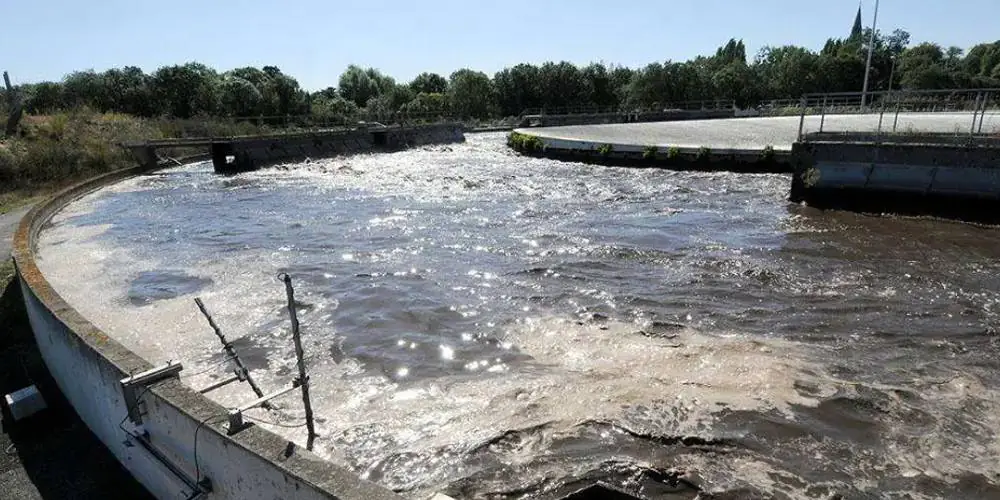
Rainfall events create a unique and often underestimated challenge for wastewater treatment operations. When heavy rain arrives, treatment plants face two simultaneous problems: a sudden surge in hydraulic loading that pushes clarifiers and settling systems toward their capacity limits, and a rapid change in influent water quality as diluted, surface-runoff-contaminated water enters the treatment train.
Most facilities design their polymer programs for average conditions. Rainfall events are not average conditions — and the treatment failures that most commonly result in regulatory violations occur not during stable operation but during and immediately after significant rainfall events.
Managing rainfall dilution effectively requires a pre-planned response protocol, an understanding of how dilution affects both wastewater characteristics and polymer performance, and — in many cases — adjustments to both dosage and treatment approach that differ from normal operating conditions.
How Rainfall Changes Wastewater Characteristics
The specific effects of rainfall on wastewater influent depend on the collection system type and catchment characteristics, but several patterns are consistent across most facilities:
For industrial facilities with open process areas: Surface runoff from rainfall carries fine soil particles, organic debris, and potentially process chemical residues into collection sumps. Influent suspended solids concentration may increase 2–5 times during heavy rainfall as clean process water mixes with contaminated stormwater.
For municipal treatment plants with combined sewers: Rainwater inflow dilutes the wastewater stream — reducing suspended solids and organic concentration per unit volume — while simultaneously increasing total hydraulic flow. The net effect on polymer demand depends on whether solids loading (kg/hour) increases or decreases, which varies by event intensity.
For facilities with separate stormwater systems: Heavy rainfall can still affect treatment through groundwater infiltration into collection pipes and through increased runoff from process areas not captured by the stormwater system.
Common rainfall-related influent changes:
| Parameter | Effect During Rainfall | Implication for PAM |
|---|---|---|
| Flow rate | Significant increase | Hydraulic loading may exceed clarifier capacity |
| Suspended solids concentration | Variable — may increase or decrease | Dosage per m³ may need adjustment |
| Total solids loading (kg/h) | Usually increases | Absolute polymer demand increases |
| Temperature | May decrease (cold rainfall) | Polymer dissolution quality affected |
| pH | May change from surface runoff | Check against optimal PAM range |
| Particle type | New particle types from runoff | Current grade may not be optimal |
The Hydraulic Surge Problem
The most immediate risk during a significant rainfall event is hydraulic overload — when influent flow rate exceeds the design capacity of the settling system.
Clarifiers and settling ponds are designed for a maximum surface overflow rate. When flow exceeds this rate, the residence time available for settlement decreases proportionally. Even perfectly flocculated water cannot settle completely if the hydraulic loading prevents adequate residence time before the clarifier overflow weir.
Signs of hydraulic overload during rainfall:
- Effluent turbidity rising despite normal or increased polymer dosage
- Visible flow disturbance at clarifier surface
- Settled sludge being carried over the overflow weir
- Polymer dosage increases that do not improve effluent quality
This is a critical diagnostic point: turbidity rising during a rainfall event that does not respond to polymer dosage increase is most likely a hydraulic problem, not a chemistry problem. Continuing to increase polymer dosage without addressing hydraulic loading is ineffective and wastes chemical.
Hydraulic management options:
- Reduce influent flow rate if equalization tank capacity allows
- Distribute flow across multiple clarifiers in parallel if available
- Reduce non-essential influent streams during peak rainfall flow
- Implement flow equalization infrastructure for facilities with chronic wet-weather compliance problems
Contact our technical team today for a wet-weather protocol review and polymer recommendations for your specific catchment and treatment system. → Contact our technical team today
Polymer Response Strategy for Rainfall Events
Once hydraulic loading is confirmed to be within manageable range, polymer adjustments address the chemistry component of rainfall performance challenges.
Before the Rainfall Event
Weather monitoring gives facilities advance notice of significant rainfall. Pre-event preparation significantly improves response effectiveness:
Increase polymer preparation capacity: Prepare a larger batch of solution before the event. Rainfall events can last hours — having adequate dissolved polymer available prevents the preparation lag that delays effective response.
Check and confirm solution quality: Ensure the preparation tank contains fresh, fully dissolved solution. Do not enter a rainfall event with a partially aged or questionable batch.
Brief operators on the rainfall protocol: Confirm that all shift operators know the target dosage adjustments for wet weather events and the turbidity thresholds that trigger further adjustment.
During the Rainfall Event
Increase dosage proactively as flow rises: As influent flow increases, total solids loading typically increases even if concentration per m³ decreases. Dosage expressed as mg/L should increase to maintain equivalent g/hour of polymer delivery.
A simple rule of thumb: if flow doubles, dosage in mg/L should be assessed — not automatically halved. The relationship between flow and solids loading is not always linear, and maintaining a target g/hour delivery based on actual turbidity feedback is more reliable than a fixed formula.
Monitor outlet turbidity continuously: Rainfall events are the situation where real-time turbidity monitoring delivers its highest value. Turbidity rising despite dosage increase signals hydraulic overload — reducing further dosage increase and focusing on hydraulic management. Turbidity stable or improving confirms the chemistry response is working.
Adjust for particle type changes: Surface runoff introduces different particle types than the normal process stream. Clay, silt, and organic debris from surface areas may respond differently to the current PAM grade than normal process solids. If standard dosage increases are not producing expected results, a temporary switch to a higher charge density grade may improve capture of fine colloidal runoff particles.
For guidance on PAM grade response to variable particle types, see: Choosing the Right PAM Grade for Your Industry
After the Rainfall Event
Gradually reduce dosage as flow normalizes: As rainfall stops and influent flow returns to normal, reduce polymer dosage in steps. Maintaining wet-weather dosage during dry-weather conditions wastes chemical and risks overdosing.
Clean preparation equipment: Rainfall events often introduce unusual contaminants to the collection system. Check preparation tank and dosing equipment for unusual fouling or contamination after significant events.
Review performance log: Document influent flow, turbidity, polymer dosage, and effluent quality through the event. This data is valuable for improving the wet-weather protocol for subsequent events and for demonstrating due diligence in treatment management to regulatory agencies if any compliance issues occurred.
Pre-Planning a Wet Weather Protocol
Facilities that develop and document a wet weather response protocol before the event maintain significantly better compliance than those responding ad hoc.
A complete wet weather protocol should specify:
Trigger conditions: The flow rate or turbidity level that initiates the wet weather protocol — typically 120–150% of normal dry weather flow.
Initial dosage adjustment: The first dosage step when the trigger condition is reached — typically 20–30% above dry weather optimum as a starting point.
Monitoring frequency: Increased turbidity monitoring interval during events — typically every 15–30 minutes rather than hourly.
Escalation steps: Defined dosage increases if initial adjustment is insufficient, with turbidity thresholds triggering each step.
Hydraulic management triggers: The flow level at which hydraulic load reduction measures are activated — equalization tank use, parallel clarifier engagement, or flow reduction requests.
Operator notification: Who to contact if the event exceeds protocol capacity — shift supervisor, environmental manager, or regulatory agency pre-notification if a compliance risk is identified.
Frequently Asked Questions
Our effluent always exceeds discharge limits during heavy rainfall — is this inevitable?
Not necessarily, but it may require infrastructure investment beyond polymer optimization. If hydraulic loading consistently exceeds clarifier design capacity during major events, no polymer program can fully compensate. Flow equalization tanks, which capture peak flow and meter it through treatment at manageable rates, are the most effective infrastructure response to chronic wet-weather compliance failures. For facilities where hydraulic loading remains manageable but chemistry is the limiting factor, polymer protocol optimization typically achieves compliance at significantly lower cost than infrastructure investment.
How do we distinguish hydraulic overload from chemistry failure during a rainfall event?
The key diagnostic test: increase polymer dosage by 20% and monitor turbidity for 30 minutes. If turbidity continues to rise despite the increase, hydraulic overload is the primary cause — polymer cannot compensate. If turbidity stabilizes or improves, the response is chemistry-limited and further dosage adjustment will help. This test should be part of every wet weather protocol.
Should we use a different PAM grade specifically for wet weather events?
For most facilities, pre-optimizing dosage of the current grade is sufficient for rainfall events. A different grade specifically for wet weather is justified if surface runoff consistently introduces particle types that respond poorly to the current grade — typically very fine clay particles requiring higher charge density. If seasonal jar testing with rainfall-period influent samples shows significantly different optimal grade compared to dry weather samples, maintaining a separate wet weather grade may be cost-effective.
Conclusion
Rainfall events are the most common trigger for wastewater treatment compliance failures — not because they are unmanageable, but because most facilities respond reactively rather than with a pre-planned protocol. The combination of hydraulic surge management and proactive polymer dosage adjustment, guided by real-time turbidity monitoring, gives facilities the tools to maintain compliance through most rainfall events.
Facilities that invest in a documented wet weather protocol — including trigger conditions, dosage steps, monitoring frequency, and escalation procedures — consistently achieve better compliance outcomes during events and demonstrate the operational due diligence that regulatory agencies expect from well-managed treatment operations.
Contact us today to develop a wet weather polymer protocol for your facility and discuss PAM grades optimized for variable influent conditions. → Get in touch today