 Skip to content
Asia is the world’s largest and fastest-growing market for polyacrylamide in wastewater treatment. Rapid industrialization, tightening environmental regulations, expanding municipal infrastructure, and the scale of mining and mineral processing operations across the region have driven demand for effective, reliable polymer programs to levels unmatched anywhere else in the world.
For procurement managers and plant operators sourcing PAM across Asia, understanding the regional market — its key applications, regulatory landscape, supply dynamics, and quality considerations — is essential for making informed purchasing decisions that deliver consistent treatment performance at competitive cost.
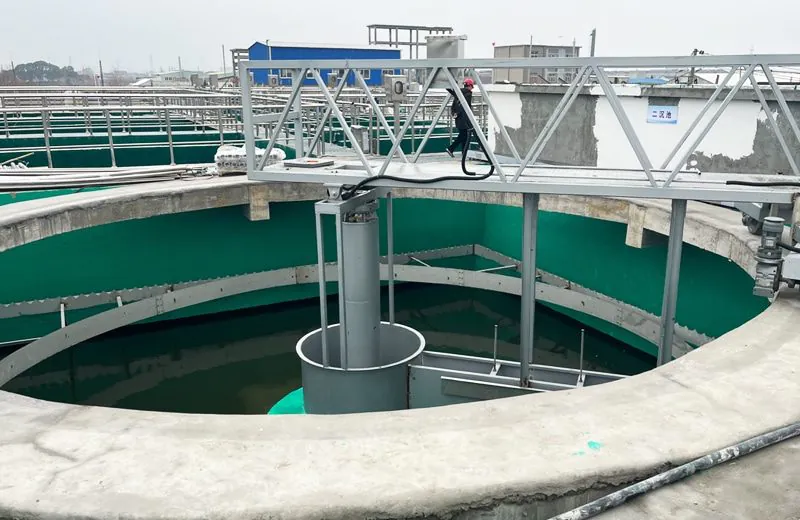
The Scale of Asia’s Wastewater Treatment Challenge
Asia’s wastewater treatment requirements are driven by the scale and diversity of its industrial and urban development. Several factors combine to create one of the most demanding treatment environments globally:
Industrial concentration: China, India, Southeast Asia, and South Korea host some of the world’s largest concentrations of mining, chemical manufacturing, textile, paper, food processing, and steel operations — all significant generators of wastewater requiring polymer-assisted treatment.
Municipal growth: Asia’s urban population has grown by hundreds of millions in recent decades, driving massive investment in municipal wastewater treatment infrastructure. China alone has built thousands of municipal wastewater treatment plants since 2000, with capacity expansion continuing across Southeast Asia and South Asia.
Regulatory tightening: Environmental enforcement across Asia has intensified significantly. China’s progressive tightening of discharge standards — particularly under the “Water Ten Plan” and subsequent regulations — has driven demand for higher-performance treatment chemicals. Similar regulatory trends are emerging across Vietnam, Indonesia, Thailand, and India.
Water scarcity: In water-stressed regions of China, India, and Central Asia, industrial water recycling is increasingly mandated rather than optional — driving demand for PAM programs that enable closed-loop water systems.
Key Applications Across Asian Markets
Mining and Mineral Processing — Largest Single Application
Asia’s mining sector — coal in China and Indonesia, iron ore in India and Australia, copper and gold across Southeast Asia, and phosphate across Central Asia — generates enormous volumes of mineral slurry requiring thickening and clarification.
High molecular weight anionic PAM is the dominant product in this segment, used in thickeners, tailings ponds, and process water recycling systems. Demand is driven by production volume, water recycling requirements, and the progressive tightening of tailings management regulations across the region.
Municipal Wastewater Treatment
China’s municipal wastewater treatment sector is among the largest PAM markets globally. Cationic PAM for sludge dewatering — belt presses and centrifuges in municipal treatment plants — represents a significant and growing application as plant capacity expands and sludge disposal regulations tighten.
Southeast Asian municipal markets — Vietnam, Indonesia, Philippines, Thailand — are earlier in their infrastructure development cycle but growing rapidly, with significant investment in new treatment capacity creating sustained demand for polymer programs.
Textile and Dyeing Wastewater
China, Bangladesh, Vietnam, and India host large textile and dyeing industries that generate complex, high-color wastewater. PAM is used in combination with coagulants for suspended solids removal and color reduction, often as part of multi-stage treatment systems required to meet increasingly strict discharge standards.
Food and Agricultural Processing
Southeast Asia’s palm oil, rubber, and food processing industries generate high-organic wastewater that requires cationic PAM for effective treatment. Indonesia and Malaysia are particularly significant markets for PAM in palm oil mill effluent treatment.
Paper and Pulp
China, Indonesia, and India host major paper and pulp industries. Both anionic PAM (for process water clarification) and cationic PAM (for sludge dewatering and retention aid applications) are widely used across this sector.
Regulatory Landscape Across Key Asian Markets
China
China’s discharge standards have tightened significantly and continue to evolve. The GB 8978 integrated wastewater discharge standard and sector-specific standards govern industrial discharge limits. Municipal treatment plants operate under increasingly strict Class A effluent standards in sensitive receiving water areas.
PAM used in China must comply with GB standards for residual acrylamide content. Procurement teams should confirm supplier compliance with current GB specifications and request batch certificates of analysis.
India
India’s Central Pollution Control Board (CPCB) and State Pollution Control Boards set discharge standards that vary by industry sector and receiving water body. Standards are tightening progressively, particularly for industries discharging to rivers or coastal waters.
Southeast Asia
Regulatory frameworks vary across Southeast Asian markets — from relatively mature systems in Singapore and Malaysia to developing frameworks in Vietnam, Indonesia, and the Philippines. In all markets, the direction of travel is toward stricter discharge limits and higher enforcement intensity.
Contact our technical team today to discuss PAM supply, documentation, and regulatory compliance for your specific Asian market. → Contact our technical team today
Sourcing PAM in Asia: Quality Considerations
Asia hosts a large number of PAM manufacturers, particularly in China where the majority of global polyacrylamide production capacity is concentrated. This creates both opportunities and risks for procurement teams.
The quality variability challenge: The Asian PAM market includes manufacturers operating across a wide range of quality standards — from world-class producers with ISO-certified manufacturing and rigorous batch testing, to lower-cost producers with variable molecular weight, inconsistent charge density, and elevated residual acrylamide content.
Low-cost PAM that underperforms in treatment applications imposes hidden costs: higher dosage requirements, more frequent operational problems, and compliance risk from elevated residual acrylamide. The true cost of low-quality PAM is almost always higher than the purchase price suggests.
What to verify when sourcing from Asian suppliers:
- Batch-specific certificates of analysis confirming molecular weight, charge density, moisture content, and residual acrylamide content for every shipment
- ISO 9001 manufacturing certification as a baseline quality management indicator
- Consistent product specifications across multiple batches — request CoA from at least three recent batches before committing to a supplier
- Technical support capability — ability to provide application guidance, jar testing support, and dosage optimization assistance, not just product supply
Why Regional Supply Matters for Asian Operations
For facilities across Asia, sourcing PAM from regional manufacturers offers practical advantages: shorter lead times, lower freight cost, simpler import documentation, and easier technical communication.
Our manufacturing and supply operations are positioned to serve industrial and municipal treatment facilities across Asia with reliable delivery, competitive pricing, and the full technical documentation that quality-conscious procurement requires.
We supply facilities across China, Southeast Asia, South Asia, and the Middle East with industrial-grade polyacrylamide backed by batch-specific CoA, technical data sheets, and application support from engineers experienced in regional treatment conditions.
Frequently Asked Questions
What PAM grades are most commonly used in Asian mining operations?
High molecular weight anionic PAM — typically 15–20 million Daltons with 20–35% charge density — is the standard for thickener and tailings applications across Asian mining operations. Specific grade requirements vary by ore type and processing conditions. Jar testing with representative slurry samples from your specific operation is the most reliable basis for grade selection.
How do I verify that a Chinese PAM supplier meets quality standards?
Request batch-specific certificates of analysis for multiple recent shipments and compare against stated product specifications. Ask for ISO 9001 certification documentation. Request a trial quantity before committing to large-volume supply, and conduct comparative jar testing against your current product. Suppliers who cannot provide batch-specific CoA or who decline trial requests should be treated with caution.
Are there import documentation requirements for PAM in Southeast Asian markets?
Import requirements vary by country. Most markets require standard commercial documentation — commercial invoice, packing list, certificate of origin, and safety data sheet. Some markets require additional documentation such as product registration, import permits for chemical products, or compliance certification against local standards. Contact our team for country-specific documentation guidance.
Conclusion
Asia’s wastewater treatment sector represents one of the most dynamic and demanding markets for polyacrylamide globally. Rapid industrial growth, tightening environmental regulation, and expanding municipal infrastructure are driving sustained demand for effective, reliable polymer programs across the region.
For procurement teams sourcing PAM across Asian markets, product quality verification — through batch-specific documentation, consistent specifications, and trial testing before large-volume commitment — is as important as price comparison. The cost of underperforming polymer, measured in increased dosage, operational problems, and compliance risk, consistently exceeds the savings from lower purchase price.
Contact us today to discuss your PAM requirements, request product documentation, and arrange trial supply for your Asian facility. → Get in touch today


