
Gold and silver extraction depends on precise solid-liquid separation at every stage — from initial thickening through cyanide leaching, carbon adsorption, and final tailings management. PAM flocculant is the chemical that makes that separation work efficiently. Without effective flocculation, fine mineral particles remain suspended, thickener overflow runs turbid, cyanide contact with ore surfaces is inconsistent, and metal recovery suffers at every stage where solids management is compromised. This article covers where PAM is applied in the gold and silver extraction circuit and what determines grade selection for each application.
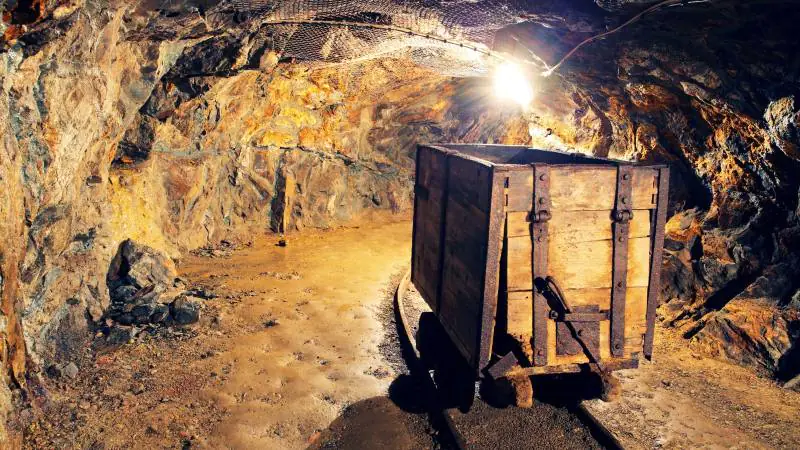
Where PAM Is Applied in the Gold and Silver Circuit
Thickening After Grinding
The first major PAM application is in the pre-leach thickener, where ground ore slurry must be concentrated before entering the leaching circuit. Fine gold and silver ores — typically ground to 75–150 µm for effective mineral liberation — contain a high proportion of ultrafine particles below 20 µm that settle extremely slowly without chemical assistance.
Anionic PAM at 10–50 g/tonne of solids promotes rapid aggregation of these fines into large, dense flocs that settle to a concentrated underflow. A well-operated thickener with optimized PAM dosing produces:
- Clarified overflow with suspended solids below 50–100 mg/L — suitable for process water recycling without further treatment
- Thickener underflow at 55–65% solids by weight — concentrated enough for efficient cyanide leaching without excessive dilution of the leach solution
Underflow density directly affects leaching economics. Every percentage point increase in underflow solids reduces the volume of cyanide solution required per tonne of ore processed, lowering reagent cost and improving gold and silver dissolution kinetics by maintaining adequate cyanide concentration around ore particles.
Cyanide Leaching Stage Support
In the leaching circuit, PAM’s role shifts from flocculation to rheology management. High-density slurry in leach tanks — typically 40–50% solids — develops non-Newtonian flow behavior that reduces mixing efficiency and creates dead zones where ore particles settle out of suspension and lose contact with cyanide solution.
Low-dose PAM addition (5–20 g/tonne) reduces slurry yield stress and improves flow behavior, ensuring more uniform distribution of slurry through leach tank volume and more consistent cyanide contact with ore particle surfaces. This rheological benefit is separate from flocculation — PAM at low dose in a high-solids slurry functions more as a dispersant than a flocculant, and grade selection should reflect this distinction. Lower molecular weight grades (5–10 million Da) typically perform better for rheology management than the high molecular weight grades used in thickener applications.
Carbon Adsorption (CIP/CIL) Circuit
In Carbon-In-Pulp (CIP) and Carbon-In-Leach (CIL) circuits, activated carbon adsorbs dissolved gold and silver complexes from the leach solution. PAM contributes to CIP/CIL performance by maintaining suspension stability in the adsorption tanks and reducing carbon fouling by fine clay and gangue minerals that would otherwise coat carbon particle surfaces and reduce adsorption efficiency.
The key PAM application in CIP/CIL is in the interstage screens that separate carbon from slurry between tanks. Improved slurry flow behavior from PAM treatment reduces blinding of these screens — a common operational problem that limits throughput in CIP/CIL plants processing clay-rich or fine-grained ores.
Tailings Thickening and Water Recovery
After carbon stripping and gold recovery, tailings — the processed ore residue — require solid-liquid separation before discharge to the tailings storage facility. This is typically the highest-volume PAM application in a gold or silver plant.
Tailings from gold processing often contain residual cyanide, heavy metals, and process chemicals that prevent direct discharge — the clarified water must meet environmental standards before recycle or release. PAM at 20–80 g/tonne in tailings thickeners achieves:
- Settling rate acceleration of 3–8× compared to unassisted settling
- Clarified overflow meeting suspended solids targets for water recycling
- Higher density underflow reducing tailings pond volume requirements and improving long-term stability
Water recovered from tailings thickening and returned to the process circuit typically represents 70–80% of total process water in a closed-loop operation — a significant operating cost reduction in water-stressed mining regions and a regulatory requirement in most jurisdictions.
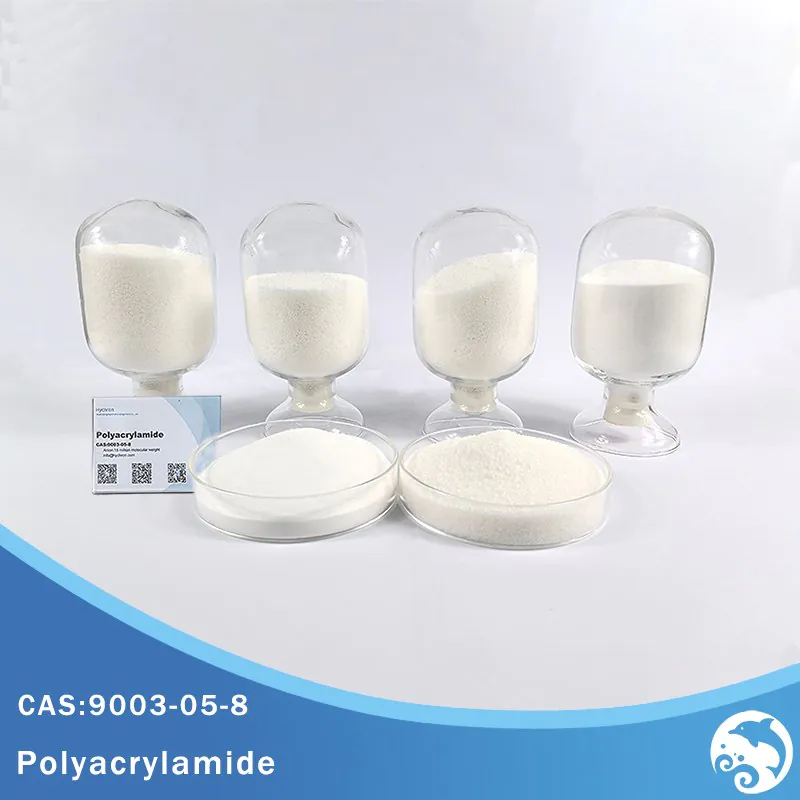
PAM Grade Selection for Gold and Silver Applications
| Application | PAM Type | Molecular Weight | Ionic Degree | Typical Dosage |
|---|---|---|---|---|
| Pre-leach thickening | Anionic | 12–20 million Da | 20–40% | 10–50 g/t solids |
| Leach slurry rheology | Anionic (low MW) | 5–10 million Da | 15–30% | 5–20 g/t solids |
| CIP/CIL suspension stability | Anionic | 10–15 million Da | 20–35% | 5–15 g/t solids |
| Tailings thickening | Anionic | 15–20 million Da | 25–45% | 20–80 g/t solids |
Why anionic PAM dominates gold and silver applications: Most gold and silver ores are processed in alkaline circuits (pH 10–11 from lime addition for cyanide stability and pH control), where mineral surfaces carry strong negative charge. Anionic PAM bridges particles through divalent cation bridges — primarily Ca²⁺ from lime addition — rather than direct electrostatic attraction. The high calcium concentration in cyanide leach circuits (50–200 mg/L Ca²⁺) provides abundant bridging ions that enhance anionic PAM flocculation efficiency.
Nonionic PAM is selected for ore types with positive surface charge or for applications where ionic interaction with cyanide chemistry could cause problems. Cationic PAM is rarely used in cyanide circuits because cationic polymer can interact with anionic cyanide complexes and interfere with leaching chemistry.
Ore-specific adjustments: Clay-rich gold ores — common in lateritic gold deposits and weathered ore zones — present particular flocculation challenges because clay minerals (smectite, kaolinite) have very high surface area and strong negative charge that requires higher PAM dosage and often a higher ionic degree than fresh sulfide ores. Carbonaceous ores that preg-rob (adsorb dissolved gold before carbon can capture it) require careful PAM grade selection to avoid worsening preg-robbing behavior.
FAQ
Q: How do I optimize PAM dosage for a gold ore thickener when ore type changes frequently?
A: Run a settling test each time ore type changes significantly. Fill a graduated cylinder with thickener feed slurry, add PAM at three dosage levels (10, 30, 50 g/t estimated), and measure settling rate at 5 and 15 minutes. The dose achieving the fastest initial settling rate with the clearest supernatant is your starting point. For operations blending multiple ore sources, establish a dosage-settling rate reference for each ore type and blend dosage proportionally based on ore blend ratio.
Q: What is the difference between using PAM in a CIP circuit versus a CIL circuit for gold recovery?
A: In CIP (Carbon-In-Pulp), leaching and adsorption occur in separate tanks — PAM in the leach circuit doesn’t directly contact the carbon adsorption stage. In CIL (Carbon-In-Leach), carbon is present during leaching — PAM must be confirmed compatible with carbon adsorption efficiency before use, since some PAM grades adsorb onto activated carbon surfaces and can reduce gold adsorption capacity. Test PAM impact on carbon activity using a carbon adsorption isotherm before committing to a grade in CIL circuits.
Q: How should PAM be stored and handled at remote gold mine sites with limited infrastructure?
A: Anionic PAM powder stores for 24 months in sealed bags kept dry and below 35°C. Emulsion PAM (12-month shelf life) dissolves faster and suits remote sites with limited make-down equipment, but requires temperature-controlled storage above 5°C to prevent phase separation. For remote operations, maintain 30-day inventory minimum and use first-in, first-out rotation. Make-down equipment should produce 0.1–0.3% solution with 40–60 minutes maturation before dosing — undissolved PAM in thickener feed causes uneven flocculation and variable overflow clarity.
PAM Makes the Difference Between Stable Recovery and Lost Metal
In gold and silver extraction, every stage where solid-liquid separation is compromised loses dissolved metal in turbid overflow, reduces leach efficiency through poor slurry contact, or increases tailings pond loading beyond design capacity. PAM — correctly selected for each circuit stage and properly dissolved before dosing — addresses all three failure modes. The investment in optimized PAM dosing typically recovers its cost many times over through improved metal recovery rates, reduced fresh water consumption, and more reliable environmental compliance.
HyChron supplies anionic PAM across the full molecular weight and ionic degree range for precious metal mining applications. Contact our team for grade recommendations based on your ore type, circuit configuration, and process water chemistry.

