
Polyacrylamide (PAM) is one of those chemicals that shows up in more places than most people realize — water treatment plants, oil fields, paper mills, mineral processing facilities, and even pharmaceutical labs. We work with PAM across all of these sectors, and the reason it keeps appearing is straightforward: no other single polymer class combines adjustable charge properties, high molecular weight flexibility, and broad chemical compatibility the way PAM does. This article breaks down what makes PAM work, where it delivers the most value, and what to watch for when specifying or handling it.
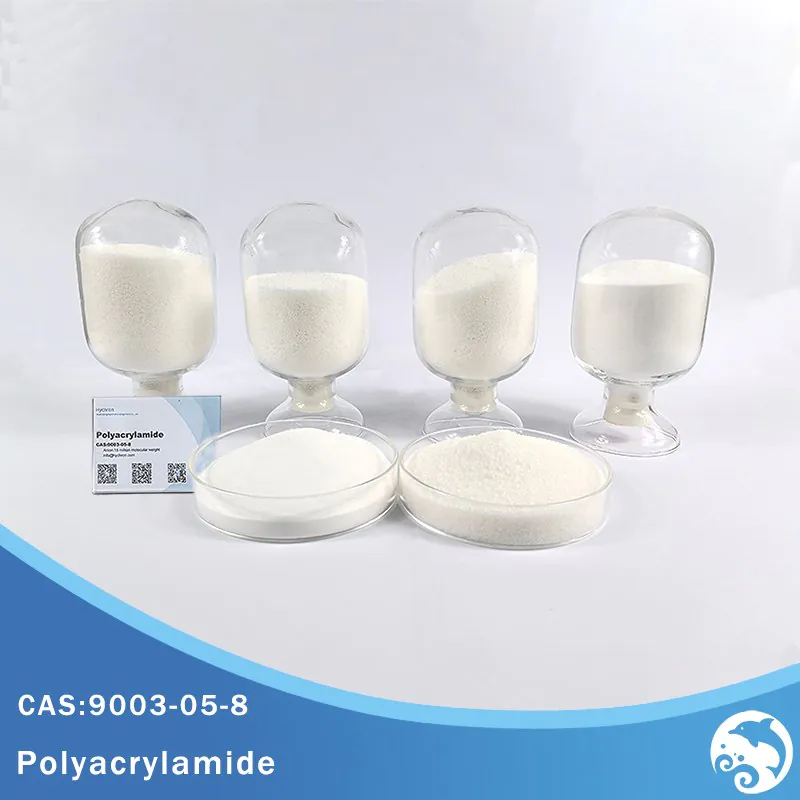
Physical and Chemical Properties That Make PAM Industrially Versatile
Understanding PAM’s physical and chemical behavior is the foundation for selecting the right grade and avoiding common application mistakes. These aren’t abstract properties — each one directly affects how PAM performs in your process.
Water Absorption and Gel Formation PAM swells aggressively in water, forming a stable hydrogel network. This behavior underpins its use as a thickener, moisture retention agent, and controlled-release matrix. Cross-linked PAM can absorb several hundred times its own weight in water — a property exploited in superabsorbent applications and soil conditioning products.
Solubility Profile PAM dissolves readily in water and polar solvents but remains insoluble in non-polar hydrocarbons. This selective solubility is what makes PAM safe to use in aqueous treatment systems without risk of solvent carry-over into product streams. It also means PAM solutions must be prepared in clean water — hard water above 500 mg/L CaCO₃ can interfere with polymer chain extension and reduce effective viscosity.
Chemical and Thermal Stability PAM remains stable across a pH range of approximately 4–10 and performs reliably at temperatures up to 60°C for most grades. Above 60°C, hydrolysis of amide groups accelerates, shifting charge character and reducing molecular weight over time. For high-temperature applications — geothermal drilling fluids or hot process water — thermally stabilized grades with modified backbone chemistry are available.
Adjustable Charge Properties This is PAM’s most commercially important feature. By controlling polymerization conditions and monomer ratios, manufacturers produce four distinct ionic types, each with a different interaction profile with charged surfaces in solution.
| Ionic Type | Charge Character | Typical Ionic Degree | Primary Interaction Mechanism |
|---|---|---|---|
| Cationic (CPAM) | Positive | 10–80% | Charge neutralization of negative surfaces |
| Anionic (APAM) | Negative | 10–40% | Bridging via divalent cation bridges |
| Nonionic (NPAM) | Neutral | < 5% | Hydrogen bonding and physical adsorption |
| Amphoteric (ZPAM) | Both | Variable | Dual-mechanism; tolerates mixed charge environments |
Viscosity and Rheological Control High molecular weight PAM solutions are highly viscous even at low concentrations — a 0.1% solution of 15 million Da PAM can reach viscosities of 200–800 mPa·s depending on shear rate. This makes PAM an effective mobility control agent in oil recovery and a reliable thickener in process fluids where flow behavior needs adjustment without adding significant solids.
Main Industrial Applications of PAM
Water Treatment: Flocculation, Sedimentation, and Sludge Dewatering
Water treatment accounts for the largest share of global PAM consumption, and it’s the application where grade selection has the most direct impact on operating cost and compliance outcomes.
In municipal and industrial wastewater treatment, cationic PAM at molecular weights of 5–12 million Da neutralizes the negative surface charge on suspended particles, colloids, and microorganisms, allowing them to aggregate into settleable flocs. Well-selected CPAM grades increase suspended solids removal efficiency by 40–70% compared to inorganic coagulants used alone, while reducing coagulant chemical consumption by 20–30%.
For sludge dewatering on belt filter presses and centrifuges, the target is different — large, mechanically strong flocs that release water under pressure rather than simply settling. CPAM at 2–6 kg per tonne of dry solids is the standard dosage range, with optimal ionic degree varying by sludge type: municipal biosolids typically respond best to 20–40% ionic degree, while industrial and oily sludges often require 40–80%. Filter cake moisture content with optimized PAM conditioning typically reaches 70–82% — 8–15 percentage points drier than unconditioned sludge.
Oil and Gas: Enhanced Recovery and Drilling Fluid Control
PAM plays two distinct roles in oil and gas operations, and they require very different product specifications.
In Enhanced Oil Recovery (EOR), partially hydrolyzed polyacrylamide (HPAM) with molecular weights of 8–20 million Da and hydrolysis degrees of 25–35% is injected into reservoirs to increase water viscosity. By improving the mobility ratio between injected water and reservoir oil, PAM flooding increases sweep efficiency — the proportion of reservoir contacted by the displacing fluid. Field data from mature EOR projects shows incremental oil recovery of 3–12% OOIP (original oil in place) compared to water flooding alone, depending on reservoir heterogeneity and PAM concentration maintained in the flood front.
In drilling fluids, lower molecular weight PAM (500,000–2,000,000 Da) serves a different function: reducing fluid loss into permeable formations and improving rheological properties of the mud. PAM-treated drilling fluids maintain better viscosity under shear at downhole temperatures, stabilize borehole walls, and reduce differential sticking — all of which improve drilling efficiency and reduce non-productive time.
Paper Industry: Retention, Drainage, and Strength
We covered paper industry PAM applications in detail in a separate article, but the core principle is worth restating here: molecular weight determines function. Low MW PAM (1,000–10,000 Da) disperses fibers; mid-MW PAM (500,000–1,000,000 Da) builds strength; high MW PAM (2,000,000–4,000,000 Da) improves retention and drainage on the paper machine wire.
Cationic PAM as a retention aid typically improves first-pass retention of fines and fillers by 15–30%, directly reducing raw material losses and improving effluent quality from the paper machine. Combined CPAM-bentonite microparticle systems deliver better formation uniformity than single-component retention programs, which matters particularly on high-speed machines where formation defects are hard to correct downstream.
Mineral Processing: Solid-Liquid Separation and Tailings Management
In mining operations, PAM is used primarily to accelerate thickener performance and improve the clarity of process water returned to the circuit. Anionic PAM at high molecular weights (10–20 million Da) is the standard choice for most mineral flocculation applications — metallic ore tailings, coal wash water, and phosphate slimes all respond well to APAM bridging mechanisms.
Typical PAM dosage in mineral thickeners runs 10–50 g/tonne of solids processed, with optimized dosing producing underflow densities 5–15% higher than unassisted settling. Higher underflow density means less water lost with tailings, less makeup water required, and smaller tailings storage footprints — all of which have direct cost and environmental implications for mine operations.
Amphoteric PAM shows particular value in processing ores with mixed surface chemistry, where the charge environment in the pulp shifts with ore feed variation. ZPAM’s dual-charge character provides more consistent flocculation performance across feed grade fluctuations than single-charge polymers.
Specialty Applications: Personal Care and Smart Materials
PAM’s gel-forming and viscosity-building properties make it useful in cosmetic formulations as a thickener and film-former, where it improves texture and stability in creams, lotions, and hair care products. In these applications, ultra-high purity grades with residual acrylamide monomer below 0.1% are required to meet regulatory limits.
Stimuli-responsive PAM copolymers — materials that change volume, permeability, or mechanical properties in response to temperature, pH, or ionic strength — represent a growing area in pharmaceutical and biomedical research. Temperature-responsive poly(N-isopropylacrylamide) (PNIPAAm) systems, for example, are under active development for controlled drug release applications. These are specialized grades far removed from industrial commodity PAM, but they share the same core polymer backbone.
Environmental Handling and Safety Considerations
PAM itself has low acute toxicity and is considered safe for use in drinking water treatment at approved dosage levels in most regulatory jurisdictions (including NSF/ANSI 60 in the United States). The key safety consideration is residual acrylamide monomer — acrylamide is a confirmed neurotoxin and probable human carcinogen, and reputable PAM manufacturers maintain residual monomer below 0.05% in drinking water grades and below 0.1% in industrial grades.
PAM is not readily biodegradable under normal environmental conditions. It persists in soil and water systems, which means disposal of PAM-containing sludge or process water requires compliant handling according to local environmental regulations. Do not discharge high-concentration PAM solutions directly to surface water without treatment.
For dosage: more is not better. Overdosing PAM — particularly in flocculation applications — can restabilize particle suspensions through charge reversal, producing worse results than no polymer at all. Always establish the optimum dose through jar testing before full-scale application, and adjust as feed water quality changes seasonally.
FAQ
Q: How do I choose between cationic, anionic, and nonionic PAM for my application?
A: Match ionic type to the charge of what you’re trying to capture. Negatively charged particles (most wastewater suspended solids, biosolids) need cationic PAM. Positively charged or neutral mineral surfaces respond better to anionic or nonionic grades. When in doubt, run a jar test — it takes 30 minutes and gives you a clear answer.
Q: What is the difference between PAM used in water treatment versus PAM used in EOR, and can they be used interchangeably?
A: No — they’re very different specifications. Water treatment PAM prioritizes floc formation at doses of 1–10 mg/L; EOR PAM (HPAM) is engineered for viscosity at reservoir conditions, with molecular weights of 8–20 million Da and controlled hydrolysis degrees. Using water treatment PAM in an EOR flood won’t deliver the mobility control needed, and EOR-grade HPAM is unnecessarily expensive for flocculation use.
Q: What residual acrylamide monomer level should I specify when purchasing PAM, and how do I verify it?
A: For drinking water treatment, specify ≤ 0.05% residual monomer (NSF/ANSI 60 compliant). For industrial use, ≤ 0.1% is standard. Ask for a batch-specific certificate of analysis with monomer content confirmed by HPLC. Don’t accept product without it.
PAM’s Industrial Value Comes From Getting the Grade Right
PAM’s breadth of application across water treatment, oil recovery, papermaking, mining, and specialty sectors reflects genuine chemical versatility — but that versatility only delivers value when the right grade is matched to the right process. Molecular weight, ionic type, charge density, and purity specification all matter, and the gap between an optimized PAM program and a poorly specified one shows up directly in operating costs, treatment performance, and regulatory compliance.
We supply anionic, cationic, nonionic, and amphoteric PAM across the full molecular weight range, with technical support for application-specific grade selection and dosing optimization. Contact our team for product data sheets, sample requests, or a consultation on your specific process requirements.