
Industries often struggle with slow sludge settling, high disposal costs, and inefficient water treatment processes. Without optimized solutions, plants lose money and risk regulatory penalties. Polyacrylamide (PAM) offers a reliable solution that accelerates solids separation, reduces sludge, and saves operational costs.
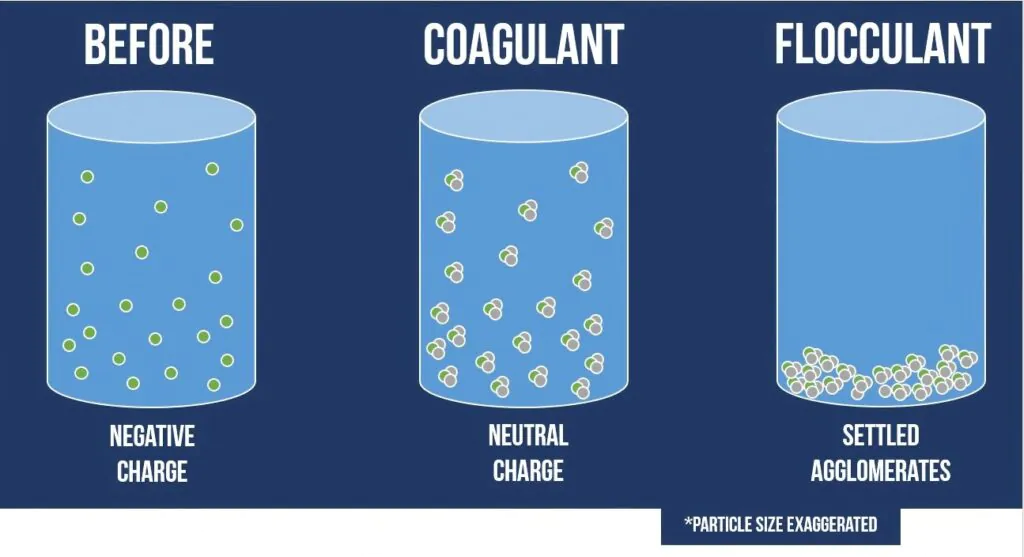
PAM accelerates solids separation by 70% through charge neutralization and polymer bridging. Correct application reduces sludge volume by 30-50%, cutting disposal expenses significantly across municipal and industrial plants.
What is Polyacrylamide (PAM)?
Polyacrylamide is a high-molecular-weight polymer widely used as a flocculant. Its primary mechanism involves charge neutralization and polymer bridging, which aggregate suspended solids into dense flocs that settle rapidly.
Key points:
- Cationic PAM: Targets negatively-charged organics, ideal for food and municipal wastewater.
- Anionic PAM: Targets positively-charged particles, used in mining and textile effluents.
- Amphoteric PAM: Works in mixed-charge waste streams, providing flexibility for diverse industries.
How PAM Removes Contaminants
Operators often overdose chemicals, thinking more equals better results. Proper understanding of PAM allows 25% less chemical usage while achieving superior clarity.
Mechanism details:
- Electrostatic Attraction: Opposite charges attract, destabilizing particles.
- Polymer Bridging: Long chains link multiple particles into larger, settleable flocs.
- Optimized Settling: Proper polymer type and dosage reduce sludge volume and improve water clarity.
Tip: Match polymer type to waste characteristics for best results. Charge density, molecular weight, and operational parameters are critical.
Selecting the Right PAM: Factors to Consider
Charge Density Matching
| Waste Type | PAM Type |
|---|---|
| Textile Effluent (negative) | Cationic |
| Mining Slurry (positive) | Anionic |
| Municipal Sewage (mixed) | Amphoteric |
Molecular Weight Impact
| Weight Range | Floc Size | Application |
|---|---|---|
| Low (1–5M Da) | Small | Drinking water clarification |
| Medium (6–10M Da) | Medium | Food processing effluent |
| High (12–15M Da) | Large | Mining tailings dewatering |
Operational Sweet Spot
- Dosage: 0.1–0.5 ppm for optimal floc formation
- Overdosing reverses charge, causing flocs to disperse
- Temperature: Pre-heating cold wastewater (<10°C) improves kinetics
- pH: Maintain 6–8 for best performance
Industry Applications and Case Studies
Food Processing
- Meat/Poultry: High-charge cationic PAM binds fats and solids. Sludge volume reduced by 40%. pH control prevents emulsions.
- Dairy: Medium-weight PAM preserves whey protein clarity, reduces chemical use by 30%, and lowers clarifier downtime by 20%.
- Breweries: Low doses during peak cycles prevent filter clogging, improve settling by 50%.
Paper Industry
- Recycled fiber mills using PAM achieve:
- 30% less freshwater use
- 15% higher paper yield
- 50% fewer clarifier cleanings
Chemical Industry
| Waste Type | PAM Type | Result |
|---|---|---|
| Dye effluent | High-cationic | Color removal >99% |
| Petrochemical | Emulsion PAM | Oily sludge reduced 75% |
| Pharma | Ultra-pure grades | COD limits met |
Municipal Wastewater
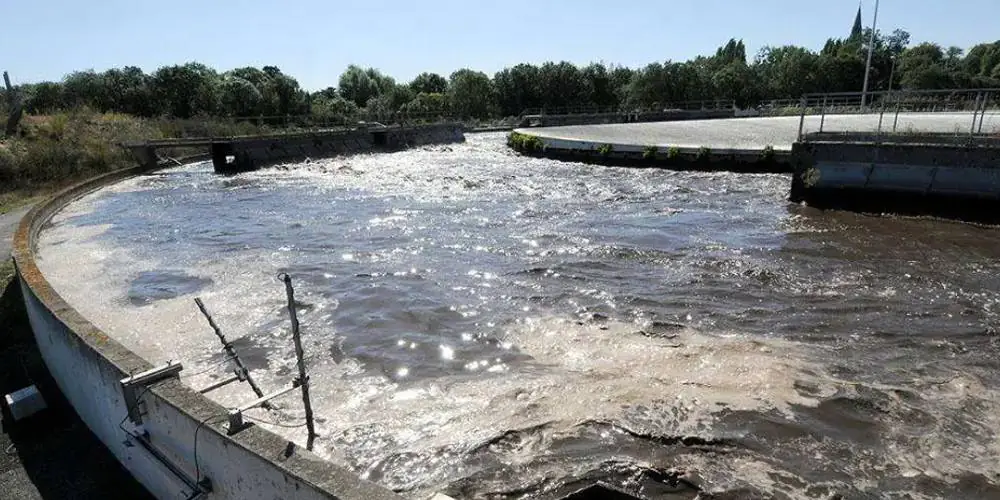
- Case study: City reduced EPA fines and sludge disposal by 55%
- Achieved 95% water clarity at half the cost of traditional coagulants
- Sludge volume reduced 30–50%, fewer truckloads required
Avoiding Treatment Failures
Common causes of PAM inefficiency:
- Improper hydration → “fish-eyes” reduce polymer activity by 60%
- Incompatible mixing energy → floc shear
- Fluctuating influent quality → reduces settling efficiency
Best practices:
- 0.1–0.3% solution, stir 50–200 rpm for 45 min
- Maintain water temperature 15–35°C
- Calibrate G-value mixers, monitor real-time TOC
- Implement auto-buffering for pH swings
Conclusion
Polyacrylamide (PAM) maximizes wastewater treatment efficiency by:
- Cutting chemical usage by 25%
- Reducing sludge volume 30–50%
- Enhancing solids capture and recovery in industrial and municipal settings
- Maintaining compliance and reducing operational costs
Proper selection, dosage, and monitoring ensure that PAM delivers the highest efficiency, cost savings, and environmental compliance.
CTA: Contact us today for tailored PAM solutions, free dosage consultation, and sample testing to optimize your wastewater treatment process.

