
Sodium Dichloroisocyanurate (SDIC) is a solid chlorine disinfectant widely used in swimming pools, drinking water treatment, industrial water systems, and hygiene applications. Compared with liquid chlorine products, SDIC offers higher stability, easier handling, and lower transportation risk.
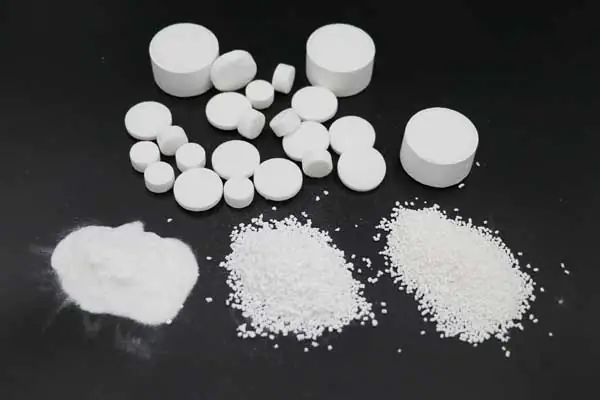
SDIC is available in several formulations, including granules, tablets, and powder. Each form has different dissolution behavior, storage requirements, and packaging standards. Choosing the right combination of formulation and packaging is essential to maintain chlorine content, ensure safety, and reduce losses during storage and export.
Why SDIC Formulation and Packaging Matter
SDIC contains cyanuric acid, which helps stabilize available chlorine and slows down degradation caused by sunlight. This makes SDIC more UV-resistant than sodium hypochlorite. However, SDIC remains sensitive to moisture, temperature, and impurities.
Improper formulation or packaging can lead to:
- Chlorine loss during storage
- Caking or tablet deformation
- Reduced disinfection efficiency
- Safety risks during transport
Understanding the characteristics of each SDIC form helps users and exporters avoid these issues.
SDIC Formulations and Their Characteristics
SDIC Granules
SDIC granules are commonly used in municipal water treatment, industrial systems, and swimming pool shock treatment.
Key characteristics
- Fast dissolution and quick chlorine release
- Suitable for large-volume water treatment
- Typical available chlorine: 56–60%
- Sensitive to humidity and must remain dry
Granules are ideal when rapid disinfection is required, such as emergency treatment or pool shock dosing.
SDIC Tablets
SDIC tablets include standard tablets, effervescent tablets, and specialty formulations. They are widely used for routine disinfection and portable applications.
Key characteristics
- Controlled dissolution rate
- No visible residue after dissolving
- Common applications: swimming pools, drinking water, household disinfection, emergency use
- Available chlorine: typically around 54%
- Easy to store and transport
Tablets provide stable dosing and are preferred where precise chlorine control is required.
SDIC Powder
SDIC powder has high purity and dissolves rapidly, making it suitable for industrial and laboratory applications.
Key characteristics
- Immediate chlorine activity after dissolution
- Available chlorine up to 60%
- Precise dosing capability
- Hygroscopic and sensitive to moisture
Powdered SDIC requires careful handling to avoid dust exposure and moisture absorption.

Factors Affecting SDIC Stability
Light and UV Exposure
Although cyanuric acid improves UV resistance, long-term exposure to strong light can still cause slow degradation. Opaque or foil-lined packaging is recommended.
Moisture
Moisture is the biggest risk factor. It can cause hydrolysis, chlorine loss, and tablet agglomeration.
Recommended solution:
Use sealed, moisture-proof packaging with desiccants.
Temperature
- Stable storage: below 40°C
- High temperatures accelerate decomposition
Cool, ventilated warehouses are essential, especially for export shipments.
Recommended Packaging for Different SDIC Forms
SDIC Granules
- Packaging: HDPE drums, aluminum foil-lined bags
- Key function: Moisture protection and mechanical strength
- Typical markets: Industrial water, municipal treatment, swimming pools
SDIC Tablets
- Packaging: Individual wrapping + foil bags + cartons, or lined HDPE drums
- Key function: Prevent moisture absorption and breakage
- Typical markets: Drinking water, pools, emergency relief
SDIC Powder
- Packaging: Composite laminated bags or sealed HDPE drums
- Key function: Dust control and moisture resistance
- Typical markets: Industrial and laboratory use
Storage and Export Best Practices
- Store in a cool and dry environment
- Keep away from acids, ammonia, organic materials, and reducing agents
- Use moisture-proof packaging with desiccants
- Follow UN 2465 transport regulations and GHS labeling requirements
For humid regions such as Southeast Asia or coastal markets, enhanced moisture protection is strongly recommended.
Conclusion
Selecting the correct SDIC formulation and packaging is essential for maintaining chlorine stability, safety, and performance. Granules, tablets, and powder each serve different application needs, and proper packaging ensures product quality throughout storage and transportation.
By matching SDIC form and packaging to climate conditions and application requirements, manufacturers and distributors can reduce losses, extend shelf life, and deliver consistent disinfection performance to global markets.