
Mineral processing generates three treatment challenges that chemical additives must address simultaneously: efficient separation of valuable minerals from gangue, management of process water containing fine suspended solids, and disposal of tailings in a way that meets environmental standards. PAM and PAC handle all three — but they do different things, and understanding where each one applies determines whether the chemical spend delivers real process improvement or just adds cost.
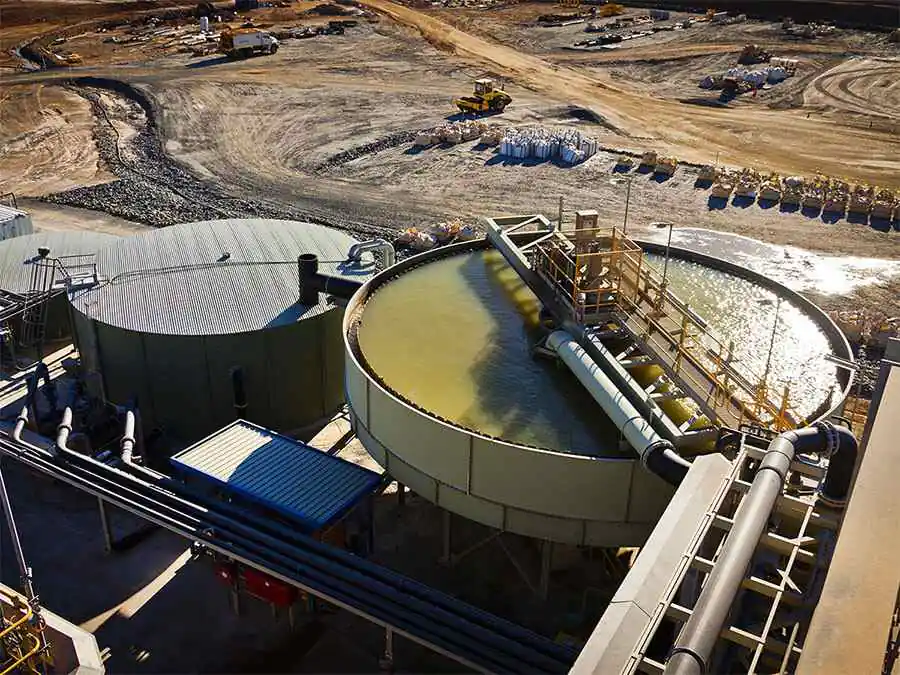
Where PAM and PAC Fit in the Mineral Processing Flowsheet
Before getting into specific applications, the functional distinction matters:
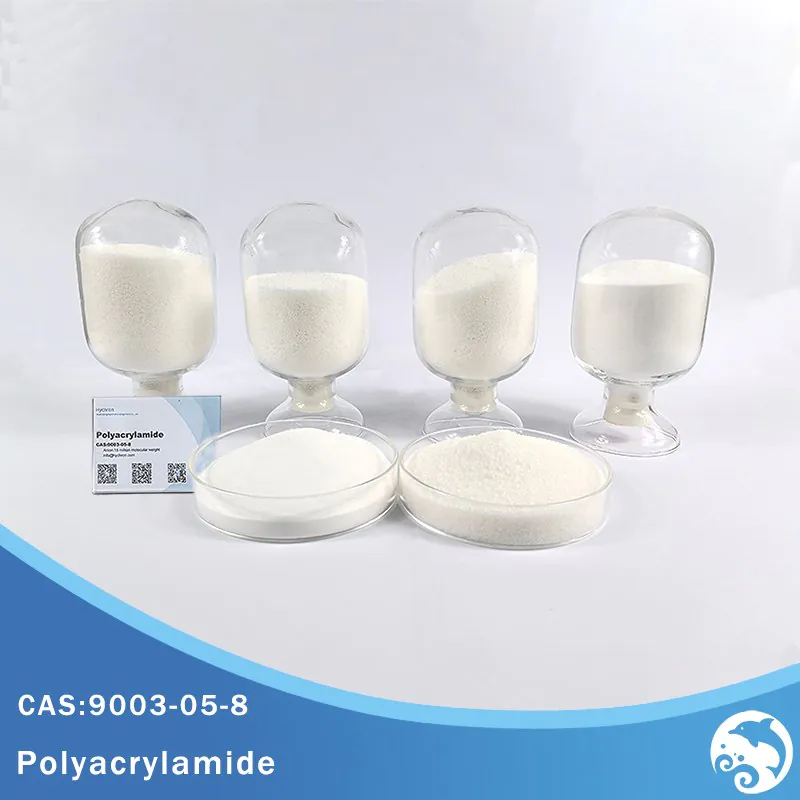
PAM (polyacrylamide) is primarily a flocculant. Its long polymer chains bridge fine mineral particles into larger aggregates that settle rapidly. In mineral processing, anionic PAM at high molecular weight (10–20 million Da) handles most thickening and tailings applications because most mineral surfaces carry negative charge in the pH range typical of process water.
PAC (polyaluminium chloride) is a coagulant. It neutralizes colloidal surface charge and destabilizes fine particles that resist settling on their own. PAC is most valuable in process water and wastewater treatment where colloidal silica, clay fines, and dissolved organics prevent effective flocculation by PAM alone.
In most mineral processing systems, PAC + PAM used in sequence outperforms either chemical alone on water clarity and solids recovery.
Application 1: Thickener Performance — Where PAM Delivers the Most Value
Thickeners are the primary solid-liquid separation unit in most mineral processing operations, and PAM dosing is the primary lever for controlling thickener performance. Anionic PAM added to the thickener feedwell causes fine mineral particles to aggregate into large, dense flocs that settle rapidly to the underflow, producing:
- Higher underflow density — typically 5–15% higher solids content with optimized PAM versus unassisted settling
- Faster settling rate — allowing higher feed throughput for the same thickener diameter
- Cleaner overflow — reducing suspended solids in process water returned to the circuit
PAM dosage in mineral thickeners typically runs 10–50 g/tonne of solids processed, but optimal dosage varies significantly with ore type, grind size, and process water chemistry. Overdosing PAM can cause viscosity problems in the underflow and make pump operation difficult — always establish optimal dosage through jar testing rather than defaulting to supplier recommendations.
Grade selection by application:
| Application | PAM Type | Molecular Weight | Ionic Degree |
|---|---|---|---|
| Base metal tailings thickening | Anionic | 12–20 million Da | 20–40% |
| Coal wash water clarification | Anionic | 10–15 million Da | 15–30% |
| Phosphate slime settling | Anionic | 15–20 million Da | 30–50% |
| Gold mine tailings | Anionic | 12–18 million Da | 20–35% |
| Process water recovery | Anionic or nonionic | 10–18 million Da | Variable |
Application 2: Flotation Circuit Support
PAM plays a supporting role in flotation circuits that is often underutilized. In selective flocculation applications, low-dose PAM (typically 50–200 g/tonne) at carefully controlled ionic degree can selectively aggregate one mineral species while leaving another dispersed — enabling separation that flotation alone cannot achieve in fine particle systems below 20–30 µm.
More commonly, PAM controls slurry rheology in the grinding circuit. At high solids concentrations, mineral slurries develop high viscosity that reduces grinding efficiency and increases energy consumption. Low molecular weight PAM additions (500,000–2,000,000 Da) at 100–300 g/tonne reduce slurry viscosity by dispersing fine particles, improving mill throughput without increasing water addition.
PAM also affects flotation bubble-particle attachment in some systems — high molecular weight PAM adsorbed on mineral surfaces can either improve or reduce flotation recovery depending on the mineral and reagent system. Test carefully before applying PAM upstream of flotation circuits.
Application 3: Process Water Treatment and Recycling
Mining operations under increasing pressure to reduce freshwater consumption rely on effective process water treatment to enable recycling. This is where PAC and PAM work together most directly.
Process water from thickener overflow and tailings pond return typically contains:
- Colloidal clay and silica fines that resist PAM flocculation without prior charge neutralization
- Residual flotation reagents that interfere with downstream processing if water is recycled without treatment
- Suspended solids at 200–2,000 mg/L that exceed discharge limits
PAC at 50–200 mg/L neutralizes colloidal charge and forms aluminum hydroxide precipitates that sweep fine particles into settleable micro-flocs. Anionic PAM at 1–5 mg/L then bridges these micro-flocs into large aggregates that clarify in lamella settlers or clarifiers within 30–60 minutes. Clarified water recycled to the grinding or flotation circuit typically meets suspended solids targets below 50 mg/L.
This treatment sequence reduces fresh water consumption by 60–80% in well-designed closed-loop systems — a significant operational cost reduction in water-stressed mining regions and a compliance requirement in many jurisdictions.
Application 4: Tailings Management
Tailings ponds represent the largest volume application of PAM in mining. Fine tailings — particularly those from clay-rich or fine-grained ores — settle extremely slowly without chemical assistance, creating large pond footprints, long consolidation times, and risk of dam instability.
PAM addition to tailings at 50–200 g/tonne of solids accelerates settling velocity by 3–10× compared to unassisted settling, producing:
- Higher density tailings consolidation — reducing pond volume requirements
- Cleaner supernatant water suitable for recycling
- Faster beach formation in dry stack tailings operations
For filtered tailings systems (paste or dry stack), PAM conditioning of the tailings slurry before filtration reduces filter press cycle time and improves cake moisture content — the same mechanism that applies in sludge dewatering, operating on the same principle of improved floc structure and water release under pressure.
FAQ
Q: How do I choose between anionic, cationic, and nonionic PAM for mineral processing applications?
A: Anionic PAM suits most mineral processing applications because mineral surfaces are typically negatively charged at normal process water pH — anionic PAM bridges particles through divalent cation bridges (Ca²⁺, Mg²⁺) rather than direct electrostatic attraction. Cationic PAM is used where mineral surfaces carry positive charge or where process water pH is very low. Nonionic PAM suits applications where water chemistry is highly variable or where ionic interaction would cause problems. Confirm with a jar test on your actual process water before committing to a grade.
Q: What is the difference between using PAC alone versus PAC + PAM for process water clarification in mining?
A: PAC alone produces fine aluminum hydroxide flocs that settle slowly and may not meet suspended solids targets within clarifier residence time. Adding PAM after PAC bridges these micro-flocs into large, fast-settling aggregates — typically improving settling rate by 3–5× and reducing clarifier overflow turbidity by 50–70% compared to PAC alone. For most mining process water applications, the PAC + PAM combination delivers better results at lower total chemical cost than either product used at higher dose independently.
Q: How should PAM be stored and handled at remote mine sites with limited infrastructure?
A: Store PAM powder in sealed bags inside a weatherproof shed — humidity and direct sun degrade the product faster than temperature alone. Keep above 5°C; freezing doesn’t destroy PAM but causes clumping that slows dissolution. Emulsion PAM is easier to handle at remote sites because it dissolves faster and requires simpler make-down equipment, but has shorter shelf life (12 months versus 24 months for powder). For sites without reliable chemical supply chains, maintain a minimum 30-day inventory buffer and rotate stock on first-in, first-out basis.
Chemical Optimization Drives Both Recovery and Compliance
PAM and PAC in mineral processing aren’t overhead costs — they’re process enablers that directly affect metal recovery, water recycling rates, tailings footprint, and discharge compliance. The facilities that get the most from these chemicals are the ones that match grade to application through systematic testing, monitor performance consistently, and adjust dosage as ore type and water chemistry change through the mine life.
HyChron supplies anionic PAM and PAC across the full range of mineral processing grades with technical support for thickener optimization and process water treatment. Contact our team for product specifications or application-specific recommendations.