Skip to content
In daily life and industrial environments, bacteria, viruses, and other harmful microorganisms are present almost everywhere. These microorganisms pose continuous risks to human health, water safety, and production systems. Effective disinfection is therefore essential in both public and industrial settings. Among commonly used disinfectants, Trichloroisocyanuric Acid (TCCA) plays a critical role due to its strong sterilizing ability and wide application range.
As a high-efficiency chlorine-based disinfectant, TCCA is widely used in water treatment, public sanitation, agriculture, and industrial systems. Its stable performance and long-lasting effect make it a preferred solution in many disinfection scenarios.
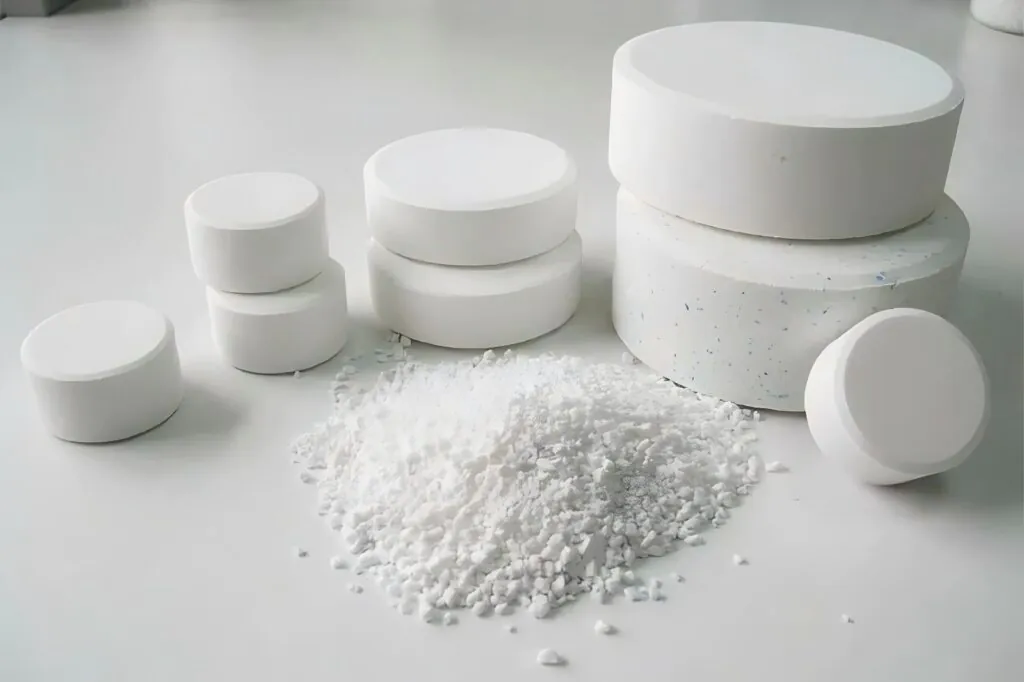
What Is Trichloroisocyanuric Acid?
Trichloroisocyanuric Acid is an organic chlorine compound commonly used as a disinfectant, bleaching agent, and intermediate in organic synthesis. It is typically supplied in the form of white powder, granules, or tablets and has a characteristic chlorine odor.
When dissolved in water, TCCA releases active chlorine gradually. This controlled release mechanism allows it to maintain effective disinfecting power over a longer period compared with many traditional chlorine products. Because of this property, TCCA is widely applied in systems that require continuous and stable microbial control.
Major Applications of Trichloroisocyanuric Acid
Swimming Pool Disinfection
Swimming pools are used by a large number of people, making pool water highly susceptible to bacteria, algae, and other microorganisms. Trichloroisocyanuric Acid is commonly used in swimming pool disinfection to maintain water clarity and hygiene. When added in the correct dosage, TCCA can continuously kill harmful microorganisms and prevent algae growth.
TCCA tablets are often placed in floating dispensers or dosing devices, allowing them to dissolve slowly and maintain a stable chlorine concentration. This long-lasting effect reduces the need for frequent dosing and significantly lowers the workload of pool operators while ensuring safe swimming conditions.
Drinking Water Disinfection
The safety of drinking water is directly related to public health. In some water treatment plants and small-scale rural water supply systems, Trichloroisocyanuric Acid is used as an effective disinfectant to eliminate pathogenic microorganisms.
By properly controlling dosage and contact time, TCCA helps ensure that drinking water meets hygiene and safety standards. Its ease of transportation and storage makes it especially suitable for decentralized or emergency water treatment applications.
Aquaculture Water Treatment
In aquaculture, water quality plays a decisive role in the growth and survival of fish, shrimp, and other aquatic species. Trichloroisocyanuric Acid is used to disinfect fish ponds and shrimp ponds, helping to control bacterial and viral diseases.
Regular and controlled application of TCCA can reduce disease outbreaks, improve survival rates, and increase overall production efficiency. This directly protects farmers’ economic returns and supports sustainable aquaculture practices.
Industrial Circulating Water Systems
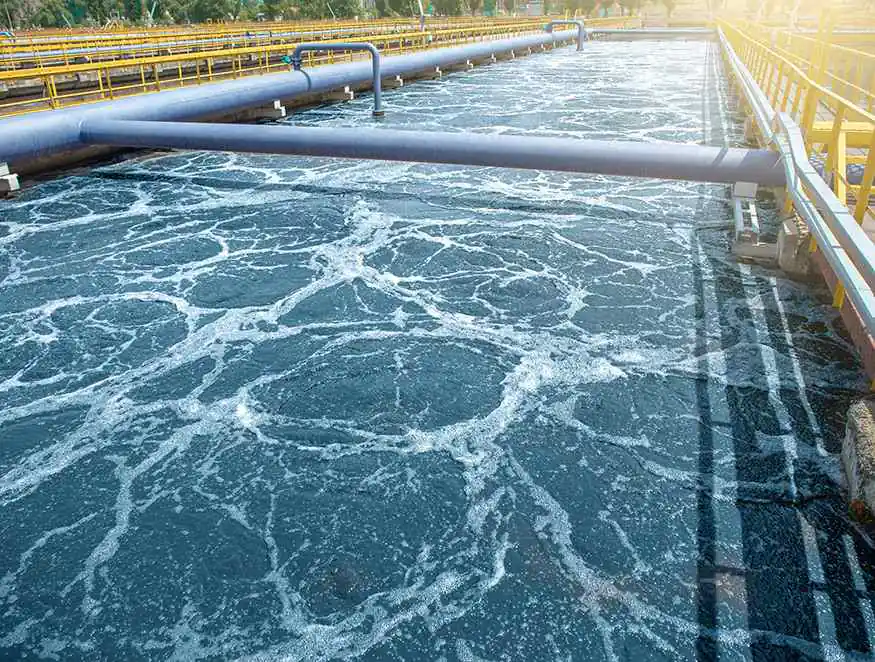
Industrial circulating water systems often operate under conditions that promote the growth of bacteria and algae. If left untreated, these microorganisms can form biofilms on pipelines, heat exchangers, and cooling towers, reducing heat transfer efficiency and increasing maintenance costs.
Trichloroisocyanuric Acid is widely used in circulating water systems to rapidly kill microorganisms and prevent biofilm formation. Its strong oxidizing ability helps maintain system cleanliness and ensures stable and efficient operation.
Papermaking Industry
In the papermaking process, microbial growth in pulp can lead to deterioration, odor problems, and reduced paper quality. Trichloroisocyanuric Acid is used to control bacteria and mold during pulp storage and processing.
Effective microbial control helps maintain pulp quality and improves key paper properties such as strength and whiteness. As a result, TCCA contributes to more stable production and better final product performance.
Precautions for Using Trichloroisocyanuric Acid
Although Trichloroisocyanuric Acid offers excellent disinfection performance, proper handling is essential. TCCA has a certain level of irritation and corrosiveness, so protective equipment such as gloves and masks should be worn during preparation and application to avoid direct skin or eye contact.
Dosage and dilution must strictly follow product specifications. Overdosing may cause unnecessary safety risks, while underdosing can reduce disinfection effectiveness. In addition, TCCA should be stored in a cool, dry, and well-ventilated place, away from heat sources, flammable materials, and direct sunlight to ensure product stability and safety.
A Reliable and Versatile Disinfection Solution
As a highly effective and broad-spectrum disinfectant, Trichloroisocyanuric Acid plays an indispensable role in water treatment, public sanitation, agriculture, and industrial systems. Its strong sterilizing ability, long-lasting effect, and wide applicability make it a trusted solution in many fields.
Selecting a reliable supplier with stable product quality and technical support is essential for achieving consistent disinfection results. If you require product information, technical guidance, or application support for Trichloroisocyanuric Acid, feel free to contact us for further assistance.